Credit: CWRU
With geographic barriers limiting treatment options for many people with multiple sclerosis (MS) , a Case Western Reserve University researcher will use a new $4.9 million award to test online- and teleconference-based adaptations of methods that reduce fatigue and improve quality of life when delivered in person.
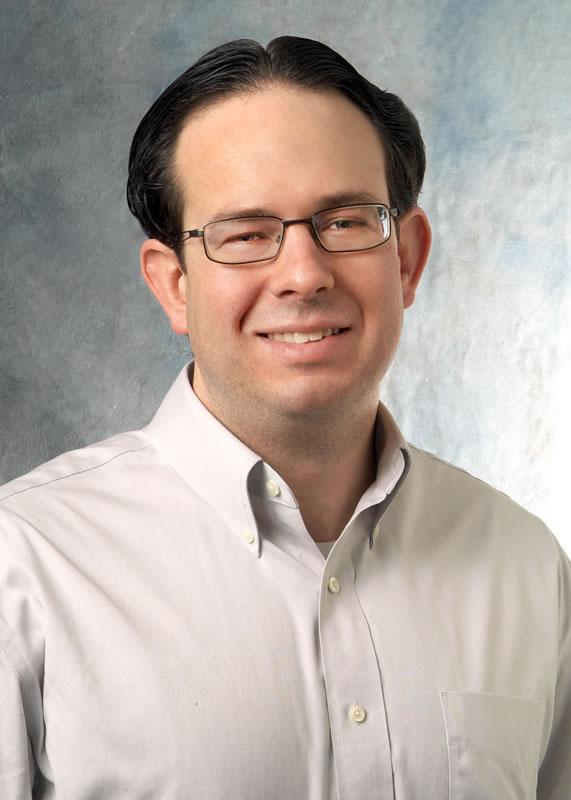
"As recent as a generation ago, people with MS might be told fatigue was 'all in their head' and to force themselves through this profound barrier to meaningful participation in a job, family or social life," said Matthew Plow, an assistant professor at the Frances Payne Bolton School of Nursing at Case Western Reserve and lead researcher on the four-year project funded by the Patient-Centered Outcomes Research Institute (PCORI).
"Now there are effective non-drug solutions that can lessen fatigue and empower people with MS to become more active," he said. "Unfortunately, these are not widely available."
One such option, a course on self-management techniques, known as Managing Fatigue, is effective in reducing fatigue when delivered in person. However, in-person formats may not be accessible for people living in rural areas or people with disabilities.
Researchers will collect data on how three methods of delivering this course — online, by teleconference and in-person — compare in reducing fatigue and improving quality of life.
"If more accessible digital versions provide similar outcomes," Plow said, "clinicians could be compelled to add them to their menu of treatments for reducing MS-related fatigue."
According to the Multiple Sclerosis Foundation, about 2.3 million people worldwide have MS, a progressive disease damaging nerves and disrupting their communication around the body.
While no drugs for MS fatigue have been approved by the U.S. Food and Drug Administration, medications prescribed for the condition show only a modest effect, Plow said.
The Managing Fatigue course teaches participants how to experiment with strategies that may work well for them, such as "banking" energy, "spending" limited energy to meet meaningful goals and re-organizing spaces, among other approaches.
An upside to offering the course online and by teleconference is the creation of a forum where participants can share their stories and experiences in a welcoming setting, Plow said.
At multiple sites around the country, the study will enroll and assign 610 people with MS to one of the three course modes–all led by a licensed occupational therapist. Recruitment will focus on populations historically underserved by medical research, including people with physical and mental disabilities and those racially and ethnically diverse.
"There are gaps in our understanding of MS care options, especially among people unfortunately neglected in past research," Plow said. "We hope our data can help personalize treatments to each patient's needs."
An independent, nonprofit organization authorized by Congress in 2010, PCORI awarded the funding as one of 5 new awards aimed at helping MS patients choose among available care options.
"This research speaks to the importance of empowering patients," said Mary E. Kerr, dean of the school of nursing. "Encouraging self-management is a hallmark of nursing science. I am excited by this contribution to the field."
###
Plow's award has been approved pending completion of a business and programmatic review by PCORI staff and issue of a formal contract.
Media Contact
Daniel Robison
[email protected]
216-368-6515
@cwru
http://www.case.edu
Original Source