• HOME
  • NEWS
  • EXPLORE
    • CAREER
      • Companies
      • Jobs
    • EVENTS
    • iGEM
      • News
      • Team
    • PHOTOS
    • VIDEO
    • WIKI
  • BLOG
  • COMMUNITY
    • FACEBOOK
    • INSTAGRAM
    • TWITTER
Saturday, December 20, 2025
BIOENGINEER.ORG
No Result
View All Result
  • Login
  • HOME
  • NEWS
  • EXPLORE
    • CAREER
      • Companies
      • Jobs
        • Lecturer
        • PhD Studentship
        • Postdoc
        • Research Assistant
    • EVENTS
    • iGEM
      • News
      • Team
    • PHOTOS
    • VIDEO
    • WIKI
  • BLOG
  • COMMUNITY
    • FACEBOOK
    • INSTAGRAM
    • TWITTER
  • HOME
  • NEWS
  • EXPLORE
    • CAREER
      • Companies
      • Jobs
        • Lecturer
        • PhD Studentship
        • Postdoc
        • Research Assistant
    • EVENTS
    • iGEM
      • News
      • Team
    • PHOTOS
    • VIDEO
    • WIKI
  • BLOG
  • COMMUNITY
    • FACEBOOK
    • INSTAGRAM
    • TWITTER
No Result
View All Result
Bioengineer.org
No Result
View All Result
Home NEWS Science News Biology

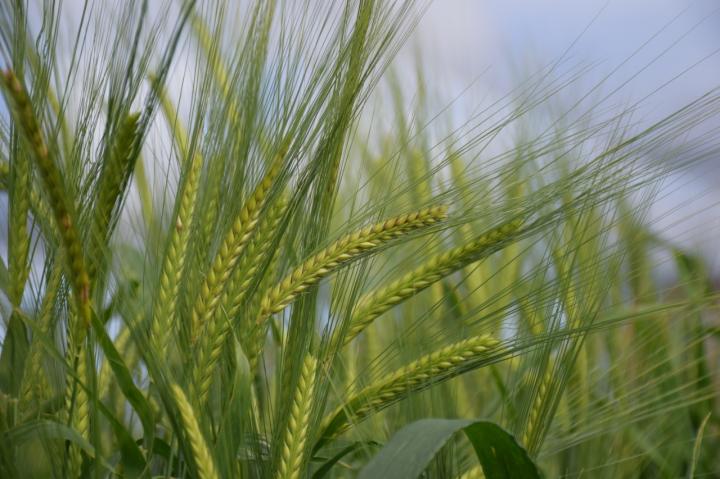
Research shows potential of gene editing in barley

Bioengineer by Bioengineer
September 17, 2020
in Biology
Reading Time: 2 mins read
0
IMAGE
Share on FacebookShare on TwitterShare on LinkedinShare on RedditShare on Telegram

IMAGE

Credit: Pixabay

An international team of plant scientists have shown the potential to rapidly improve the quality of barley grain through a genetic tool known as CRISPR or gene editing.

Published in The Plant Journal, researchers from the University of Adelaide’s Waite Research Institute working with the James Hutton Institute in Scotland and other colleagues in the UK and Melbourne, describe how the levels of beta-glucan in barley grain can be influenced through gene editing.

Joint senior author Associate Professor Matthew Tucker, Deputy Director of the Waite Research Institute, says: “Barley grain is comparatively rich in beta-glucan, a source of fermentable dietary fibre that protects against various human health conditions. However, crops with a low content of this compound are preferred for brewing and distilling.

“The research has given us further insight into key genes responsible for barley grain composition and, by using CRISPR gene editing, plant breeders will have the potential to accelerate plant breeding and deliver new crop varieties that are best suited to their target markets.”

This work was carried out by Dr Guillermo Garcia-Gimenez during his PhD at the James Hutton Institute and the University of Adelaide. It is the first published use of the CRISPR technique to influence barley grain quality in Australia and Scotland.

Dr Garcia-Gimenez says: “We used what’s called a reverse genetics approach, using CRISPR to generate changes in members of the gene superfamily responsible for making beta-glucan. The results led to specific differences in grain quality, composition and content of beta-glucan.

“We hope this work will contribute to creating awareness about the potential of this technique and we look forward to trialling the new plants in field conditions.”

Associate Professor Tucker says: “This study has brought real immediate benefit in terms of understanding how gene editing can help improve the quality of barley crops. And it’s part of our overall ongoing efforts to apply the latest genetic techniques to deliver improvements for the food and feed industries.”

Professor Matthew Gilliham, Director of the Waite Research institute, says: “Barley is Australia’s second most important cereal crop behind wheat, contributing around $3 billion to the economy. Despite recent market fluctuations, this discovery is important and opens the door to significant economic impact for breeders and growers.

“The Waite Research Institute, in partnership with The International Barley Hub, is showing again that research in this area can yield great returns on investment in the basic understanding of barley.”

###

The research is a collaboration between barley scientists at the University of Adelaide, the James Hutton Institute, The University of Dundee and La Trobe University, Melbourne.

Media Contact
Matthew Tucker
[email protected]

Original Source

https://www.adelaide.edu.au/newsroom/news/list/2020/09/16/research-shows-potential-of-gene-editing-in-barley

Related Journal Article

http://dx.doi.org/10.1111/tpj.14977

Tags: AgricultureBiologyEcology/EnvironmentGeneticsPlant Sciences
Share12Tweet8Share2ShareShareShare2

Related Posts

blank

Anopheles arabiensis Transcriptome and Microbiota Shift Revealed

December 20, 2025
BCL2 Gene Linked to Canine Mammary Tumors Enhanced

BCL2 Gene Linked to Canine Mammary Tumors Enhanced

December 20, 2025

Unveiling Genomes: Vincetoxicum Pycnostelma Revealed

December 20, 2025

Targeted Knock-In of Mouse Y Chromosomal Genes

December 20, 2025
Please login to join discussion

POPULAR NEWS

  • Nurses’ Views on Online Learning: Effects on Performance

    Nurses’ Views on Online Learning: Effects on Performance

    70 shares
    Share 28 Tweet 18
  • NSF funds machine-learning research at UNO and UNL to study energy requirements of walking in older adults

    71 shares
    Share 28 Tweet 18
  • Unraveling Levofloxacin’s Impact on Brain Function

    53 shares
    Share 21 Tweet 13
  • Exploring Audiology Accessibility in Johannesburg, South Africa

    51 shares
    Share 20 Tweet 13

About

We bring you the latest biotechnology news from best research centers and universities around the world. Check our website.

Follow us

Recent News

Caregiver Struggles and Solutions for Dementia in Africa

Neonatal Sepsis Variations in Preterm Infants Studied

Synergistic Antidiabetic Benefits of Voglibose and Ubiquinone

Subscribe to Blog via Email

Enter your email address to subscribe to this blog and receive notifications of new posts by email.

Join 70 other subscribers
  • Contact Us

Bioengineer.org © Copyright 2023 All Rights Reserved.

Welcome Back!

Login to your account below

Forgotten Password?

Retrieve your password

Please enter your username or email address to reset your password.

Log In
No Result
View All Result
  • Homepages
    • Home Page 1
    • Home Page 2
  • News
  • National
  • Business
  • Health
  • Lifestyle
  • Science

Bioengineer.org © Copyright 2023 All Rights Reserved.