• HOME
  • NEWS
  • EXPLORE
    • CAREER
      • Companies
      • Jobs
    • EVENTS
    • iGEM
      • News
      • Team
    • PHOTOS
    • VIDEO
    • WIKI
  • BLOG
  • COMMUNITY
    • FACEBOOK
    • INSTAGRAM
    • TWITTER
Monday, May 11, 2026
BIOENGINEER.ORG
No Result
View All Result
  • Login
  • HOME
  • NEWS
  • EXPLORE
    • CAREER
      • Companies
      • Jobs
        • Lecturer
        • PhD Studentship
        • Postdoc
        • Research Assistant
    • EVENTS
    • iGEM
      • News
      • Team
    • PHOTOS
    • VIDEO
    • WIKI
  • BLOG
  • COMMUNITY
    • FACEBOOK
    • INSTAGRAM
    • TWITTER
  • HOME
  • NEWS
  • EXPLORE
    • CAREER
      • Companies
      • Jobs
        • Lecturer
        • PhD Studentship
        • Postdoc
        • Research Assistant
    • EVENTS
    • iGEM
      • News
      • Team
    • PHOTOS
    • VIDEO
    • WIKI
  • BLOG
  • COMMUNITY
    • FACEBOOK
    • INSTAGRAM
    • TWITTER
No Result
View All Result
Bioengineer.org
No Result
View All Result
Home NEWS Science News Biology

Research brief: Surface protein editing in bacteria

Bioengineer by Bioengineer
May 7, 2019
in Biology
Reading Time: 2 mins read
0
IMAGE
Share on FacebookShare on TwitterShare on LinkedinShare on RedditShare on Telegram

IMAGE

Credit: Mark Herzberg

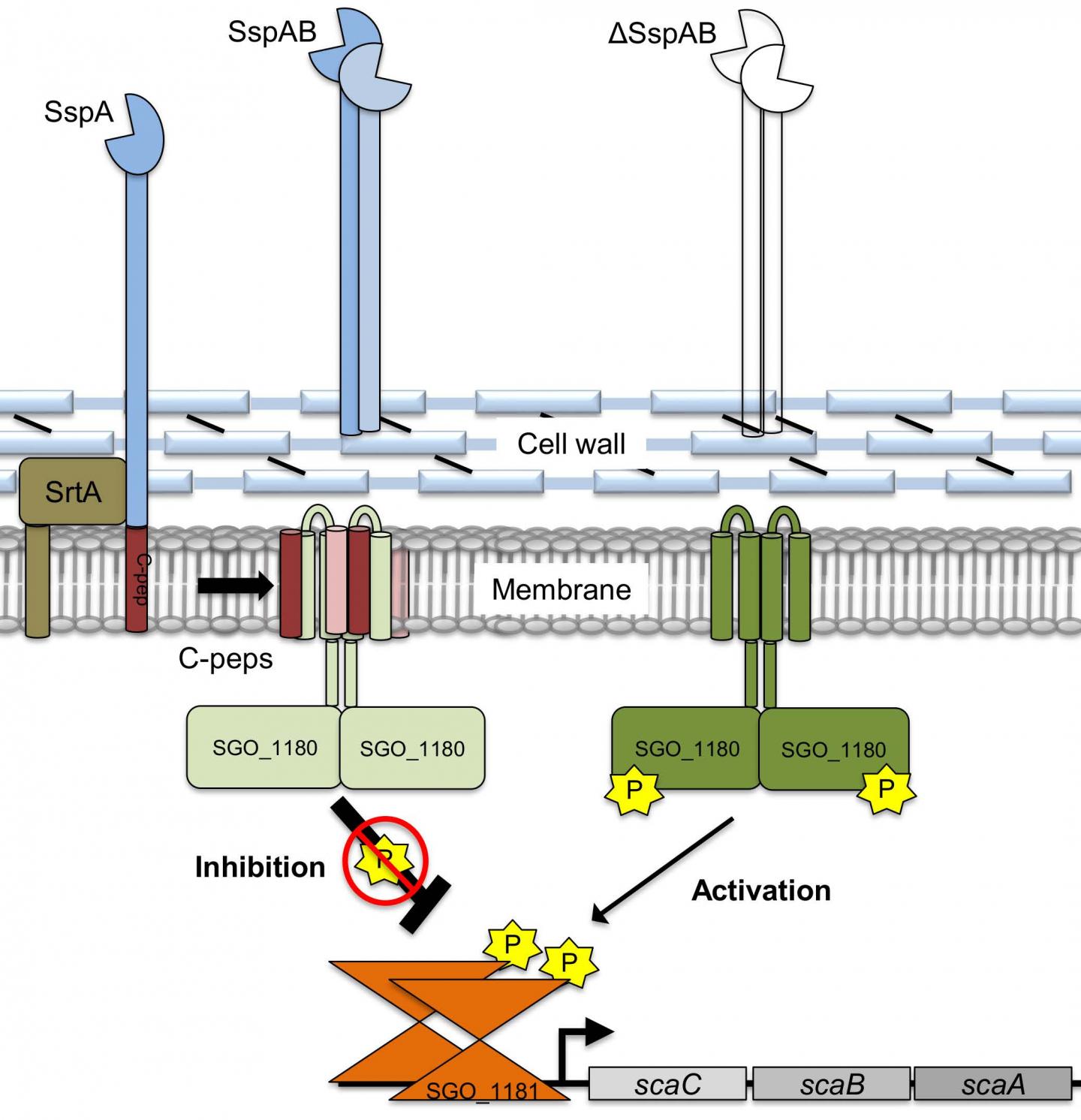
University of Minnesota researchers have discovered this previously unknown signaling pathway that regulates surface proteins on bacteria that can lead to new targets for antibiotics.

Researchers studied how oral bacteria adhere to and develop biofilms (plaque) in the oral cavity. The team wanted to learn whether and how the bacterial cells might adjust their adhesive surface proteins. They discovered a previously unknown circuit that is embedded in the cell membrane that can signal for changes in the surface adhesive proteins. This circuit appears to be conserved among a subset of Gram-positive bacteria. The intramembrane bacterial signaling system calls for different surface proteins to compensate in the absence of primary surface proteins. This mechanism provides compensatory biofilm (plaque) formation.

This mechanism appears to function in microbial communities in vitro and in the human mouth. Genes encoding surface adhesive proteins differ when the bacteria are recovered from saliva versus dental plaque in the same person at the same time.

When activated, this circuit rescued biofilm formation — which is when microorganisms strongly attach and grow on a surface — helping bacteria to survive in dental plaque.

The results, published in Science Signaling, found:

    a previously unrecognized signaling system within the cell membrane that regulates surface adhesive protein gene expression;

    the signaling system calls for the regulation of different surface proteins as the available pool of surface proteins is altered;

    the regulatory signal is a conserved amino acid sequence found in fragments cleaved from the surface adhesive proteins. When the fragment is present in the membrane, the system is “off” and, when it is absent, the system is “on” and alternative surface proteins are expressed;

    this intramembrane signaling system appears to compensate as a “fail-safe” mechanism to edit surface proteins and enable the bacteria to adhere and colonize different body surfaces.

“Discovering this previously unknown signaling pathway that regulates surface proteins on bacteria may help us to understand better how complex microbial communities develop and offer new targets for antibiotics,” said Dr. Mark Herzberg, a professor in the School of Dentistry and a member of the Masonic Cancer Center.

###

The study was funded by the National Institute of Dental & Craniofacial Research, the University of Minnesota Summer Dental Student Research Fellowship Program, and the NIDCR-NIH intramural program. The nuclear magnetic resonance spectroscopy (NMR) experiments were carried out at the Minnesota NMR Center. The transcriptomics analysis was completed at the University of Minnesota Genomics Center. Support is also acknowledged from the University of Minnesota Office of the Vice President for Research and the School of Dentistry.

Media Contact
Katrinna Dodge
[email protected]

Original Source

https://twin-cities.umn.edu/news-events/research-brief-surface-protein-editing-bacteria

Tags: BacteriologyBiologyCell BiologyVirology
Share12Tweet8Share2ShareShareShare2

Related Posts

From Complexity to Clarity: Unraveling the “Topological Laws” Governing Cell Death — Biology

From Complexity to Clarity: Unraveling the “Topological Laws” Governing Cell Death

May 11, 2026
New Classification Framework Identifies Tumor-Associated Bacterial Effectors as Crucial Drivers of Tumor Biology and Immune Response — Biology

New Classification Framework Identifies Tumor-Associated Bacterial Effectors as Crucial Drivers of Tumor Biology and Immune Response

May 11, 2026

HIV-1 Strains Reveal Varied Paths to Antibody Escape

May 11, 2026

CRISPRi Screening Identifies Fungal-Specific Drug Targets

May 11, 2026
Please login to join discussion

POPULAR NEWS

  • Research Indicates Potential Connection Between Prenatal Medication Exposure and Elevated Autism Risk

    841 shares
    Share 336 Tweet 210
  • New Study Reveals Plants Can Detect the Sound of Rain

    728 shares
    Share 290 Tweet 182
  • Salmonella Haem Blocks Macrophages, Boosts Infection

    62 shares
    Share 25 Tweet 16
  • Breastmilk Balances E. coli and Beneficial Bacteria in Infant Gut Microbiomes

    57 shares
    Share 23 Tweet 14

About

We bring you the latest biotechnology news from best research centers and universities around the world. Check our website.

Follow us

Recent News

Humans and Zebra Finches Share Similar Speech Learning Techniques #ASA190

New Study Uncovers How Fungal Parasites Attack Strawberries and Raspberries

City of Hope Researchers to Present Groundbreaking Immunotherapy and Precision Medicine Advances Across Multiple Cancer Types at ASCO 2026

Subscribe to Blog via Email

Enter your email address to subscribe to this blog and receive notifications of new posts by email.

Join 82 other subscribers
  • Contact Us

Bioengineer.org © Copyright 2023 All Rights Reserved.

Welcome Back!

Login to your account below

Forgotten Password?

Retrieve your password

Please enter your username or email address to reset your password.

Log In
No Result
View All Result
  • Homepages
    • Home Page 1
    • Home Page 2
  • News
  • National
  • Business
  • Health
  • Lifestyle
  • Science

Bioengineer.org © Copyright 2023 All Rights Reserved.