A research team in Germany has demonstrated that bio-based organic compounds derived from renewable plant resources can protect water-based cooling lubricants against microbial attack through biostatic metabolic suppression rather than destructive biocidal action. Reporting in the journal Green Technology, Resilience, and Sustainability, investigators led by Charis Wiesbaum and Hubertus Wichmann established an experimental framework that screened more than seventy candidate compounds across seven substance families. Cooling lubricants operating in industrial machining systems regularly succumb to microbial colonization, causing severe fluid degradation, foul odor pollution, and health hazards for machine operators. By examining candidate substances under rigorous laboratory conditions, the authors discovered that short-chain diols and plant-derived secondary metabolites maintain complete biostatic protection over extended durations without eradicating bacterial cells.
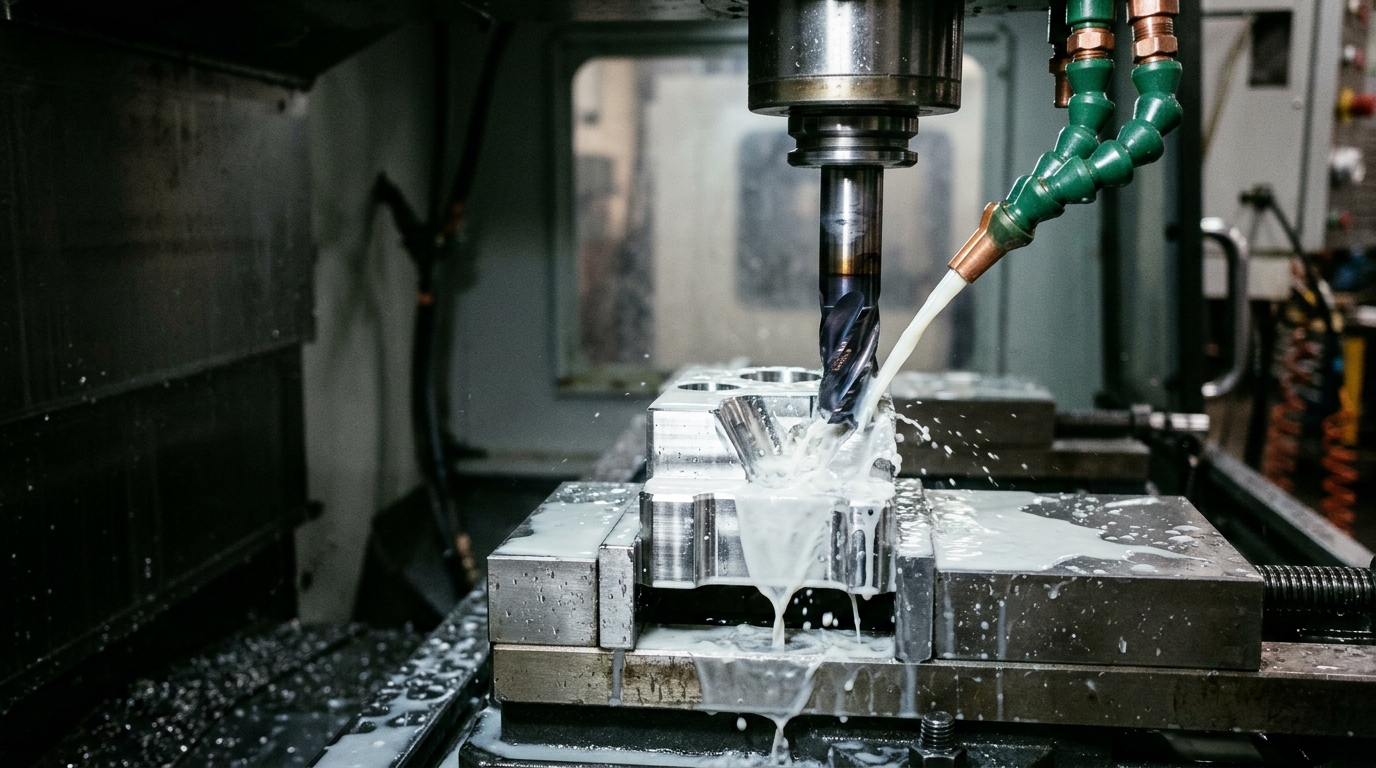
Industrial cooling lubricants represent an essential operational input across modern manufacturing, with the industrial and skilled trade sectors in Germany alone consuming approximately 1.1 million metric tons of technical lubricants annually. These products are widely deployed as oil-in-water emulsions or water-based solutions across metalworking facilities, where fluid volumes measured in cubic meters continuously recirculate through machine sumps, piping systems, and cutting zones for months or even exceeding a full year of service. Under these humid conditions, microbial infestation causes severe operational damage. Microbial growth releases volatile metabolic products that pollute shop-floor air, exposing workers to airborne pathogens, fungal spores, and endotoxins. Furthermore, microbial biofilms attach to internal surfaces, frequently peeling off to clog pumps, pipes, and filters. Conventional fluid management has relied on chemical biocides to suppress growth, but European regulations are rapidly restricting these active ingredients.
Implementation of the European Biocides Regulation has created significant challenges for lubricant manufacturers by mandating extensive testing regarding human health and environmental compatibility for product type 13 preservatives. In response, the study explored botanical defenses found in terrestrial and aquatic plants, agricultural residues, or biotechnological processes in Germany. Candidate substances had to satisfy demanding criteria: broad antimicrobial spectrum, durable efficacy, minimal human toxicity, high biodegradability, and stability at an alkaline pH of 9 to prevent metal corrosion. The researchers evaluated candidate substance classes including alcohols, coumarins, terpenes, sulphides, polyphenols, saponins, glucosinolates, and alkaloids. While sulphides exhibited strong antimicrobial activity, their offensive odor precluded practical application. Similarly, glucosinolates, alkaloids, saponins, and polyphenols were excluded due to poor commercial availability or chemical instability, focusing subsequent research on alcohols, coumarins, and terpenes.
To test these substances against realistic biological challenges, the research team obtained a diverse microbial inoculum rather than relying on isolated laboratory cultures. In operational machine environments, cooling lubricants are continuously inoculated via ambient air, human contact, workpiece residues, and makeup water containing up to one thousand colony-forming units per milliliter. Consequently, the investigators sampled secondary clarifier effluent from a municipal wastewater treatment plant located in Braunschweig, Germany. Microbiological characterization across five seasonal samplings evaluated total cell density using Compact Dry plates, Neubauer counting chambers, and Envirocheck dip slides. Selective media confirmed that the biological community preserved consistent taxonomic proportions despite total count variations, comprising 28 to 30 percent Enterobacteriaceae, 17 to 28 percent coliform bacteria, and 2.4 to 6.2 percent Enterococci across different sampling dates.
Using this standardized wastewater inoculum, the researchers conducted pre-tests to establish minimum inhibitory concentrations for selected alcohols, terpenes, and coumarins across a ten-day incubation at twenty degrees Celsius. The resulting growth measurements divided the active candidates into two distinct performance categories based on required concentrations. Coumarins and most evaluated terpenes demonstrated powerful antimicrobial suppression at low concentrations between 0.25 percent and 1.0 percent. Because they remain effective at low concentrations, these substances function as protective additives, although high volatility and distinct fragrances require careful formulation in industrial sumps. Conversely, polyhydric alcohols including glycerol and short-chain diols required concentrations between 5 percent and 30 percent to achieve comparable growth inhibition. At such substantial concentrations, these compounds directly govern physical fluid characteristics, including viscosity, lubricity, and foaming behavior. Consequently, the authors classified short-chain diols and polyols not as minor additives, but as core components of the aqueous base fluid itself.
To track biological inhibition over time, the researchers measured biochemical oxygen demand over twenty days according to DIN EN ISO 5815-1 standards. By monitoring pressure drop resulting from microbial oxygen consumption at pH 9, the team evaluated metabolic activity across four butanediol isomers at a ten percent volume fraction. Chemical structure proved decisive in governing antimicrobial longevity. While 1,3-butanediol delayed microbial respiration for only two days, 2,3-butanediol sustained inhibition for seven days, and 1,4-butanediol suppressed metabolic activity for sixteen days. Most remarkably, 1,2-butanediol completely suppressed oxygen consumption throughout the entire twenty-day test period, maintaining respiration values matching uninoculated blank baselines. For isomers with shorter lag phases, oxygen consumption eventually exceeded uninhibited controls, demonstrating that bacteria utilized the diols as carbon sources once initial suppression failed. Similar complete metabolic suppression occurred during tests with ten percent concentrations of 1,6-hexanediol and 1,5-pentanediol, firmly establishing selected short-chain diols as exceptionally durable metabolic inhibitors.
To investigate the cellular mechanism underlying this preservation, the investigators paired twenty-day oxygen demand assays with polymerase chain reaction analyses of bacterial ribosomal RNA. Because ribosomal RNA degrades quickly after cell death, it functions as an activity marker for viable bacterial cells. Testing evaluated 12 percent 1,6-hexanediol and 0.1 percent coumarin against uninhibited controls and 2-phenoxyethanol, a recognized commercial biocide. Gel electrophoresis resolved amplified genetic fragments, from which prominent bands were excised and sequenced to identify prevalent environmental bacteria, including species within Pseudomonas, Rheinheimeria, Microbacterium, and Lysinibacillus. Band totals decreased from day zero to day twenty across all active treatments, declining from 19 to 10 bands in 1,6-hexanediol and from 23 to 9 in coumarin. Crucially, intact ribosomal RNA remained detectable in every sample. Neither the renewable compounds nor the conventional biocide completely killed the microbial community, demonstrating that all tested active agents functioned exclusively via biostatic inhibition.
This biostatic mechanism provides notable environmental and operational advantages over biocidal strategies. When spent lubricants are discharged and diluted with water below their inhibitory concentration threshold, these resident bacteria reactivate spontaneously. Furthermore, earlier practical experience with glycerol-based lubricants indicated that formulations containing at least 35 percent glycerol exhibited no microbial growth after two years of ambient storage, confirming the long-term stability of polyhydric alcohol systems.
To confirm that biostatic diols satisfy technical requirements, the researchers evaluated a novel cooling lubricant formulation in laboratory trials. Kinematic viscosity testing using an Ubbelohde viscometer at twenty-five degrees Celsius recorded 2.4 square millimeters per second for the 1,6-hexanediol mixture compared to 3.7 for the glycerol reference. In Brugger wear tests measuring load-carrying capacity, the 1,6-hexanediol formulation achieved 36.0 Newtons per square millimeter, closely matching the 38.0 Newtons per square millimeter of the higher-viscosity glycerol fluid. Foaming behavior assessed under DIN 51566 demonstrated low foam formation easily manageable with trace defoamers, while DIN 51360-2 cast iron chip testing confirmed degree zero corrosion, indicating complete rust protection across all samples.
The study culminated in machine-scale machining trials using an industrial Studer S120 internal cylindrical grinding machine to process hardened 100Cr6 bearing steel rings with aluminum oxide corundum grinding wheels. Operating at a tool cutting speed of 40 meters per second, workpiece speed of 300 millimeters per minute, and material removal rates from 0.5 to 1.5 cubic millimeters per millimeter per second, the 1,6-hexanediol fluid delivered exceptional finishing performance. Workpiece surface analysis revealed that the 1,6-hexanediol formulation produced lower average surface roughness (Rz) and mean roughness (Ra) than the glycerol reference, closely approaching the fine finish generated by a commercial six-percent mineral oil emulsion. Throughout continuous multi-week circulation in the machine sump, the experimental fluid recirculated stably without foul odors or excessive foaming. The authors concluded that this research provides a comprehensive development strategy for sustainable, biostatically stabilized industrial lubricants, establishing a robust empirical foundation for safely replacing petroleum-based fluids across diverse metalworking applications.
Subject of Research: Renewable biostatic protection of water-based cooling lubricants against microbial contamination
Article Title: A sustainable protection of water-containing technical fluids like cooling lubricants against microbial attack using renewable resources
Article References: Wiesbaum, C., Kolb, M., Klages, D., Arafat, R., & Wichmann, H. (2025). A sustainable protection of water-containing technical fluids like cooling lubricants against microbial attack using renewable resources. Green Technology, Resilience, and Sustainability, 5(1), Article 1. https://doi.org/10.1007/s44173-025-00019-3
Image Credits: AI Generated
DOI: 10.1007/s44173-025-00019-3
Keywords: Cooling Lubricants, Biostatic Protection, Renewable Resources, Microbial Contamination, Industrial Machining, Hexanediol, Sustainable Chemistry, Metalworking Fluids, sustainable, protection, water-containing, technical
News Source: Morgan Morrow. (November 7, 2026). Renewable Plant Compounds Protect Industrial Cooling Lubricants Against Microbial Attack Biostatically. Scienmag.