• HOME
  • NEWS
  • EXPLORE
    • CAREER
      • Companies
      • Jobs
    • EVENTS
    • iGEM
      • News
      • Team
    • PHOTOS
    • VIDEO
    • WIKI
  • BLOG
  • COMMUNITY
    • FACEBOOK
    • INSTAGRAM
    • TWITTER
Wednesday, June 24, 2026
BIOENGINEER.ORG
No Result
View All Result
  • Login
  • HOME
  • NEWS
  • EXPLORE
    • CAREER
      • Companies
      • Jobs
        • Lecturer
        • PhD Studentship
        • Postdoc
        • Research Assistant
    • EVENTS
    • iGEM
      • News
      • Team
    • PHOTOS
    • VIDEO
    • WIKI
  • BLOG
  • COMMUNITY
    • FACEBOOK
    • INSTAGRAM
    • TWITTER
  • HOME
  • NEWS
  • EXPLORE
    • CAREER
      • Companies
      • Jobs
        • Lecturer
        • PhD Studentship
        • Postdoc
        • Research Assistant
    • EVENTS
    • iGEM
      • News
      • Team
    • PHOTOS
    • VIDEO
    • WIKI
  • BLOG
  • COMMUNITY
    • FACEBOOK
    • INSTAGRAM
    • TWITTER
No Result
View All Result
Bioengineer.org
No Result
View All Result
Home NEWS Science News

Remote sensing techniques help treat and manage hollow forests

Bioengineer by Bioengineer
July 19, 2021
in Science News
Reading Time: 2 mins read
0
IMAGE
Share on FacebookShare on TwitterShare on LinkedinShare on RedditShare on Telegram

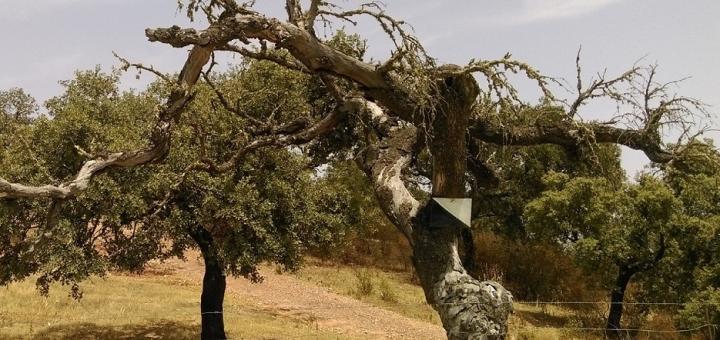
Oak tree decline detected by advanced remote sensing techniques
IMAGE

Credit: Swansea University.

Using advanced remote sensing techniques can help the early detection of oak tree decline and control many other forest diseases worldwide, says new research from Swansea University.

The research published in Remote Sensing of Environment examined holm oak decline, which in its early stages causes changes to the tree’s physiological condition that is not readily visible. It is only later, when the tree is more advanced in its decline, that outward changes to its leaf pigment and canopy structure become apparent.

The researchers used an integrated approach of hyperspectral and thermal imaging, a 3-D radiative transfer model and field surveys of more than 1100 trees with varying severity of disease, which enabled them to successfully predict of holm oak decline at an early stage.

The research, which was in collaboration with the University of Cordoba, the Spanish National Research Council and the University of Melbourne, concluded that this integrated approach is vital to the large-scale monitoring of forest decline.

Lead author of the research, Alberto Hornero of the Department of Geography said: “It is essential to monitor trees for harmful forest diseases before the symptoms become visible. When the trees start to dry out or lose their leaves, it is simply too late to start treating and managing these hollow forests. Our research has shown that having a range of tools like advanced airborne imagery and satellite data observations will help us understand and monitor the physiological state of our oak trees and could potentially apply to many other forest diseases worldwide.”

###

Media Contact
Delyth Purchase
[email protected]

Original Source

https://www.swansea.ac.uk/press-office/news-events/news/2021/07/remote-sensing-techniques-help-treat-and-manage-hollow-forests.php

Related Journal Article

http://dx.doi.org/10.1016/j.rse.2021.112570

Tags: Earth ScienceEcology/EnvironmentForestryPlant Sciences
Share13Tweet8Share2ShareShareShare2

Related Posts

Flowing Zinc Slurry Powers Long-Duration Energy Storage — Technology and Engineering

Flowing Zinc Slurry Powers Long-Duration Energy Storage

June 24, 2026

Predicting Severe Sepsis Kidney Injury in Elderly ICU

June 24, 2026

Industrial Testing of Transistor Gate Dielectric Reliability

June 24, 2026

Solution-Processed 2D Hexagonal Copper Indium Selenide

June 24, 2026
Please login to join discussion

POPULAR NEWS

  • Saying Goodbye to PGY-6: Pediatric Fellowship Realities

    103 shares
    Share 41 Tweet 26
  • Multi-Hospital Study Reveals Long Covid Burden Is Twice as High as Current Estimates

    92 shares
    Share 36 Tweet 23
  • Detection of EDCs in Breast Milk and Infant Urine Up to Six Months Highlights Early Exposure Risks

    77 shares
    Share 31 Tweet 19
  • New Drug Candidate Developed at McMaster Shows Potential for Treating Brain Cancer

    58 shares
    Share 23 Tweet 15

About

We bring you the latest biotechnology news from best research centers and universities around the world. Check our website.

Follow us

Recent News

Flowing Zinc Slurry Powers Long-Duration Energy Storage

Predicting Severe Sepsis Kidney Injury in Elderly ICU

Industrial Testing of Transistor Gate Dielectric Reliability

Subscribe to Blog via Email

Enter your email address to subscribe to this blog and receive notifications of new posts by email.

Join 82 other subscribers
  • Contact Us

Bioengineer.org © Copyright 2023 All Rights Reserved.

Welcome Back!

Login to your account below

Forgotten Password?

Retrieve your password

Please enter your username or email address to reset your password.

Log In
No Result
View All Result
  • Homepages
    • Home Page 1
    • Home Page 2
  • News
  • National
  • Business
  • Health
  • Lifestyle
  • Science

Bioengineer.org © Copyright 2023 All Rights Reserved.