Nestling songbirds relocated as part of conservation programmes successfully learn the song repertoires they need to communicate – and ultimately survive – in the wild, a new study has found.
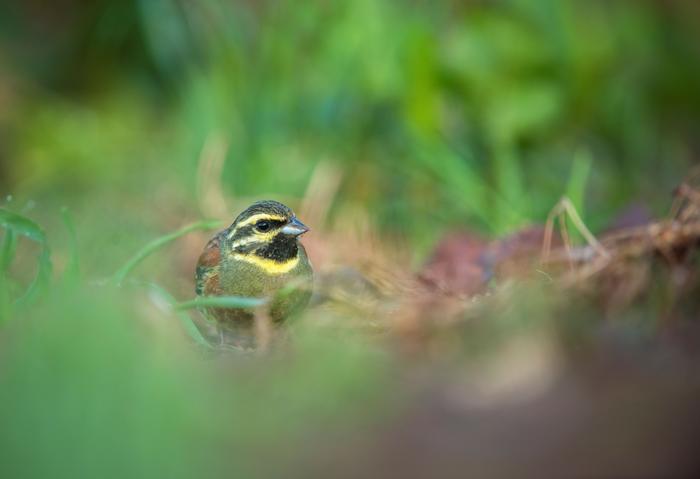
Credit: Ben Andrew (rspb-images.com)
Nestling songbirds relocated as part of conservation programmes successfully learn the song repertoires they need to communicate – and ultimately survive – in the wild, a new study has found.
The research, published in the journal Conservation Science and Practice, is the first to follow translocated songbird chicks over time to assess their song development.
It focused on populations of cirl buntings (Emberiza cirlus), taken from a number of sites in Devon before being hand-reared and then reintroduced in Cornwall as part of a major programme co-ordinated by the Royal Society for the Protection of Birds (RSPB) between 2006 and 2011.
Cirl buntings are songbirds, which means they need to learn their songs from adult tutors and the relocated birds were all chicks that were hand-reared.
As a result, in addition to RSPB officers examining the overall success of the conservation programme, scientists recorded the birds’ song to assess the song repertoires of the relocated birds.
Recordings at the release site in Cornwall in 2011 showed the population contained a reduced number of song types and individuals sang a wide range of abnormal song types, all very different to the source populations in Devon.
This was not that surprising given they had only had a CD with a single cirl bunting song played to them while being hand-reared.
However, on following up in 2019 the Cornwall population’s song repertoire had reached similar levels to the source populations in Devon, with song types also typical to those found within other cirl bunting populations.
This showed that despite an issue with the songs produced in 2011, termed by scientists as a cultural bottleneck, the population recovered as it increased in size.
It also suggests that if the translocation of nestlings is deemed necessary for conservation purposes, it may not lead to long-term problems for communication and population persistence.
The research was carried out by conservation experts at the University of Plymouth, the RSPB, and Manchester Metropolitan University.
Dr Sarah Collins, Associate Professor in Animal Behaviour and Welfare at the University of Plymouth, is the study’s lead author. She said: “Song diversity is a crucial feature among songbird populations, and although it has been examined as part of relocation or reintroduction programmes in the past, there were no studies on what happens when you translocate nestling songbirds before they have had a chance to learn their song. Although we found translocating nestlings led to a short-term lack of song diversity, the population recovered from this to produce normal songs.
“This is ultimately a positive conservation story that we can learn from for the future. What we found with these cirl buntings, however, cannot be guaranteed to occur in all song learning birds. So we believe the song development of a species needs to be considered in translocation projects, and that could include playing species typical song to young chicks before they are released in the wild.”
The reintroduction programme in Cornwall was a collaboration between the Royal Society for the Protection of Birds (RSPB), Natural England, National Trust, Zoological Society of London and Paignton Zoo.
It was spurred by the loss of cirl buntings from the county, and over the space of six years several groups of chicks were released at a site in Cornwall.
In the decade from 2007 to 2016, the number of breeding pairs in the reintroduction location observed by the RSPB project team had risen from nine to 65.
Cath Jeffs, the RSPB’s then Cirl Bunting Project Manager and a co-author of the new study, said: “Cirl buntings have been a pioneering conservation success story. That they are singing once again in Cornwall is testament to the hard work by the many people involved. That they are singing like cirl buntings demonstrates how wonderful nature is.”
Journal
Conservation Science and Practice
Method of Research
Observational study
Subject of Research
Animals
Article Title
Recovery of cirl bunting, Emberiza cirlus, song diversity after translocation
Article Publication Date
29-Dec-2023