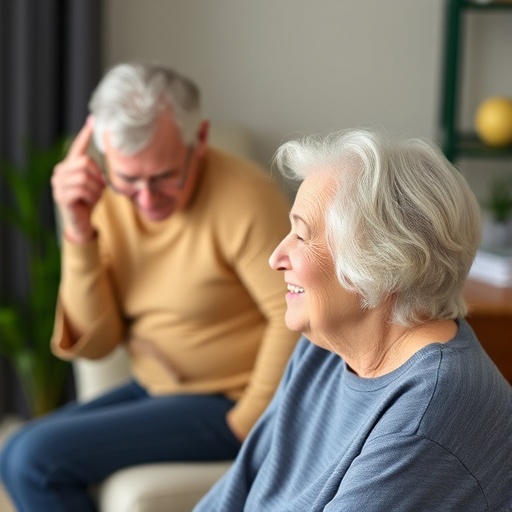
In a groundbreaking study that investigates rehabilitation techniques for elderly individuals facing mild cognitive impairment (MCI), researchers Gursan and Bayar present compelling findings that have the potential to reshape practices in geriatric care. This study, published in BMC Geriatrics, examines the effects of various rehabilitation approaches, shedding light on methods that can improve cognitive function and quality of life for aging populations.
Mild cognitive impairment is often viewed as a precursor to more serious cognitive conditions, including Alzheimer’s disease. With the aging global population, understanding and addressing MCI has become increasingly critical. Gursan and Bayar’s investigation sought to identify which rehabilitation strategies could yield the most substantial benefits for this vulnerable demographic. Their research is particularly timely as it aligns with the heightened awareness of the challenges faced by older adults experiencing cognitive decline.
The study involved a diverse group of elderly participants diagnosed with MCI, each of whom underwent distinct rehabilitation methods. These included cognitive training exercises, physical activity programs, and occupational therapy sessions specifically tailored to enhance cognitive engagement. The researchers meticulously monitored the participants’ progress, assessing both cognitive and emotional outcomes over an extended period. This rigorous approach ensured a comprehensive understanding of how different interventions might work in tandem or independently to support cognitive health.
Among the key findings of the study, the importance of cognitive training emerged as a standout. Participants who engaged in structured cognitive exercises demonstrated notable improvements in memory retention and problem-solving skills. These cognitive benefits were directly correlated with increased engagement in daily activities, suggesting that such training not only enhances cognitive faculties but also significantly enriches the participants’ overall quality of life. The implications of these findings could usher in a new era of personalized rehabilitation strategies aimed at cognitive enhancement.
Physical activity also played a crucial role in the study’s outcomes. Elderly individuals participating in regular physical exercise exhibited marked improvements in both their cognitive and physical health. These enhancements are thought to stem from increased blood flow to the brain and the release of neuroprotective factors during exercise. Gursan and Bayar emphasize the necessity of integrating physical activity into any comprehensive rehabilitation program for elderly individuals with MCI, noting that the physical and cognitive benefits are interlinked in ways that enhance overall well-being.
As the researchers delved deeper into the results, they discovered that occupational therapy sessions created a unique environment for participants. By focusing on real-life tasks and daily responsibilities, occupational therapy helped individuals regain confidence in their capabilities, which, in turn, positively affected their mental health. This aspect of rehabilitation is essential, as enhanced self-efficacy often leads to greater motivation to engage in cognitive and physical activities, creating a virtuous cycle of improvement that is beneficial for aging adults.
The study also highlighted the significance of social interactions during rehabilitation. Participants who engaged in group activities reported feeling more connected and less isolated, which are critical factors in combating the often-prevalent feelings of loneliness among the elderly. The researchers advocate for further exploration into how social engagement can enhance the effectiveness of rehabilitation techniques, positing that a multifaceted approach that includes social elements could lead to superior outcomes for individuals with MCI.
In terms of methodology, Gursan and Bayar utilized a combination of qualitative and quantitative measures to gather a comprehensive dataset. This included neuropsychological assessments, surveys assessing quality of life, and direct observation during rehabilitation sessions. Coupling these diverse methods allowed for a nuanced view of how each rehabilitation approach affected cognitive outcomes, ensuring that the results pack both breadth and depth. Such rigorous research design is crucial for establishing solid evidence in the field of geriatric studies.
As they analyzed their data, the researchers also took into account various demographic factors, such as age, gender, and existing health conditions. This careful consideration ensures that the findings are not merely generalizable but can be effectively tailored to meet the needs of individual patients. Gursan and Bayar advocate for healthcare practitioners to consider such demographic variables when recommending rehabilitation approaches, as personalized care is key to addressing the complex nature of cognitive impairment.
While the findings are promising, the researchers caution against viewing any single approach as a panacea. Instead, they argue for an integrative model where cognitive training, physical activity, and occupational therapy can be combined in a tailored manner that addresses the individual needs of each patient. This multifaceted approach is poised to provide the most comprehensive support for elderly individuals facing cognitive challenges.
In conclusion, Gursan and Bayar’s research contributes to a growing body of evidence highlighting the importance of tailored rehabilitation strategies for elderly individuals with mild cognitive impairment. Their study underscores the necessity of employing a holistic and integrative approach to rehabilitation, one that promotes cognitive, emotional, and physical well-being. With the potential to influence future practices and enhance the quality of life for millions, this pioneering research marks a significant step forward in our understanding of cognitive health in aging populations.
As we expand our understanding of cognitive decline and rehabilitation in the elderly, it is essential for healthcare providers to stay informed of emerging research and adapt their practices accordingly. The findings from Gursan and Bayar could very well lead to a paradigm shift in how cognitive impairments are managed in geriatric populations, ultimately fostering a healthier, more engaged aging society.
As a final note, it is essential that more studies follow suit, exploring the various ways in which rehabilitation can be enhanced and adapted to cater to the complex needs of the elderly with MCI. The future of cognitive health care lies in the integration of innovative approaches that recognize the unique needs of aging individuals, ensuring that they receive the best care possible as they navigate the challenges of cognitive impairment.
Subject of Research: Rehabilitation approaches in elderly individuals with mild cognitive impairment.
Article Title: Investigation of the effects of different rehabilitation approaches in elderly individuals with mild cognitive impairment.
Article References:
Gursan, K., Bayar, K. Investigation of the effects of different rehabilitation approaches in elderly individuals with mild cognitive impairment.
BMC Geriatr (2026). https://doi.org/10.1186/s12877-025-06946-x
Image Credits: AI Generated
DOI:
Keywords: Rehabilitation, elderly, mild cognitive impairment, cognitive training, physical activity, occupational therapy, quality of life, geriatric care.
Tags: Alzheimer’s disease prevention strategiescognitive engagement interventionscognitive training for elderlyelderly emotional wellbeingenhancing quality of life in seniorsgeriatric care practicesmild cognitive impairment strategiesoccupational therapy for cognitive declinephysical activity benefits for agingrehabilitation methods for seniorsrehabilitation techniques for cognitive healthresearch on MCI in elderly