• HOME
  • NEWS
  • EXPLORE
    • CAREER
      • Companies
      • Jobs
    • EVENTS
    • iGEM
      • News
      • Team
    • PHOTOS
    • VIDEO
    • WIKI
  • BLOG
  • COMMUNITY
    • FACEBOOK
    • INSTAGRAM
    • TWITTER
Wednesday, November 18, 2026
BIOENGINEER.ORG
No Result
View All Result
  • Login
  • HOME
  • NEWS
  • EXPLORE
    • CAREER
      • Companies
      • Jobs
        • Lecturer
        • PhD Studentship
        • Postdoc
        • Research Assistant
    • EVENTS
    • iGEM
      • News
      • Team
    • PHOTOS
    • VIDEO
    • WIKI
  • BLOG
  • COMMUNITY
    • FACEBOOK
    • INSTAGRAM
    • TWITTER
No Result
View All Result
Bioengineer.org
No Result
View All Result
Home NEWS Science News Health

Refugee Children in Uganda Face Multiple Complex Social and Basic Needs

by
November 18, 2026
in Health
Reading Time: 2 mins read
0
Refugee Children in Uganda Face Multiple Complex Social and Basic Needs

Refugee Children in Uganda Face Multiple Complex Social and Basic Needs

Share on FacebookShare on TwitterShare on LinkedinShare on RedditShare on Telegram

Children residing in the Kiryandongo refugee settlement in Uganda face a wide array of intertwined challenges that significantly impact their daily lives and developmental well-being. A recent qualitative secondary analysis, published in Frontiers in Child and Adolescent Psychiatry, explored these perspectives by focusing on how children navigate their social environments, including relationships with family, peers, and various institutions.

To better understand these experiences, researchers conducted a secondary analysis of data originally gathered for the Journey of Life caregiver intervention study. The study methodology incorporated a combination of key informant interviews (KIIs) and focus group discussions (FGDs) to capture a comprehensive view of the settlement’s social fabric. Stakeholders involved in the KIIs included caregivers, individuals responsible for implementing caregiver programs, and various community partners, totaling 43 participants. Complementing this, the researchers held FGDs with 50 children between the ages of 10 and 19, utilizing a participatory ranking method to prioritize their most pressing concerns.

The results revealed a high degree of convergence across different age groups, with children and adolescents reporting a wealth of shared concerns. These primary concerns included reports of forced marriage, the trauma of separation from parents, and ongoing experiences of neglect and abuse.

The study also examined the alignment between the children’s self-reported perspectives and those of the adult key informants. While there was substantial overlap between the two groups, the analysis identified specific points of discrepancy. Researchers noted that the viewpoints of children regarding their fundamental rights and the prevalence of physical abuse did not always match the perceptions provided by the adult stakeholders.

The authors of the analysis advocate for a critical, ongoing dialogue that bridges the gap between children, their caregivers, and humanitarian actors. By fostering this interaction, program developers can ensure that interventions are more effectively attuned to the specific needs and concerns expressed by the children themselves. The study suggests that such inclusive efforts could lead to stronger, more responsive programs capable of mitigating risks like child labor and enhancing access to essential educational and livelihood resources.

Ultimately, the researchers propose that supporting caregivers in adopting diverse and effective parenting methods is a vital component of a comprehensive strategy. The findings emphasize that children are significantly affected by the consequences of conflict and displacement, and traditional programming models may not always be consistently aligned with their stated priorities.

Subject of Research: Qualitative analysis of children's perspectives on challenges and caregiving in the Kiryandongo refugee settlement.

Article Title: Children's perceptions of their caregiving system and complex challenges in a Ugandan refugee settlement: a qualitative secondary analysis

Article References: Cohen, F., Hermosilla, S., Nywevu, L., Kajungu, R., Obalim, G., Onyango Mangen, P., & Stark, L. (2026). Children's perceptions of their caregiving system and complex challenges in a Ugandan refugee settlement: a qualitative secondary analysis. Frontiers in Child and Adolescent Psychiatry, 5, Article 1917565. https://doi.org/10.3389/frcha.2026.1917565

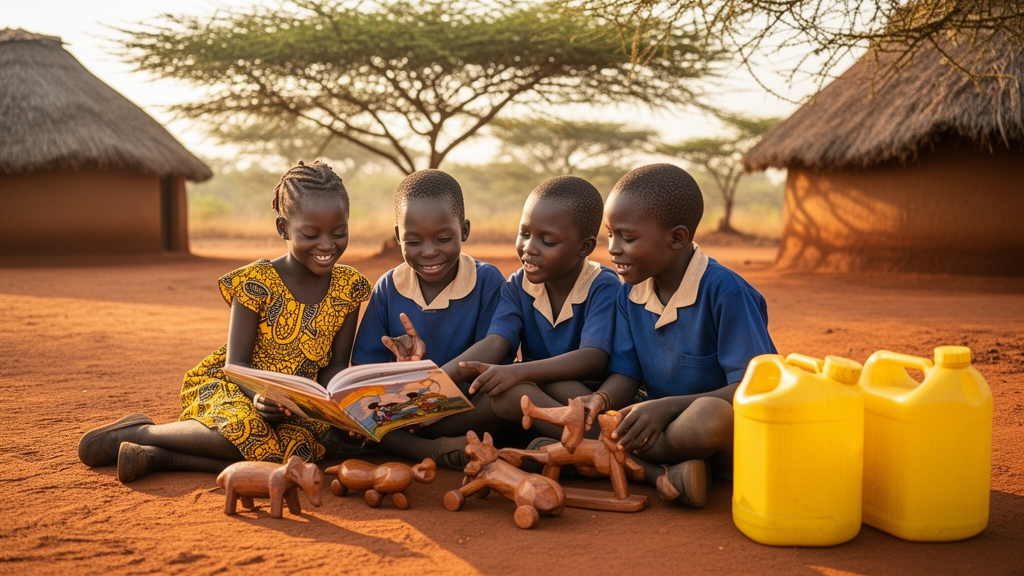
Image Credits: AI Generated

DOI: 10.3389/frcha.2026.1917565

Keywords: Refugee children, Uganda, Kiryandongo, Humanitarian settings, Qualitative research, Participatory ranking, Child protection, Displacement, Caregiving, Social environment, Secondary analysis, Adolescent mental health, Basic needs, Forced marriage, Educational access, Community stakeholders

News Source: Glenn Wilkins. (November 18, 2026). Refugee Children in Uganda Face Multiple Complex Social and Basic Needs. Scienmag.


Tags: adolescent mental healthBasic needscaregivingchild protectionCommunity stakeholdersdisplacementEducational accessForced marriagehumanitarian settingsKiryandongoParticipatory rankingqualitative researchRefugee childrensecondary analysissocial environmentUganda
Share12Tweet7Share2ShareShareShare1

Related Posts

Targeted Livestock Vaccination Could Improve Economic Returns Against Clostridial Diseases in Iran

Targeted Livestock Vaccination Could Improve Economic Returns Against Clostridial Diseases in Iran

November 18, 2026
Bacterial FabI Enzyme Emerges as Critical Target to Overcome Drug Resistance

Bacterial FabI Enzyme Emerges as Critical Target to Overcome Drug Resistance

November 18, 2026

Higher Estimated Pulse Wave Velocity Associated With Delirium in Cardiovascular ICU Patients

November 18, 2026

Health Equity Indicators Measure Distinct Moral Targets Rather Than Single Standard

November 18, 2026

POPULAR NEWS

  • Early Sensory Differences Prospectively Predict Subsequent Autistic Traits in Longitudinal Cohort

    Early Sensory Differences Prospectively Predict Subsequent Autistic Traits in Longitudinal Cohort

    29 shares
    Share 12 Tweet 7
  • High-Power Spray Coagulation Boosts Efficiency in Colorectal Underwater Endoscopic Dissection

    29 shares
    Share 12 Tweet 7
  • Robotic Latissimus Dorsi Harvest Minimizes Incisions in Complex Breast Reconstruction

    29 shares
    Share 12 Tweet 7
  • Integrated Decision Framework Cuts Costs and Speeds Supply Network Recovery

    29 shares
    Share 12 Tweet 7

About

We bring you the latest biotechnology news from best research centers and universities around the world. Check our website.

Follow us

Recent News

Targeted Livestock Vaccination Could Improve Economic Returns Against Clostridial Diseases in Iran

Bacterial FabI Enzyme Emerges as Critical Target to Overcome Drug Resistance

Three-Tiered DNA Diagnostic Method Accurately Identifies Mating Status in Invasive Medflies

Subscribe to Blog via Email

Enter your email address to subscribe to this blog and receive notifications of new posts by email.

Join 88 other subscribers
  • Contact Us

Bioengineer.org © Copyright 2023 All Rights Reserved.

Welcome Back!

Login to your account below

Forgotten Password?

Retrieve your password

Please enter your username or email address to reset your password.

Log In
No Result
View All Result
  • Homepages
    • Home Page 1
    • Home Page 2
  • News
  • National
  • Business
  • Health
  • Lifestyle
  • Science

Bioengineer.org © Copyright 2023 All Rights Reserved.