• HOME
  • NEWS
  • EXPLORE
    • CAREER
      • Companies
      • Jobs
    • EVENTS
    • iGEM
      • News
      • Team
    • PHOTOS
    • VIDEO
    • WIKI
  • BLOG
  • COMMUNITY
    • FACEBOOK
    • INSTAGRAM
    • TWITTER
Wednesday, April 1, 2026
BIOENGINEER.ORG
No Result
View All Result
  • Login
  • HOME
  • NEWS
  • EXPLORE
    • CAREER
      • Companies
      • Jobs
        • Lecturer
        • PhD Studentship
        • Postdoc
        • Research Assistant
    • EVENTS
    • iGEM
      • News
      • Team
    • PHOTOS
    • VIDEO
    • WIKI
  • BLOG
  • COMMUNITY
    • FACEBOOK
    • INSTAGRAM
    • TWITTER
  • HOME
  • NEWS
  • EXPLORE
    • CAREER
      • Companies
      • Jobs
        • Lecturer
        • PhD Studentship
        • Postdoc
        • Research Assistant
    • EVENTS
    • iGEM
      • News
      • Team
    • PHOTOS
    • VIDEO
    • WIKI
  • BLOG
  • COMMUNITY
    • FACEBOOK
    • INSTAGRAM
    • TWITTER
No Result
View All Result
Bioengineer.org
No Result
View All Result
Home NEWS Science News

Reforestation programs could threaten vast area of tropical grasslands

Bioengineer by Bioengineer
February 15, 2024
in Science News
Reading Time: 2 mins read
0
Savanna
Share on FacebookShare on TwitterShare on LinkedinShare on RedditShare on Telegram

New research led by the University of Liverpool reveals the scale of inappropriate reforestation projects across Africa.
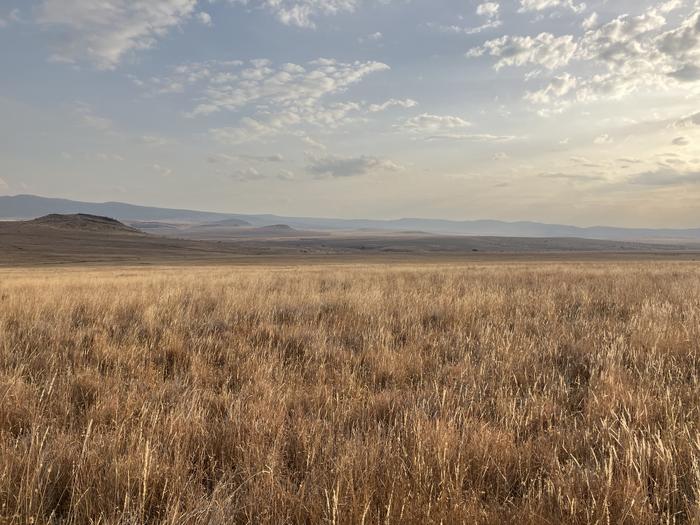
Savanna

Credit: Kate Parr, University of Liverpool

New research led by the University of Liverpool reveals the scale of inappropriate reforestation projects across Africa.

A study published in the journal Science reveals that an area the size of France is under threat by forest restoration initiatives due to inappropriate restoration in the form of tree-planting.

Researchers analysed the areas of land committed to restoration via reforestation and found that many programmes include areas classified as non-forest systems. They believe that the inclusion of non-forest systems such as savannas and grasslands, which are threatened by increased tree cover, is the key issue.

They warn that planting trees in these grassy areas, which are structurally, functionally and compositionally distinct from forests, could be a risk to wildlife such as rhinos and wildebeest, as well as people who depend on these ecosystems.

Kate Parr, Professor of Tropical Ecology at the University’s School of Environmental Sciences and author of the study, said: “Restoration of ecosystems is needed and important, but it must be done in a way that is appropriate to each system.

“Non-forest systems such as savannas are misclassified as forest and therefore considered in need of restoration with trees.

“There is an urgent need to revise definitions so that savannas are not confused with forest because increasing trees is a threat to the integrity and persistence of savannas and grasslands.”

“Highlighting this issue now means there is still time to negate this threat and ensure that non-forest systems receive appropriate restoration.”

Dr Nicola Stevens, Trapnell Research Fellow in African Environments at the University of Oxford and co-author of the paper said: “The urgency of implementing large-scale tree planting is prompting funding of inadequately assessed projects that will most likely have negligible sequestration benefits and cause potential social and ecological harm.” 

The study highlights that the issues raised are not unique to Africa and many other non-forest areas, for example the open savannas and grasslands of India and Brazil, could face a similar future due to inappropriate ‘restoration’ with trees.

The paper ‘Conflation of reforestation with restoration is widespread’ is published in the journal Science.

The study involved the University of Liverpool, the University of Oxford and Utrect University.


Journal

Science

DOI

10.1126/science.adj0899

Article Title

Conflation of reforestation with restoration is widespread

Article Publication Date

16-Feb-2024

Share12Tweet8Share2ShareShareShare2

Related Posts

Protein Language Model Accuracy Test Sheds Light on AI’s ‘Black Box’

Protein Language Model Accuracy Test Sheds Light on AI’s ‘Black Box’

April 1, 2026

Lehigh University College of Health Launches HEAL Service Center: A Cutting-Edge Shared High-Resolution Mass Spectrometry Facility

April 1, 2026

Scientists Unveil Innovative Method to Identify Breakthroughs in Science

April 1, 2026

New Study Reveals Respiratory Evolution as Key Driver of Body Size Variation in Early Terrestrial Vertebrates

April 1, 2026

POPULAR NEWS

  • blank

    Revolutionary AI Model Enhances Precision in Detecting Food Contamination

    96 shares
    Share 38 Tweet 24
  • Imagine a Social Media Feed That Challenges Your Views Instead of Reinforcing Them

    1006 shares
    Share 398 Tweet 249
  • Promising Outcomes from First Clinical Trials of Gene Regulation in Epilepsy

    51 shares
    Share 20 Tweet 13
  • Popular Anti-Aging Compound Linked to Damage in Corpus Callosum, Study Finds

    43 shares
    Share 17 Tweet 11

About

We bring you the latest biotechnology news from best research centers and universities around the world. Check our website.

Follow us

Recent News

Protein Language Model Accuracy Test Sheds Light on AI’s ‘Black Box’

Lehigh University College of Health Launches HEAL Service Center: A Cutting-Edge Shared High-Resolution Mass Spectrometry Facility

Scientists Unveil Innovative Method to Identify Breakthroughs in Science

Subscribe to Blog via Email

Enter your email address to subscribe to this blog and receive notifications of new posts by email.

Join 78 other subscribers
  • Contact Us

Bioengineer.org © Copyright 2023 All Rights Reserved.

Welcome Back!

Login to your account below

Forgotten Password?

Retrieve your password

Please enter your username or email address to reset your password.

Log In
No Result
View All Result
  • Homepages
    • Home Page 1
    • Home Page 2
  • News
  • National
  • Business
  • Health
  • Lifestyle
  • Science

Bioengineer.org © Copyright 2023 All Rights Reserved.