


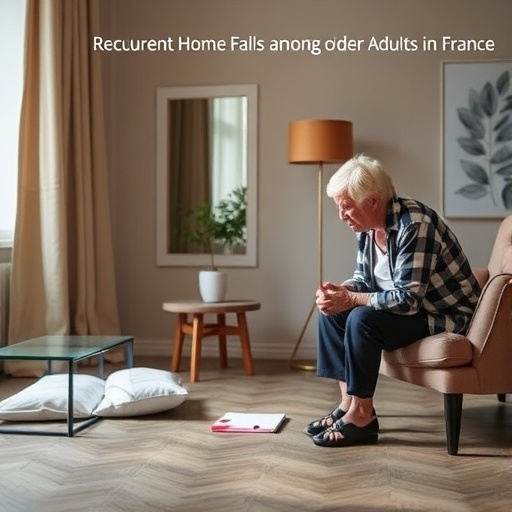
Falls among older adults remain a prominent public health issue, especially within the context of home environments. The frequency and severity of these incidents raise questions about the effectiveness of existing preventive measures. A recent study, spearheaded by Buitrago Gámez and colleagues, seeks to illuminate this problem by analyzing the recurrence of home falls-related injuries among older individuals in France. This research uncovers not only the immediate impacts of falls but also the long-term implications that these incidents carry for the health and well-being of older adults.
The study’s findings indicate that falling is not merely a one-time event for many older adults; rather, it tends to recur, creating a cycle of injuries that can drastically affect their quality of life. The researchers focused on this phenomenon to uncover the risk factors and implications surrounding recurrent falls. By addressing these issues, the researchers hope to contribute to the dialogue on fall prevention and enhance the strategies adopted within home care settings.
Falling incidents among older adults commonly arise from a combination of factors including physical limitations, environmental hazards, and inadequate support systems. The intricate interplay of these variables contributes to the likelihood of a recurrent fall. The study explores these dimensions in depth, providing insights into how age-related changes in mobility, balance, and perception of risk can compound the effects of falls among this vulnerable population.
As people age, they undergo natural physiological changes that can impair coordination and balance. Coupled with potential health issues such as osteoporosis, these changes can make even minor falls life-altering. Understanding the trajectory from an initial fall to subsequent injuries is crucial in crafting effective interventions. The research by Buitrago Gámez et al. meticulously details the pathophysiological changes that can escalate the severity of injuries sustained in falls, reinforcing the need for targeted prevention strategies.
Environmental factors are equally significant in the equation of falls among older adults. Many homes are not designed with aging inhabitants in mind, often presenting hazards such as slippery floors, poor lighting, and uneven surfaces. The study highlights the role of home modifications and adaptive technologies in mitigating fall risks. Simple interventions, like installing grab bars or improving lighting, can drastically reduce the likelihood of falls in vulnerable populations, emphasizing a need for further investment in public awareness campaigns regarding home safety.
Psychological factors also come into play regarding falls and their recurrence. Fear of falling can lead to a decline in physical activity, creating a paradox where the very fear of falling increases the likelihood of future falls due to diminished strength and coordination. The findings of this research illustrate the importance of addressing the emotional and psychological impacts of falls, proposing that interventions should not only focus on physical safety but also on educating older adults about risk factors and reinforcing their confidence in mobility.
Further complicating the issue of recurrent falls is the existing healthcare system framework. The study discusses how fragmented care can lead to inadequate follow-up for older individuals who have experienced falls. Coordinated care—including physical therapy, occupational therapy, and regular medical check-ups—plays a pivotal role in reducing the chances of future falls. The importance of a multidisciplinary approach in managing the health of older adults is emphasized by the findings of this research, reiterating that health systems must adapt to better support this demographic.
Community support networks are also identified as crucial in preventing recurrent falls. Social isolation, which often affects older adults, can exacerbate the effects of falls and hinder recovery. Buitrago Gámez and collaborators stress the need for fostering social connections and support systems that can help older individuals maintain their independence while ensuring their safety. Engaging communities in fall prevention initiatives could lead to an encompassing strategy that addresses the multifaceted nature of this health concern.
The implications of recurrent falls extend into broader societal contexts, including increased healthcare costs and reduced quality of life for affected individuals. Addressing this issue not only improves individual health but also alleviates the strain on healthcare systems. The researchers advocate for targeted policy interventions that prioritize fall prevention in older adult populations, highlighting the urgent need for governments to recognize the high public health burden associated with falls.
The study signals a call to action for researchers, healthcare providers, and policymakers alike. It emphasizes that understanding the recurrence of falls is not merely a question of individual risk but represents a systemic issue that requires attention at multiple levels. The complexity of this topic means that efforts must be collaborative, combining insights from gerontology, public health, and social service fields.
In summary, Buitrago Gámez’s research sheds light on the troubling pattern of recurrent falls among older adults, prompting a re-evaluation of existing prevention strategies and care models. By highlighting the interplay of physiological, environmental, psychological, and systemic factors, this study aims to foster a more profound understanding of the challenges faced by older adults and the measures required to support them.
As the findings circulate within the scientific community, it is hoped that they will inspire fresh initiatives, promote innovation in fall prevention, and ultimately lead to a reduction in the frequency and severity of falls in older populations. The importance of this research cannot be overstated; addressing the issue of falls is vital for improving health outcomes and enhancing the lives of older adults globally.
By focusing on preventing falls and understanding their recurrence, we not only protect older adults from immediate injuries but also enhance their overall well-being and social engagement. Thus, concerted efforts are necessary to address this critical issue and ensure that older adults can live their lives to the fullest—free from the fear of falling.
Subject of Research: Recurrence of home falls-related injuries among older adults in France.
Article Title: Falling once, falling again? Recurrence of home falls-related injuries among older adults in France.
Article References:
Buitrago Gámez, G., Bonnal, B., Lagarde, E. et al. Falling once, falling again? Recurrence of home falls-related injuries among older adults in France. BMC Geriatr (2026). https://doi.org/10.1186/s12877-025-06896-4
Image Credits: AI Generated
DOI:
Keywords: Falls, older adults, home safety, fall prevention, recurrence, public health.
Tags: elderly injury recurrencefall prevention strategiesFrance older adult healthhome environment hazards for seniorshome safety for seniorslong-term effects of fallsphysical limitations in agingpublic health issues in agingquality of life after fallsrecurrent falls in older adultsrisk factors for elderly fallssupport systems for fall prevention



