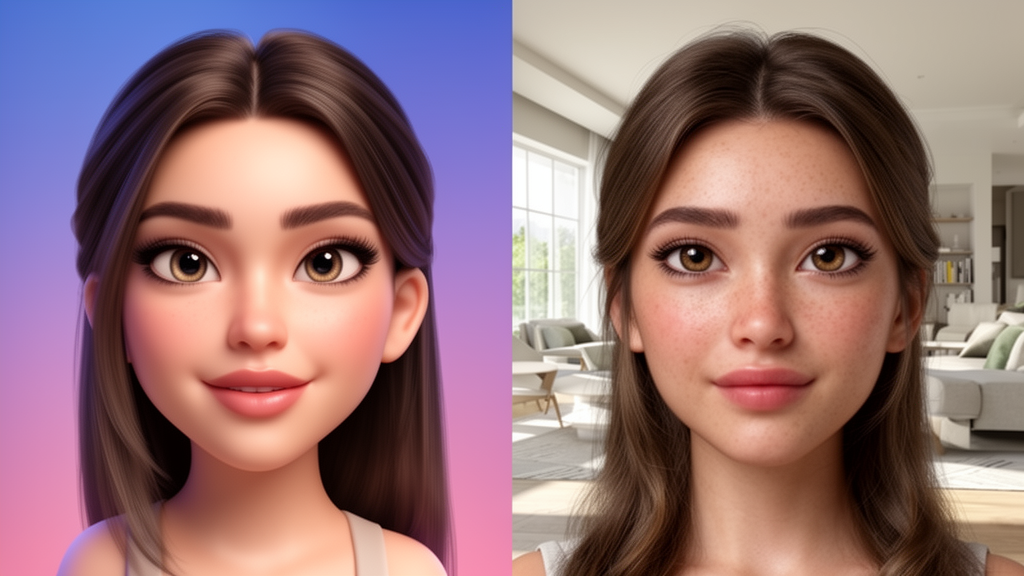
Placing computer-generated virtual influencers against authentic, real-world photographic backdrops triggers higher levels of perceived uncanniness among social media consumers than situating them within overtly synthetic, computer-rendered environments. According to an experimental investigation published in Fashion and Textiles by researchers Jeeweon Wee, Namhee Yoon, and Yoon-Jung Lee, this heightened psychological discomfort is directly driven by perceived inconsistency between the artificial character and the realistic surroundings. When digital models are composited into photographic scenes of everyday reality, viewers detect a jarring contextual clash that disrupts fluent image processing. The research team identified that this negative response does not arise merely from the appearance of the virtual influencer itself, but emerges dynamically from the relationship between the focal figure and the surrounding visual cues embedded in the social media frame.
The rapid expansion of artificial intelligence and digital graphics has established virtual influencers as prominent commercial assets across social networking advertising. Valued globally at 6.33 billion dollars in 2024, the virtual influencer market is projected to expand from 8.30 billion dollars in 2025 to 111.78 billion dollars by 2033, reflecting a compound annual growth rate of 38.4 percent. Commercial brands increasingly deploy these fictional digital figures because they offer distinct operational efficiencies over human counterparts, including complete corporate controllability, 24/7 availability, immunity to conventional human aging, and freedom from personal scandals. In the Asia-Pacific region, which represents one of the fastest-growing markets due to widespread digital transformation and high social network adoption, virtual figures like South Korea’s Rozy have amassed hundreds of thousands of followers while fronting major corporate campaigns and digital fashion exhibitions. However, this commercial proliferation has raised pressing questions regarding viewer acceptance, authentic engagement, and the specific visual presentation strategies that optimize consumer responses while preventing adverse affective reactions.
To explain why certain visual configurations provoke consumer unease, the investigators grounded their inquiry in the classic uncanny valley formulation alongside consistency theory and cue utilization theory. The uncanny valley effect posits that as artificial humanlike entities approach high levels of human resemblance without achieving complete biological realism, they often provoke an acute emotional drop characterized by unease, creepiness, and revulsion. Consistency theory emphasizes that human observers inherently prefer cognitive congruence within interpersonal and visual stimuli, as harmonious elements lower cognitive processing load and facilitate favorable evaluations. Meanwhile, cue utilization theory posits that because human faces generated by computers are inherently ambiguous and cognitively challenging to decipher, social media viewers act as cognitive misers by actively extracting secondary information from surrounding contextual cues. Consequently, the background environment serves as an interpretive anchor: a computer-generated backdrop maintains contextual symmetry with a digital model, whereas a photographic real-world setting introduces an explicit visual dissonance that magnifies perceived model-background incompatibility.
While earlier academic scholarship has heavily scrutinized the isolated personal traits of virtual endorsers, such as facial realism, anthropomorphism, dynamic physical motion, and simulated emotional displays, empirical assessments evaluating contextual background realism have remained scarce. Marketers frequently assume that embedding virtual influencers into hyper-realistic physical spaces, such as bustling urban shopping districts, elevates realism and viewer immersion. Nevertheless, recent investigations examining hybrid compositions of virtuality and reality have cautioned that mixing artificial beings with tangible human environments can trigger adverse consumer reactions. Prior studies observed that while consumer perceptions of authenticity increased when virtual models interacted with physical products, introducing real human celebrities or genuine physical spaces caused sharp drops in perceived trustworthiness and endorser evaluations. Wee, Yoon, and Lee specifically designed their study to isolate the visual properties of background images—such as compositional tone, shading, and perceived virtuality—independent of broader social contexts, thereby clarifying how environmental staging governs consumer psychology.
To test these theoretical relationships, the authors constructed a single-factor between-subjects experiment comparing reality against virtuality background images within simulated social media posts. The experimental stimulus was built using the established South Korean female virtual influencer Rozy to maximize ecological validity, selected from her official social media account. A standardized, detailed half-body portrait displaying her facial features, torso, and fashionable attire was carefully extracted, removing her original setting. For the reality condition, the researchers selected a high-resolution photograph of the Paris Champs-Élysées shopping district. For the virtuality condition, a computer-generated architectural scene was curated and graphically edited to replicate the exact compositional geometry, perspective angles, white-toned storefront structures, and diagonal framing of the Paris photograph while distinctly adjusting color, brightness, and surface shading to emphasize an unmistakably artificial aesthetic. To eliminate confounding reputational biases, the influencer was labeled with the generic descriptor Virtual Influencer in the mock Instagram posts.
The empirical data were gathered through a controlled online survey administered to South Korean consumers in October 2023 following formal approval from an Institutional Review Board. Recruitment was conducted through Macromill Embrain Co. Ltd, a recognized commercial research panel provider in South Korea. The sampling criteria deliberately selected female Instagram users, accounting for demographic patterns in fashion social media engagement and avoiding perceptual variations in cross-gender appearance evaluation. Potential participants who demonstrated prior familiarity with Rozy during an uncaptioned image screening phase were systematically excluded to prevent pre-existing brand sentiment from distorting experimental responses. Among an initial pool of 200 surveyed respondents, seven individuals failed designated attention check protocols and were eliminated, yielding a final analytical sample of 193 participants. The participant group exhibited a mean age of 33.58 years with a standard deviation of 9.52 years, where 41.45 percent were in their twenties, 64.80 percent were unmarried, and 76.20 percent possessed an undergraduate degree or higher.
The research design implemented rigorous psychometric scales and structural evaluation protocols to confirm variable reliability and experimental manipulation. Background virtuality manipulation checks, measured on a five-point scale adapted from established literature, confirmed that participants assigned to the virtual condition perceived their background as significantly more synthetic (mean 3.733, standard deviation 0.944) compared to participants in the reality condition (mean 2.613, standard deviation 0.899; t = -8.594, p < .001). Construct validity across the measurement models was verified through confirmatory factor analysis utilizing AMOS 24.0. The overall structural measurement model demonstrated satisfactory statistical fit indices: chi-square was 140.843 with 62 degrees of freedom (p = 0.000, chi-square to degrees of freedom ratio 2.212), comparative fit index reached 0.951, goodness-of-fit index registered 0.901, standardized root mean residual was 0.068, and root mean square error of approximation was 0.071. All measured constructs showed Cronbach’s alpha values surpassing 0.836, composite reliabilities spanning 0.841 to 0.915, and average variance extracted estimates ranging between 0.520 and 0.736.
Statistical hypothesis testing validated the direct negative impact of realistic background images on consumer impressions. An independent samples t-test confirmed Hypothesis 1: participants viewing the virtual influencer placed against the reality background reported statistically significantly greater uncanniness toward the model (mean 3.34, standard deviation 0.79) than those viewing the identical model framed by the virtual backdrop (mean 3.04, standard deviation 0.79; t = -2.58, p < 0.05). To scrutinize the underlying psychological pathway, the investigators executed a moderated mediation analysis using SPSS PROCESS Model 7 with 5000 bootstrap resamples and 95 percent bias-adjusted confidence intervals, integrating participant age and prior influencer awareness as statistical covariates. The reality background directly elevated perceived uncanniness (b = 0.256, standard error 0.106, 95 percent confidence interval 0.0476 to 0.4643) and strongly heightened perceived model-background inconsistency (b = 0.862, standard error 0.367, 95 percent confidence interval 0.1387 to 1.5857). Perceived inconsistency in turn significantly intensified feelings of uncanniness (b = 0.333, standard error 0.057, 95 percent confidence interval 0.2200 to 0.4463), confirming the mediating role specified in Hypothesis 2.
Crucially, the moderated mediation framework uncovered that an individual’s categorization uncertainty regarding the influencer’s biological identity moderates this psychological pathway, providing robust support for Hypothesis 3. Regression modeling identified a statistically significant negative interaction between background image type and categorization uncertainty on perceived inconsistency (b = -0.285, standard error 0.122, 95 percent confidence interval -0.5251 to -0.0445). Among participants with low categorization uncertainty—meaning those who readily identified the character as an artificial, computer-generated entity—the reality background produced a pronounced positive effect on perceived inconsistency (b = 0.37, standard error 0.19, 95 percent confidence interval 0.0022 to 0.7413). In stark contrast, among participants exhibiting high categorization uncertainty, the background image exerted no statistically meaningful effect on inconsistency (b = -0.25, standard error 0.19, 95 percent confidence interval -0.6229 to 0.1214). The overarching index of moderated mediation was statistically significant at -0.0949 (standard error 0.05, 95 percent confidence interval -0.1979 to -0.0077), confirming that conditional indirect effects occur exclusively when audiences clearly categorize the model as non-human.
These experimental outcomes hold considerable strategic significance for advertising practitioners navigating virtual influencer campaigns, while also delineating clear methodological boundaries for future academic exploration. Rather than pursuing seamless, hyper-realistic real-world environments, creative directors should consider incorporating deliberate traces of digital styling, surreal textures, or curated virtual aesthetics into commercial backgrounds to maintain visual congruence with digital personas. The authors acknowledged notable study limitations, emphasizing that their sample was restricted to South Korean female consumers evaluating a single female fashion influencer without directly tracking downstream commercial transactions like brand trust or purchase conversion.
Subject of Research: Consumer psychological responses to background realism in virtual influencer advertising
Article Title: Exploring the impact of background inconsistency on consumers’ negative feelings toward virtual influencers
Article References: Wee, J., Yoon, N., & Lee, Y.-J. (2026). Exploring the impact of background inconsistency on consumers’ negative feelings toward virtual influencers. Fashion and Textiles, 13(1), Article 10. https://doi.org/10.1186/s40691-026-00463-0
Image Credits: AI Generated
DOI: 10.1186/s40691-026-00463-0
Keywords: virtual influencers, social media advertising, uncanny valley, consumer psychology, visual inconsistency, categorization uncertainty, digital marketing, Instagram marketing, Exploring, impact, background, inconsistency
News Source: Denise Maddox. (November 8, 2026). Realistic Backgrounds Heighten Uncanny Reactions to Virtual Influencers. Scienmag.