In a groundbreaking development that promises to transform clinical diagnostics, a team of researchers has unveiled an innovative technique for the rapid, culture-free identification of pathogens. This striking advancement leverages the fusion of microfluidic technology with Raman micro-spectroscopy to enable precise detection of infectious agents directly from clinical samples, bypassing the traditionally long wait times associated with culture-based diagnostics. Published in Nature Communications, the study spearheaded by Li, Xu, Yi, and colleagues stands to revolutionize the speed and accuracy of pathogen diagnosis in medical laboratories worldwide.
The urgency of improving diagnostic timelines cannot be overstated. Currently, the primary method for pathogen identification entails cultivating microorganisms in selective media—a process that is labor-intensive and can take anywhere from 24 hours to several days depending on the organism. This delay is critical, often hindering timely administration of appropriate antimicrobial therapy, which directly impacts patient outcomes especially in severe infections such as sepsis or pneumonia. By integrating microfluidics with Raman spectroscopy, the researchers have found a way to isolate and analyze pathogens at a molecular level within minutes, eliminating the need for culture growth.
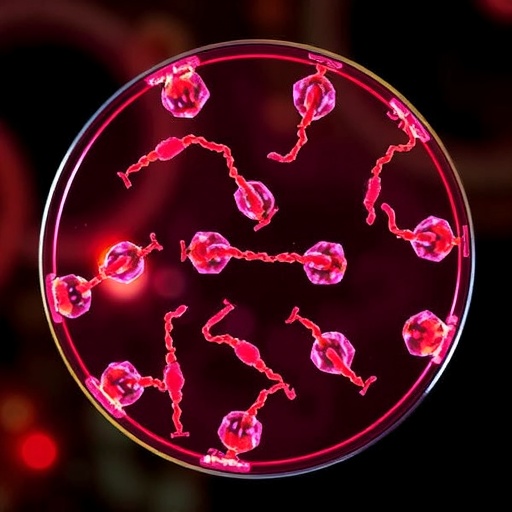
Microfluidics—the manipulation of fluids at microscale volumes—forms the backbone of this novel diagnostic platform. This technology permits the precise and rapid handling of minuscule clinical specimen volumes, such as blood, sputum, or urine, facilitating highly controlled environments ideal for pathogen isolation. In this setup, the samples are confined in microchannels engineered to enhance pathogen capture and concentration. Such meticulous sample preparation is vital for downstream spectroscopic analysis, ensuring that the signal-to-noise ratio is sufficiently high to discern the biochemical fingerprints of microorganisms.
Raman micro-spectroscopy, the other pivotal component of the method, is a vibrational spectroscopic technique that provides detailed information on the molecular composition of the sample without requiring labeling or extensive preparation. When biological specimens are illuminated with a laser, Raman scattering occurs, producing spectra unique to the specific molecular bonds and structures within the species present. This spectral fingerprint facilitates differentiation between bacteria, fungi, and other pathogens, enabling precise identification at possibly the species or even strain level.
What makes this integrated approach uniquely powerful is its ability to bypass the conventional barriers posed by culture dependency. The method’s sensitivity stems from its capability to detect biochemical signatures in situ, which, when combined with microfluidic precision, yields rapid and reliable diagnostic outputs. Importantly, the highly multiplexed microfluidic channels can process multiple samples or target diverse pathogens simultaneously, hinting at a scalable platform suited for clinical laboratories dealing with heterogeneous infection types.
The researchers validated their platform using a gamut of clinically relevant pathogens, including antibiotic-resistant strains, demonstrating remarkable accuracy and speed. In comparison with gold-standard culture methods, the integrated microfluidic-Raman system delivered results within a fraction of the time—often under 30 minutes from sample collection to identification. This speed could notably impact clinical decision-making by enabling targeted antimicrobial treatments sooner, thereby mitigating the risk of resistance development stemming from broad-spectrum empiric therapies.
Furthermore, the study delves deeply into the technical optimization of the microfluidic device, highlighting the use of specific surface chemistries and channel architectures that enhance pathogen capture efficiency. The team explored various geometries and flow rates to maximize sample throughput while minimizing the loss or destruction of delicate microbial cells. Combined with advanced data-processing algorithms for spectral analysis, this ensures that the system is both robust and adaptable across diverse clinical contexts.
From a clinical workflow perspective, this technique represents a significant leap forward. Traditional culture methods are not only time-consuming but also labor-intensive, requiring specialized personnel and infrastructure. By contrast, the described platform offers the potential for automation, reduced hands-on technician time, and integration into point-of-care settings. Such advantages could democratize access to rapid diagnostics in resource-limited environments, a vital consideration given the global burden of infectious diseases.
Moreover, the integration of Raman spectroscopy confers another crucial benefit: the non-destructive nature of the analysis. This allows for subsequent confirmatory testing or molecular characterization on the same sample if warranted, without needing additional specimen collection. In conjunction with the real-time data acquisition capabilities, clinical laboratories could dynamically monitor infection progression or treatment responses, elevating the standard of personalized care.
The implications extend far beyond immediate clinical diagnostics. The platform’s modular design could be tailored to detect emerging pathogens, monitor environmental samples, or even tackle challenges in microbial forensics. Its versatility equips it not only to address routine infectious diseases but also to act as an early warning tool during outbreaks or biothreat scenarios, where rapid identification is critical.
While the study marks a monumental stride, there remain practical considerations for widespread adoption. Scalability and cost-effectiveness of manufacturing the microfluidic chips and Raman instrumentation are key factors the authors acknowledge. However, given the accelerating advancements in microfabrication techniques and the decreasing costs of laser technologies, these hurdles appear surmountable within a near-future horizon.
The researchers also highlight prospective enhancements, such as integrating machine learning algorithms capable of refining spectral interpretation and pattern recognition, potentially increasing diagnostic accuracy even against complex polymicrobial samples. This artificial intelligence augmentation aligns well with ongoing digital transformation trends in medical diagnostics, promising a synergistic pathway to further improvements.
In addition, continuous refinement of the microfluidic design, perhaps incorporating active sorting mechanisms or enhanced surface functionalization, could boost the selectivity and sensitivity of pathogen capture. Future versions might also embrace multiplexed Raman probes, expanding the diagnostic panel to include viral or parasitic agents, thus broadening the clinical applicability of this revolutionary method.
In conclusion, Li and colleagues’ integrated microfluidic-Raman micro-spectroscopy platform heralds a new era in rapid, culture-free pathogen detection. By delivering high-resolution molecular insights in near real-time, it addresses a critical unmet need in clinical microbiology. As the field advances towards more streamlined, rapid, and sensitive diagnostics, this pioneering work lays a robust foundation that could ultimately save countless lives by enabling earlier, targeted interventions for infectious diseases worldwide.
Subject of Research: Rapid culture-free diagnosis of clinical pathogens using integrated microfluidic and Raman micro-spectroscopy technologies.
Article Title: Rapid culture-free diagnosis of clinical pathogens via integrated microfluidic-Raman micro-spectroscopy.
Article References:
Li, Y., Xu, J., Yi, X. et al. Rapid culture-free diagnosis of clinical pathogens via integrated microfluidic-Raman micro-spectroscopy. Nat Commun (2025). https://doi.org/10.1038/s41467-025-66996-y
Image Credits: AI Generated
Tags: antimicrobial therapy administrationclinical microbiology advancementsculture-free diagnosticsimproving diagnostic timelinesinfectious disease detection methodsinnovative medical laboratory techniquesmicrofluidic technology in diagnosticsmolecular level pathogen analysisRaman spectroscopy for pathogen identificationrapid pathogen detectionreal-time pathogen analysissepsis and pneumonia diagnostics