• HOME
  • NEWS
  • EXPLORE
    • CAREER
      • Companies
      • Jobs
    • EVENTS
    • iGEM
      • News
      • Team
    • PHOTOS
    • VIDEO
    • WIKI
  • BLOG
  • COMMUNITY
    • FACEBOOK
    • INSTAGRAM
    • TWITTER
Saturday, November 7, 2026
BIOENGINEER.ORG
No Result
View All Result
  • Login
  • HOME
  • NEWS
  • EXPLORE
    • CAREER
      • Companies
      • Jobs
        • Lecturer
        • PhD Studentship
        • Postdoc
        • Research Assistant
    • EVENTS
    • iGEM
      • News
      • Team
    • PHOTOS
    • VIDEO
    • WIKI
  • BLOG
  • COMMUNITY
    • FACEBOOK
    • INSTAGRAM
    • TWITTER
No Result
View All Result
Bioengineer.org
No Result
View All Result
Home NEWS Science News Health

Random Forest Model Demonstrates High Accuracy for Cervical Cancer Risk Stratification

by
November 7, 2026
in Health
Reading Time: 2 mins read
0
Random Forest Model Demonstrates High Accuracy for Cervical Cancer Risk Stratification

Random Forest Model Demonstrates High Accuracy for Cervical Cancer Risk Stratification

Share on FacebookShare on TwitterShare on LinkedinShare on RedditShare on Telegram

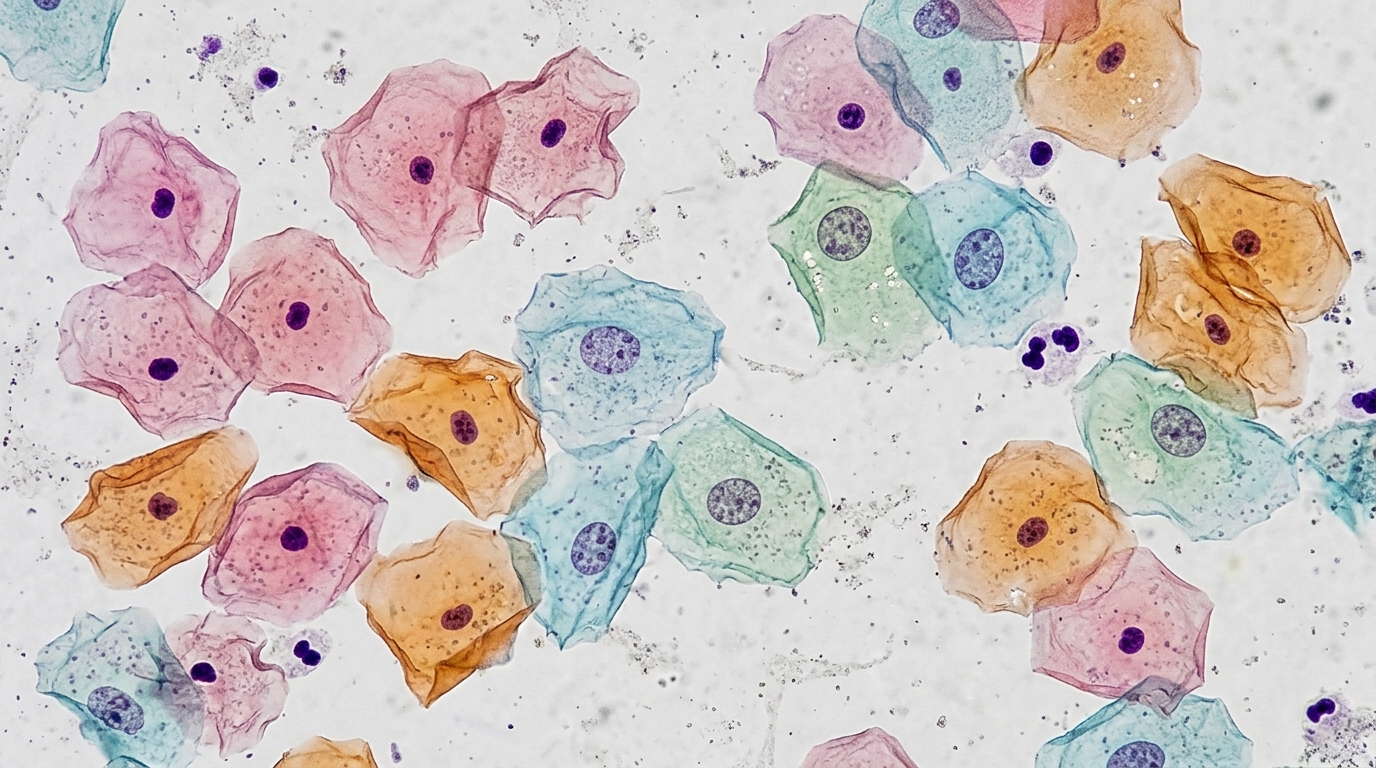
A Random Forest machine learning model achieved an area under the receiver operating characteristic curve of 0.966 and a sensitivity of 100% for individualized risk stratification of cervical cancer at a single point in time, according to a study published in BMC Medical Genomics. Developed by researchers evaluating clinical, molecular, and cytological features, the cross-sectional model was designed to assist timely clinical decision-making and individualized screening assessment.

Cervical cancer represents the fourth most common malignancy among women worldwide, carrying particularly poor prognosis and high rates of late-stage diagnosis across low- and middle-income countries. Although clinicians rely on the standard FIGO staging system, the authors noted that the current staging framework provides limited prognostic precision when assessing individual-level risk, highlighting the need for enhanced diagnostic decision-support tools.

The study cohort comprised 207 participants enrolled from the Fifth Affiliated Hospital of Sun Yat-sen University, including 151 non-cancer individuals and 56 cancer cases. Researchers gathered over 20 variables per participant, encompassing age, blood pressure, human papillomavirus (HPV) genotypes, P16 expression, cytological grading, and serum tumor markers such as squamous cell carcinoma antigen (SCC), carcinoembryonic antigen (CEA), and human epididymis protein 4 (HE4).

Feature selection was conducted through LASSO regression-based feature ranking. By assessing the performance of Random Forest models across different candidate feature subsets, the researchers determined an optimal set of 11 core predictors, which incorporated key factors such as SCC, HPV16/18, and high-grade squamous intraepithelial lesions (HSIL).

A comparative evaluation of 11 distinct machine learning models showed that Random Forest (RF) and Logistic Regression (LR) delivered the strongest overall performance. Random Forest was selected as the final model due to its balanced discrimination and calibration metrics, attaining the highest AUROC (0.966) and 100% sensitivity. Subsequent SHAP analysis identified SCC, HPV16/18 status, and documented P16 expression as the primary contributors to the model, and a nomogram was constructed for clinical visualization and interpretation.

The authors noted important limitations in their study scope, acknowledging that findings are based on cross-sectional data collected at a single center. The research team stated that external validation across multiple centers and the future integration of longitudinal data will be necessary next steps to establish generalizability and support prognostic applications in clinical settings.

Subject of Research: Machine learning model for cross-sectional cervical cancer risk stratification

Article Title: Development of a machine learning model for risk stratification of cervical cancer based on cross-sectional data

Article References: Zhang, S., Hu, C., Ou, H., Nie, Q., Chen, Y., Huang, D., Wang, F., Qin, C., Gu, L., & Xie, B. (2026). Development of a machine learning model for risk stratification of cervical cancer based on cross-sectional data. BMC Medical Genomics. https://doi.org/10.1186/s12920-026-02483-7

Image Credits: AI Generated

DOI: 10.1186/s12920-026-02483-7

Keywords: cervical cancer, machine learning, Random Forest, risk stratification, oncology, biomarkers, clinical diagnostics, SHAP analysis, Development, machine, learning, model

News Source: Nathaniel Bowman. (November 7, 2026). Random Forest Model Demonstrates High Accuracy for Cervical Cancer Risk Stratification. Scienmag.


Tags: biomarkersCervical cancerclinical diagnosticsDevelopmentlearningmachineMachine LearningmodelOncologyRandom Forestrisk stratificationSHAP analysis
Share12Tweet7Share2ShareShareShare1

Related Posts

Parenting Support Trials for Vulnerable Families Show Weak, Inconsistent Evidence

Parenting Support Trials for Vulnerable Families Show Weak, Inconsistent Evidence

November 7, 2026
Skin patch aims to reprogram a patient's own cells into living medicine

Skin patch aims to reprogram a patient’s own cells into living medicine

November 7, 2026

Spinal Cord Organoids Stiffen as They Mature

November 7, 2026

Letter Reconsiders Transfusion Thresholds in Severe Traumatic Brain Injury

November 7, 2026

POPULAR NEWS

  • Tanzanian breast cancer survivors describe diagnosis delays and propose fixes

    Tanzanian breast cancer survivors describe diagnosis delays and propose fixes

    29 shares
    Share 12 Tweet 7
  • Microbe That Breaks Down Mycotoxin Can Temporarily Raise Toxicity

    29 shares
    Share 12 Tweet 7
  • Study Finds Single Factor in PE Student Competency Perceptions

    29 shares
    Share 12 Tweet 7
  • Genome Sequencing Tracks Mutations in Stem Cells Grown for Months

    29 shares
    Share 12 Tweet 7

About

We bring you the latest biotechnology news from best research centers and universities around the world. Check our website.

Follow us

Recent News

Parenting Support Trials for Vulnerable Families Show Weak, Inconsistent Evidence

Skin patch aims to reprogram a patient’s own cells into living medicine

Catalyst Aggregation State Flips Chirality in Anti-Inflammatory Phosphine Synthesis

Subscribe to Blog via Email

Enter your email address to subscribe to this blog and receive notifications of new posts by email.

Join 86 other subscribers
  • Contact Us

Bioengineer.org © Copyright 2023 All Rights Reserved.

Welcome Back!

Login to your account below

Forgotten Password?

Retrieve your password

Please enter your username or email address to reset your password.

Log In
No Result
View All Result
  • Homepages
    • Home Page 1
    • Home Page 2
  • News
  • National
  • Business
  • Health
  • Lifestyle
  • Science

Bioengineer.org © Copyright 2023 All Rights Reserved.