In a groundbreaking new study published in npj Parkinson’s Disease, researchers have uncovered compelling evidence linking elevated levels of specific inflammatory markers in the colon to isolated REM sleep behavior disorder (iRBD), a rare condition often regarded as a prodromal stage of Parkinson’s disease and other synucleinopathies. This revelation sheds new light on the gut-brain axis and its potential role in neurodegenerative disease progression, providing fresh avenues for early diagnosis and therapeutic intervention.
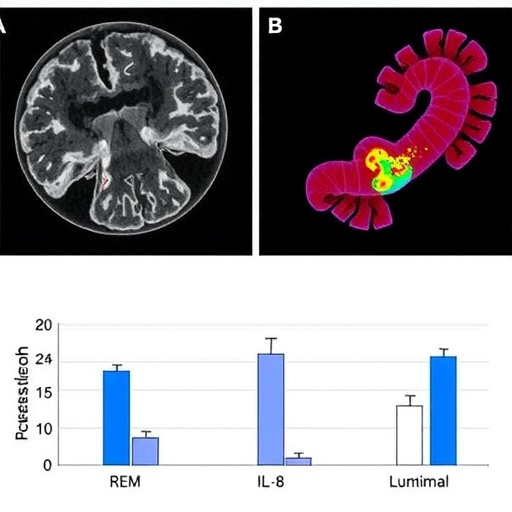
The investigation, led by Sellier Montaigne, L., Lassozé, S., de Guilhem de Lataillade, A., and colleagues, meticulously analyzed colonic tissue samples from patients diagnosed solely with isolated REM sleep behavior disorder. They focused their biotechnological scrutiny on interleukin-1beta (IL-1β) and interleukin-8 (IL-8), two prominent pro-inflammatory cytokines known to play pivotal roles in immune signaling. Remarkably, these cytokines were found to be elevated significantly compared to healthy controls, despite a conspicuous absence of alterations in gut barrier permeability.
IL-1β and IL-8 have long been implicated in the inflammatory cascade that characterizes many neurodegenerative and systemic autoimmune diseases; their overexpression hints at heightened immune activation within the colon. However, what distinguishes this study is the decoupling of inflammation from intestinal permeability defects. This finding challenges previous paradigms that posited a leaky gut as a primary contributor to neuroinflammation and synucleinopathy progression.
The methodology employed was rigorous and multifaceted. Through highly sensitive immunoassays and quantitative polymerase chain reaction (qPCR) techniques, the researchers quantified cytokine levels and assessed barrier integrity using biomarkers typically reflective of tight junction functionality. The absence of modifications in permeability markers, such as claudins or zonulin expression, signifies that the observed immune changes are independent of intestinal barrier disruption.
These findings prompt intriguing questions about the origin and driver of localized gut inflammation in iRBD patients. Could the immune response be a primary event rather than secondary to microbial translocation or toxin exposure? The study speculates that neuroimmune interactions within the enteric nervous system may trigger a localized cytokine surge, potentially representing an early pathogenic mechanism prompting α-synuclein misfolding in both gut and brain.
The role of the gut as a potential initiation site for Parkinsonian pathology has been debated for years, especially given Braak’s hypothesis, which postulates that α-synuclein aggregates may ascend from the enteric nervous system through the vagus nerve to the central nervous system. This research strengthens that theory by illustrating a pro-inflammatory milieu that predates overt neurodegeneration and motor symptom onset.
The absence of changes in gut permeability could indicate either a more subtle immune dysregulation or a stage-specific pathological hallmark in iRBD. It suggests that inflammation alone, sans increased barrier leakiness, may be sufficient to propagate pathogenic cascades. This could redefine biomarkers and therapeutic targets, particularly emphasizing modulation of intestinal immune responses over barrier repair strategies.
Further implicating the gut-brain connection, this study notes that elevated IL-1β and IL-8 may facilitate microglial priming and neuroinflammation once peripheral signals breach central defenses. Elevated systemic cytokines can cross the blood-brain barrier (BBB), or promote BBB dysfunction, resulting in a feed-forward loop exacerbating central disease mechanisms.
Crucially, these insights afford a window of opportunity for early intervention in synucleinopathies. Detecting colonic inflammation before motor symptom manifestation could enable clinicians to identify at-risk individuals and apply anti-inflammatory or immunomodulatory treatments at an asymptomatic stage, potentially halting or slowing disease progression.
The study’s findings also inspire a reevaluation of diagnostic protocols. Currently, the diagnosis of isolated REM sleep behavior disorder depends heavily on polysomnography and clinical symptomatology. Colonoscopic sampling and cytokine measurement might become adjunctive tools for stratifying patients by risk and individualizing care pathways.
While the precise mechanistic pathways linking intestinal cytokine elevation and neurological sequelae remain incompletely understood, this pioneering research lays the foundation for future multi-omics studies and longitudinal clinical trials. Integrating microbiome profiling, transcriptomics, and immunophenotyping could unravel intricate interactions dictating disease course.
It’s important to contextualize these findings within broader neurodegenerative research. Inflammation has emerged as a critical modulator in Alzheimer’s, Huntington’s, and multiple sclerosis, suggesting shared immune-mediated mechanisms across conditions. This convergence may foster development of universal therapeutic agents targeting inflammatory signatures.
Moreover, the dissociation between inflammation and permeability challenges the prevailing focus on “leaky gut” phenomena in neurodegeneration, potentially redirecting research and clinical attention towards discrete immunological alterations independent of barrier breakdown. This nuanced understanding refines our conceptualization of gut pathology in neurological disorders.
The compelling evidence presented by Sellier Montaigne and colleagues accentuates the complex interplay between peripheral tissues and the central nervous system. It underscores the necessity for interdisciplinary collaboration, bridging gastroenterology, neurology, immunology, and molecular biology to tackle unanswered questions in synucleinopathy pathogenesis.
As research advances, the hope is to translate these molecular insights into tangible health benefits, eventually enabling precision medicine approaches that can intercept disease mechanisms at their youthful onset rather than once irreversible neuronal loss has occurred.
In conclusion, the elevated colonic IL-1β and IL-8 levels identified in isolated REM sleep behavior disorder, independent of intestinal permeability changes, mark a critical step forward in unraveling the enigmatic gut-brain axis in early neurodegeneration. This discovery challenges existing dogma, spotlights inflammation as a potential harbinger of Parkinsonian pathology, and opens promising horizons for early diagnostics and novel therapeutics.
Subject of Research: Inflammatory markers in the colon in isolated REM sleep behavior disorder related to neurodegeneration.
Article Title: Elevated levels of colonic interleukin-1beta and interleukin-8 in isolated REM sleep behavior disorder without associated changes in permeability.
Article References: Sellier Montaigne, L., Lassozé, S., de Guilhem de Lataillade, A. et al. Elevated levels of colonic interleukin-1beta and interleukin-8 in isolated REM sleep behavior disorder without associated changes in permeability. npj Parkinsons Dis. (2026). https://doi.org/10.1038/s41531-026-01340-9
Image Credits: AI Generated
Tags: colonic cytokines in early Parkinson’s diagnosisearly therapeutic targets in REM sleepelevated IL-1β in isolated REM sleep behavior disordergut immune signaling in neurodegenerationIL-8 inflammatory markers in gut-brain axisinflammatory biomarkers without gut permeability changesinterleukin overexpression in neurodegenerative diseasesisolated REM sleep disorder and immune responseneuroinflammation in synucleinopathiesParkinson’s disease prodromal biomarkersREM sleep behavior disorder and colonic inflammation