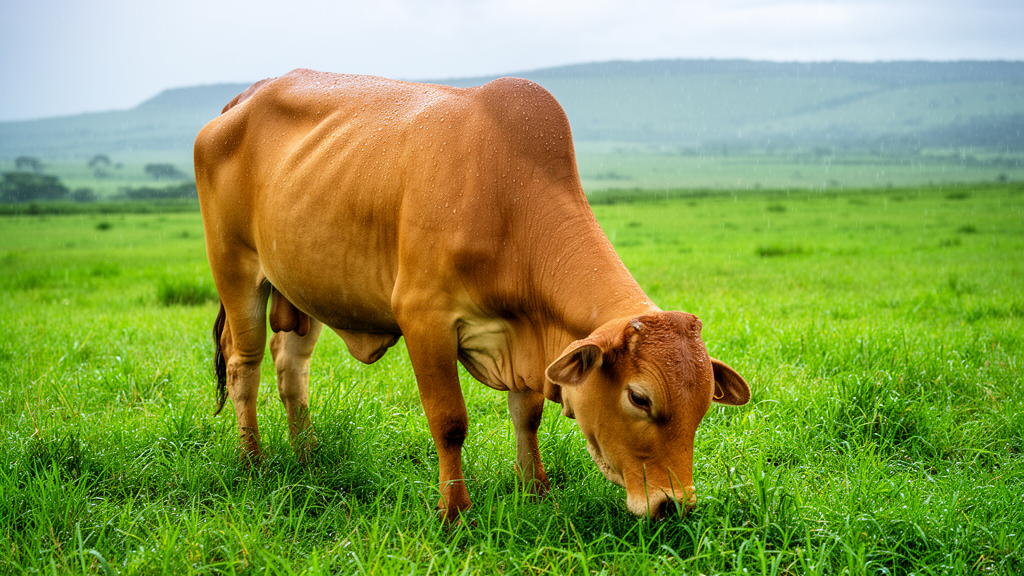
A retrospective cohort study evaluating Bonsmara steers in southern Mozambique has identified significant associations between local climatic factors and cattle growth across both pre-weaning and post-weaning development phases. Conducted in Namaacha within Maputo Province, the investigation examined how environmental conditions and production records interact in a tropical semi-intensive beef production system.
The research team assembled data by integrating historical production records from the CattleMax management system covering the years 2021 through 2023 with direct field observations and microclimatic monitoring. Across the monitored cohort of 30 steers, investigators tracked ambient climatic conditions alongside management indicators during both the early nursing period and the subsequent post-weaning phase.
To evaluate environmental exposure, researchers measured four core climatic variables: ambient air temperature, relative humidity, precipitation, and the calculated Temperature-Humidity Index. The production metrics evaluated across the herd included birth weight, weaning weight, final slaughter or exit weight, average daily weight gain across both phases, and the precise duration of each developmental stage.
Baseline performance measurements established that the steers had a mean birth weight of 34.60 ± 7.25 kilograms. Calves achieved a mean weaning weight of 200.07 ± 38.35 kilograms at an average age of 233.87 ± 64.36 days, eventually reaching a mean final weight of 326.27 ± 74.56 kilograms. Across the lifespan of the animals, pre-weaning daily gain averaged 0.76 ± 0.29 kilograms per day, while post-weaning gain averaged 0.41 ± 0.16 kilograms per day.
When comparing performance by seasonal timing using Welch’s t-test with a significance threshold of 0.05, researchers found no statistically significant differences in productive traits between cohorts raised during the rainy season and those raised during the dry season (p > 0.05).
Before conducting multivariate analyses, the research team removed the Temperature-Humidity Index from statistical models due to severe multicollinearity with air temperature, marked by a variance inflation factor exceeding 20,000. Subsequent Canonical Correlation Analysis revealed statistically significant linkages between environmental conditions and performance, yielding a canonical correlation of 0.79 (Wilks’ lambda = 0.360, F = 3.394, p = 0.002) in the pre-weaning phase and 0.69 (Wilks’ lambda = 0.416, F = 2.825, p = 0.008) in the post-weaning phase.
In the pre-weaning phase, precipitation showed a canonical loading of +0.610 and relative humidity loaded at -0.588 on the climate variate, with precipitation cross-loading at +0.484 on animal performance; weaning weight and pre-weaning phase duration showed positive cross-loadings of +0.655 and +0.374 on the climate variate. During the post-weaning period, precipitation dominated the climate canonical variate with a loading of -0.950 and cross-loaded at -0.653 on the performance variate, while post-weaning daily gain dominated the performance variate at -0.739 with a cross-loading of -0.507 on the climate variate, demonstrating a positive association between post-weaning rainfall and steer daily gain.
The researchers noted that because herd management practices were identical across the entire cohort—showing a standard deviation of zero for all measured management indicators—the statistical analysis could not isolate an independent effect for specific management practices. Furthermore, the absence of protective shade structures in post-weaning facilities was noted as an operational constraint, leading the authors to recommend shade installations and targeted nutritional supplementation to optimize beef production in tropical semi-intensive environments.
Subject of Research: Climate and management associations with Bonsmara steer growth in Mozambique
Article Title: Climate and management associations with Bonsmara steer performance in a tropical semi-intensive beef production system
Article References: Maholele, X. A., Monjane, S. K., Inganhar, F., Alberto, R., & Muatareque, E. (2026). Climate and management associations with Bonsmara steer performance in a tropical semi-intensive beef production system. BMC Veterinary Research. https://doi.org/10.1186/s12917-026-06139-7
Image Credits: AI Generated
DOI: 10.1186/s12917-026-06139-7
Keywords: Bonsmara cattle, beef cattle production, semi-intensive beef systems, tropical livestock, Mozambique agriculture, Maputo Province, Namaacha, retrospective cohort study, canonical correlation analysis, average daily gain, weaning weight, precipitation effects, Temperature-Humidity Index, livestock management, pasture supplementation, shade provision, veterinary research
News Source: William Thompson. (November 21, 2026). Rainfall Linked to Bonsmara Steer Growth in Mozambique Cattle Study. Scienmag.