• HOME
  • NEWS
  • EXPLORE
    • CAREER
      • Companies
      • Jobs
    • EVENTS
    • iGEM
      • News
      • Team
    • PHOTOS
    • VIDEO
    • WIKI
  • BLOG
  • COMMUNITY
    • FACEBOOK
    • INSTAGRAM
    • TWITTER
Sunday, December 21, 2025
BIOENGINEER.ORG
No Result
View All Result
  • Login
  • HOME
  • NEWS
  • EXPLORE
    • CAREER
      • Companies
      • Jobs
        • Lecturer
        • PhD Studentship
        • Postdoc
        • Research Assistant
    • EVENTS
    • iGEM
      • News
      • Team
    • PHOTOS
    • VIDEO
    • WIKI
  • BLOG
  • COMMUNITY
    • FACEBOOK
    • INSTAGRAM
    • TWITTER
  • HOME
  • NEWS
  • EXPLORE
    • CAREER
      • Companies
      • Jobs
        • Lecturer
        • PhD Studentship
        • Postdoc
        • Research Assistant
    • EVENTS
    • iGEM
      • News
      • Team
    • PHOTOS
    • VIDEO
    • WIKI
  • BLOG
  • COMMUNITY
    • FACEBOOK
    • INSTAGRAM
    • TWITTER
No Result
View All Result
Bioengineer.org
No Result
View All Result
Home NEWS Science News

Radiotherapy risks are much higher for smokers

Bioengineer by Bioengineer
March 20, 2017
in Science News
Reading Time: 2 mins read
0
Share on FacebookShare on TwitterShare on LinkedinShare on RedditShare on Telegram

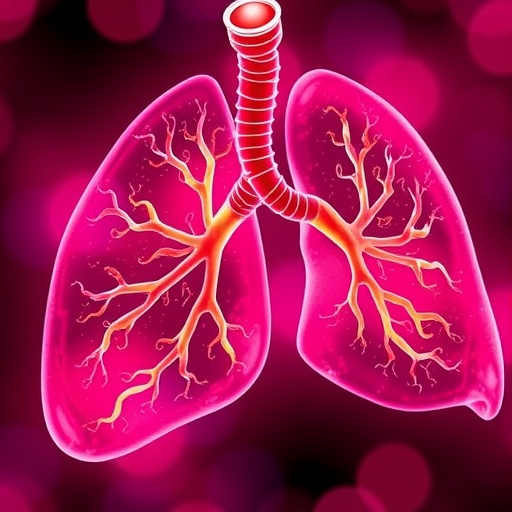
Smokers treated for breast cancer have much higher risks than non-smokers of developing lung cancer or heart attack as a result of radiotherapy – according to a new study* funded by Cancer Research UK** and published today in the Journal of Clinical Oncology.

The study shows that for non-smokers the long-term risk of death from lung cancer or heart attack – caused by radiation – is only 0.5 percent. But for smokers, this increases to around 5 percent.

These findings are based on a worldwide study by the Early Breast Cancer Trialists' Collaborative Group of the lung and heart radiation doses and risks among 40,781 women with breast cancer in 75 randomised trials of radiotherapy.

Because modern breast cancer radiotherapy techniques have improved and are now better at sparing the lungs and heart than those used in the trials, the researchers also reviewed recent literature so they could take into account how radiotherapy is better targeted today.

Dr Carolyn Taylor, radiation oncologist and lead author from the University of Oxford, said: "For non-smokers, the absolute risk of death from the side effects of modern radiotherapy is only about 0.5 percent, which is much less than the benefit. But for smokers, the risk is about 5 percent, which is comparable with the benefit.

"Stopping smoking at the time of radiotherapy will avoid most of the lung cancer and heart disease risk from radiotherapy, and has many other benefits."

Radiotherapy remains an important treatment for breast cancer and reduces the likelihood of dying from the disease. For most non-smokers or ex-smokers the benefits of radiotherapy will far outweigh any risks. But for some long-term continuing smokers, the risks may be greater than the benefits.

Dr Julie Sharp, Cancer Research UK's head of health information, said: "This research highlights that breast cancer patients who smoke need to be offered help and support in order to try and quit to minimise any risks from their treatment. It's important to remember that modern day radiotherapy techniques have been refined and improved to make sure it is targeted and effective while reducing the risk of side-effects."

###

*Taylor, C., et al Estimating the Risks of Breast Cancer Radiotherapy: Evidence From Modern Radiation Doses to the Lungs and Heart and From Previous Randomized Trials Journal of Clinical Oncology (2017)

**The study also received funding from the British Heart Foundation and the UK Medical Research Council.

Media Contact

Simon Shears
[email protected]
44-203-469-8054
@CR_UK

http://www.cancerresearchuk.org

############

Story Source: Materials provided by Scienmag
Share12Tweet8Share2ShareShareShare2

Related Posts

Antisense Therapy Reverses Developmental Defects in SMA Organoids

December 21, 2025
blank

Black Soldier Fly Larvae Boost African Catfish Growth

December 21, 2025

Unraveling Influenza A Host Tropism through Nucleotide Signatures

December 21, 2025

Frailty and Malnutrition Impact Pneumonia Severity in Vaccinated Elderly

December 21, 2025
Please login to join discussion

POPULAR NEWS

  • Nurses’ Views on Online Learning: Effects on Performance

    Nurses’ Views on Online Learning: Effects on Performance

    70 shares
    Share 28 Tweet 18
  • NSF funds machine-learning research at UNO and UNL to study energy requirements of walking in older adults

    71 shares
    Share 28 Tweet 18
  • Unraveling Levofloxacin’s Impact on Brain Function

    53 shares
    Share 21 Tweet 13
  • Exploring Audiology Accessibility in Johannesburg, South Africa

    51 shares
    Share 20 Tweet 13

About

We bring you the latest biotechnology news from best research centers and universities around the world. Check our website.

Follow us

Recent News

Antisense Therapy Reverses Developmental Defects in SMA Organoids

Black Soldier Fly Larvae Boost African Catfish Growth

Unraveling Influenza A Host Tropism through Nucleotide Signatures

Subscribe to Blog via Email

Enter your email address to subscribe to this blog and receive notifications of new posts by email.

Join 70 other subscribers
  • Contact Us

Bioengineer.org © Copyright 2023 All Rights Reserved.

Welcome Back!

Login to your account below

Forgotten Password?

Retrieve your password

Please enter your username or email address to reset your password.

Log In
No Result
View All Result
  • Homepages
    • Home Page 1
    • Home Page 2
  • News
  • National
  • Business
  • Health
  • Lifestyle
  • Science

Bioengineer.org © Copyright 2023 All Rights Reserved.