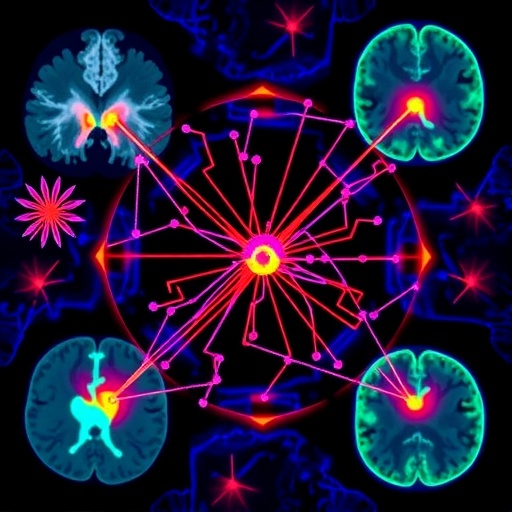
In a groundbreaking study published in the Journal of Translational Medicine, researchers have developed an innovative radiomics-based gradient boosting model that leverages contrast-enhanced MRI to predict epidermal growth factor receptor (EGFR) expression and the therapeutic response to EGFR-targeted antibody-drug conjugates in high-grade glioma organoid models. This research represents a pivotal advancement in the field of oncological imaging and precision medicine, promising to enhance the non-invasive assessment of glioma treatment strategies while minimizing the reliance on invasive procedures.
High-grade gliomas, particularly glioblastomas, remain one of the most aggressive forms of brain cancer, characterized by their rapid growth and resistance to conventional treatments. The presence and expression levels of the epidermal growth factor receptor have been strongly correlated with glioma malignancy and patient prognosis. Understanding the nuances of EGFR expression is critical, as it serves as both a diagnostic and therapeutic biomarker, guiding treatment decisions and influencing patient outcomes.
The study by Tan et al. set out to bridge a crucial gap in current glioma treatment approaches. Traditional imaging techniques often fall short in accurately assessing the biological characteristics of tumors. In this context, radiomics—the extraction of a large number of features from medical images using data-characterization algorithms—offers a sophisticated alternative. The integration of radiomics with machine learning, particularly gradient boosting algorithms, facilitates enhanced prediction capabilities about tumor behavior and response to targeted therapies.
Contrast-enhanced MRI plays a vital role in the early detection and evaluation of gliomas. By employing advanced imaging techniques that highlight intratumoral heterogeneity, the researchers aimed to extract meaningful radiomic features that correlate with EGFR expression levels. These features included texture analysis, shape descriptors, and intensity distributions, all of which contribute to a more robust understanding of tumor biology.
The researchers utilized a cohort of high-grade glioma organoid models, meticulously designed to mirror the complexities of human tumors. These organoids provide an ethically viable and scientifically relevant platform for studying tumor behavior under various therapeutic conditions. By validating their model within these organoids, the team aimed to create a predictive framework that could eventually be translated into clinical practice.
One of the study’s significant findings was the ability of the gradient boosting model to distinguish different levels of EGFR expression with remarkable accuracy. By analyzing a diverse set of radiomic features, the model achieved precision in predicting patient responsiveness to EGFR-targeted therapies, emphasizing its potential utility as a pre-treatment assessment tool in clinical settings.
Moreover, the research underlines the importance of non-invasive methodologies in cancer treatment strategy decisions. Many current practices rely on invasive biopsy techniques, which may expose patients to unnecessary complications and discomfort. The radiomics-based model presents a less invasive alternative, allowing for a more comfortable assessment of tumor characteristics while maintaining accuracy and predictive value.
Given the burgeoning interest in personalized medicine, the study underscores the importance of tailoring treatment protocols based on individual tumor biology rather than solely relying on standardized treatment regimens. By implementing personalized approaches guided by robust radiomic data, clinicians may be empowered to make more informed decisions, ultimately enhancing patient outcomes and minimizing adverse effects associated with inappropriate therapies.
In addition to its clinical implications, the research contributes to the rapidly advancing field of artificial intelligence in medical imaging. Machine learning, particularly gradient boosting technology, has emerged as a powerful tool in decoding complex datasets inherent in medical images. The successful application of these techniques in predicting EGFR expression demonstrates the promising intersection of radiomics, imaging, and computational modeling, illuminating a pathway toward more streamlined and effective cancer treatment paradigms.
Furthermore, this research signals a broader shift within oncology towards embracing innovative technologies that augment traditional diagnostic methods. As the healthcare landscape continues to evolve technologically, the potential for integrating artificial intelligence with medical imaging stands to revolutionize how clinicians approach cancer diagnosis and treatment.
The findings of this study are not merely academic but offer concrete evidence supporting the application of radiomics in everyday clinical practice. As researchers continue to refine the model and validate findings in larger cohorts, the anticipated translation of this model into a clinically applicable tool could set a new standard for glioma management and patient care.
In summary, the work by Tan et al. represents a significant stride toward harnessing the capabilities of advanced imaging and artificial intelligence in the battle against high-grade gliomas. As the medical community seeks to navigate the complexities of cancer treatment, embracing innovative methodologies like radiomics emerges as a promising frontier, expanding the toolkit available to oncologists and potentially altering patients’ lives for the better.
As these insights gradually permeate clinical practice, ongoing collaboration between researchers, clinicians, and technologists will be paramount. The exploration of radiomics paves the way for future investigations that will undoubtedly expand our understanding of tumor biology and therapy responsiveness. With each advancement, the vision of a more precise, patient-centered approach to cancer treatment inches closer to fruition.
In the years to come, continual refinement of these predictive models will likely enhance their applicability, offering broader insights into various cancer types beyond gliomas. The radiomics approach has far-reaching implications, inviting global research initiatives to replicate, adapt, and potentially pioneer efforts against diverse oncological challenges. As this exciting research unfolds, the possibilities for improving cancer care and outcomes become ever more tangible, reaffirming the role of innovation in the ongoing fight against cancer.
Subject of Research: High-grade glioma organoid models and EGFR expression prediction.
Article Title: Radiomics-based gradient boosting model on contrast-enhanced MRI for non-invasive prediction of epidermal growth factor receptor expression and therapeutic response to EGFR-targeted antibody-drug conjugates in high-grade glioma organoid models.
Article References: Tan, C., Zhou, Y., Li, S. et al. Radiomics-based gradient boosting model on contrast-enhanced MRI for non-invasive prediction of epidermal growth factor receptor expression and therapeutic response to EGFR-targeted antibody-drug conjugates in high-grade glioma organoid models. J Transl Med (2026). https://doi.org/10.1186/s12967-025-07634-5
Image Credits: AI Generated
DOI:
Keywords: Radiomics, gradient boosting, EGFR expression, glioma, MRI, machine learning, personalized medicine.
Tags: advancements in oncological imagingcontrast-enhanced MRI in cancer researchepidermal growth factor receptor as a biomarkerglioblastoma treatment strategiesgradient boosting models in medical imaginghigh-grade glioma organoid modelsinnovative approaches to brain cancer diagnosisnon-invasive glioma assessment techniquesprecision medicine in oncologypredicting EGFR expression in gliomasradiomics in glioma treatmenttherapeutic response to EGFR-targeted therapies