• HOME
  • NEWS
  • EXPLORE
    • CAREER
      • Companies
      • Jobs
    • EVENTS
    • iGEM
      • News
      • Team
    • PHOTOS
    • VIDEO
    • WIKI
  • BLOG
  • COMMUNITY
    • FACEBOOK
    • INSTAGRAM
    • TWITTER
Tuesday, November 17, 2026
BIOENGINEER.ORG
No Result
View All Result
  • Login
  • HOME
  • NEWS
  • EXPLORE
    • CAREER
      • Companies
      • Jobs
        • Lecturer
        • PhD Studentship
        • Postdoc
        • Research Assistant
    • EVENTS
    • iGEM
      • News
      • Team
    • PHOTOS
    • VIDEO
    • WIKI
  • BLOG
  • COMMUNITY
    • FACEBOOK
    • INSTAGRAM
    • TWITTER
No Result
View All Result
Bioengineer.org
No Result
View All Result
Home NEWS Science News Health

Questionnaire Layout Associated With Response Patterns in Orthopaedic Patient Surveys

by
November 17, 2026
in Health
Reading Time: 2 mins read
0
Questionnaire Layout Associated With Response Patterns in Orthopaedic Patient Surveys

Questionnaire Layout Associated With Response Patterns in Orthopaedic Patient Surveys

Share on FacebookShare on TwitterShare on LinkedinShare on RedditShare on Telegram

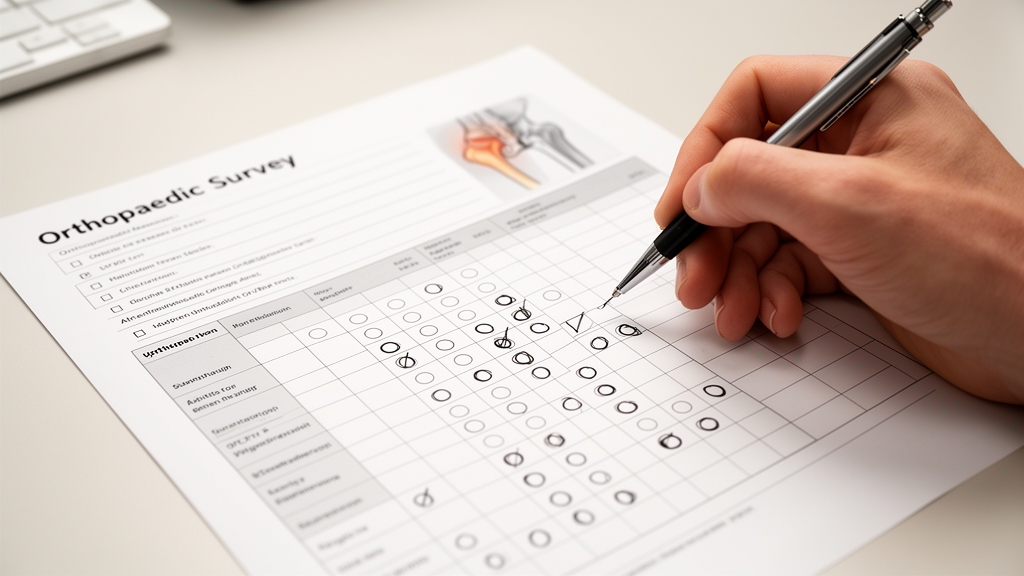
A new exploratory study indicates that the layout of digital questionnaires is associated with how orthopaedic patients respond to health-related quality of life instruments. The research, which compared grid-like and item-by-item layouts on mobile devices, suggests that the format of data collection may be associated with variation in patient-reported outcomes.

The study, conducted in an orthopaedic department in China, employed a non-randomized, sequential cross-sectional design to analyze data from 234 participants. Patients completed the EQ-5D-5L and the experimental EQ-HWB-9 (version 1.2) using one of the two display formats on their mobile phones. To investigate if layout was associated with results, researchers performed Fisher’s exact tests and adjusted ordered logistic regression models to account for clinical and sociodemographic characteristics.

For the EQ-5D-5L instrument, the item-by-item layout was associated with significantly different response levels compared to the grid-like format. Specifically, patients using the item-by-item display reported higher response levels for mobility, with an odds ratio of 5.96. Conversely, those in the item-by-item group showed lower response levels for anxiety and depression, with an odds ratio of 0.12.

The format also showed a significant association with responses to the experimental EQ-HWB-9 instrument. Researchers found that layout was associated with responses to eight of the nine EQ-HWB-9 items, with odds ratios ranging from 0.05 to 3.03. Anxiety was the only item on the EQ-HWB-9 where the layout did not show a statistically significant difference in responses.

The study also examined the frequency of straight-lining, a pattern where participants select the same response for all items, in relation to layout. The results showed that exact straight-lining across the six frequency items of the EQ-HWB-9 was more common among participants using the grid-like layout. In contrast, the overall frequency of straight-lining across the three functional dimensions of the EQ-5D-5L remained similar between the two groups.

Among the covariates analyzed, the timing of the questionnaire relative to surgery consistently showed associations with patient responses. Given the non-randomized design and the potential for confounding based on the data-collection period, the authors emphasize that these findings are exploratory and should not be interpreted as causal. They conclude that larger, randomized studies across different populations and contexts are necessary to confirm these results and understand their implications for the comparability of patient-reported outcomes.

Subject of Research: Effect of digital questionnaire layout on health-related quality of life instrument responses in orthopaedic patients.

Article Title: An exploratory study of questionnaire layout and EQ-5D-5L and EQ-HWB-9 responses in orthopaedic patients

Article References: Xie, Z., Feng, S., Derrett, S., Herdman, M., Rencz, F., & Yang, Z. (2026). An exploratory study of questionnaire layout and EQ-5D-5L and EQ-HWB-9 responses in orthopaedic patients. Health and Quality of Life Outcomes. https://doi.org/10.1186/s12955-026-02666-x

Image Credits: AI Generated

DOI: 10.1186/s12955-026-02666-x

Keywords: orthopaedic medicine, patient-reported outcomes, EQ-5D-5L, EQ-HWB-9, questionnaire layout, survey methodology, mobile health, data collection, response bias, clinical research, cross-sectional study, health outcomes research, straight-lining, questionnaire design, orthopaedic inpatients

News Source: Ophelia Keating. (November 17, 2026). Questionnaire Layout Associated With Response Patterns in Orthopaedic Patient Surveys. Scienmag.


Tags: Clinical ResearchCross-sectional Studydata collectionEQ-5D-5LEQ-HWB-9health outcomes researchmobile healthorthopaedic inpatientsorthopaedic medicinePatient-reported outcomesquestionnaire designquestionnaire layoutresponse biasstraight-liningsurvey methodology
Share12Tweet7Share2ShareShareShare1

Related Posts

Unique Plasmid Found in Carbapenem-Resistant Klebsiella pneumoniae After Treatment Failure

Unique Plasmid Found in Carbapenem-Resistant Klebsiella pneumoniae After Treatment Failure

November 17, 2026
Machine Learning Models Predict Long-Term Surgical Mortality Across Emergency and Elective Patients

Machine Learning Models Predict Long-Term Surgical Mortality Across Emergency and Elective Patients

November 17, 2026

Collicular Microgliosis Maps to Synapse Loss and Varies by Sex

November 17, 2026

Thirty Percent of Sexually Active Northwest Ethiopian Female Youth Used Contraceptives at First Sex

November 17, 2026

POPULAR NEWS

  • Review Links Hyperinsulinaemia to Molecular Pathways in Cholesterol Gallstone Formation

    Review Links Hyperinsulinaemia to Molecular Pathways in Cholesterol Gallstone Formation

    29 shares
    Share 12 Tweet 7
  • Self-Assessed Hirsutism Accurately Flags Endocrine and Metabolic Disruptions in Oligomenorrheic Women

    29 shares
    Share 12 Tweet 7
  • Genomic Radiosensitivity Metrics Fail to Predict Survival in Canine Sinonasal Tumors

    29 shares
    Share 12 Tweet 7
  • Global Review Highlights Escalating Burden and Care Deficits for Migraine Patients

    29 shares
    Share 12 Tweet 7

About

We bring you the latest biotechnology news from best research centers and universities around the world. Check our website.

Follow us

Recent News

Short Bioconversion Reduces Off-Flavors in Pea Protein Without Added Sugar

Dual Nutrient Starvation Triggers Transient Bioplastic and Lipid Production in Freshwater Microalgae

Unique Plasmid Found in Carbapenem-Resistant Klebsiella pneumoniae After Treatment Failure

Subscribe to Blog via Email

Enter your email address to subscribe to this blog and receive notifications of new posts by email.

Join 88 other subscribers
  • Contact Us

Bioengineer.org © Copyright 2023 All Rights Reserved.

Welcome Back!

Login to your account below

Forgotten Password?

Retrieve your password

Please enter your username or email address to reset your password.

Log In
No Result
View All Result
  • Homepages
    • Home Page 1
    • Home Page 2
  • News
  • National
  • Business
  • Health
  • Lifestyle
  • Science

Bioengineer.org © Copyright 2023 All Rights Reserved.