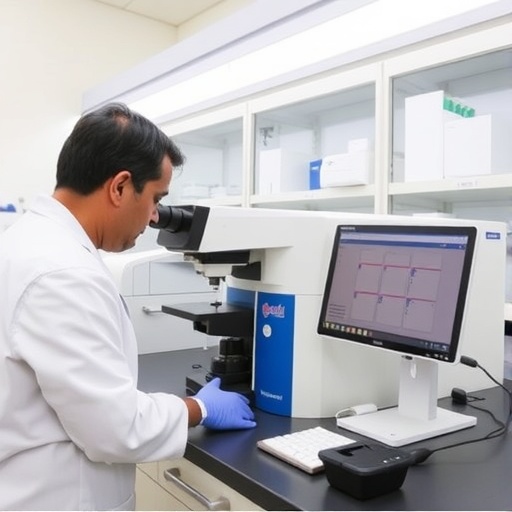
In the rapidly evolving realms of biomedical research and precision medicine, the integration of advanced technologies is spearheading innovative breakthroughs. One of the most transformative developments in this area is the emergence of highly accurate computational models that simulate the behaviors of individual cells and entire cell populations. At the heart of this transformation lies an impressive convergence of high-resolution assays with cutting-edge computational tools, paving the way for unprecedented insights into cellular dynamics.
Recent advancements in single-cell and spatial transcriptomics, as well as multi-omics technologies, have propelled the field forward, allowing researchers to probe the intricate molecular landscapes of cells. This surge in understanding is being significantly accelerated by artificial intelligence (AI), which is adept at analyzing vast datasets generated by these high-resolution techniques. As AI continues to evolve, it offers researchers the ability to identify patterns and correlations within complex biological systems that would previously have been imperceptible.
However, the journey toward unlocking the full potential of cellular modeling faces formidable challenges. As researchers strive to capture the dynamic behaviors of cells over time, the computational demands of processing the resulting data often lead to significant bottlenecks. This is where the integration of quantum computing enters the conversation. While still in its relative infancy, quantum computing offers a novel computation paradigm capable of tackling these challenges head-on.
Quantum computing fundamentally differs from classical computing by leveraging the principles of quantum mechanics. This allows quantum computers to perform computations at an exponentially faster rate than their classical counterparts. For applications in biological research, this could mean simulating complex cellular interactions and dynamics with a level of accuracy and speed that is currently unattainable. As quantum technologies advance, we might find ourselves on the brink of a new era in single-cell analysis and modeling.
One particularly exciting aspect of quantum computing is its potential to augment existing AI approaches in the life sciences. By combining classical AI algorithms with the immense computational power of quantum machines, researchers can develop solutions capable of crunching multitudes of parameters more efficiently. This synergy can lead to deeper insights into cellular responses and behaviors under various perturbations, making it an essential tool for precision medicine.
The exploration of how quantum computing can be applied in cell-based therapeutics is already underway. For instance, drug discovery efforts could be revolutionized by utilizing quantum algorithms to model and predict how individual cells or populations respond to specific compounds. This would enable researchers and clinicians to tailor therapeutic interventions to the unique profiles of patients, heralding a new age of personalized medicine that is more effective and responsive.
The cumbersome computational loads often associated with high-resolution biological data can be alleviated with quantum computing, which stands to dramatically reduce the time and resources required for analyses. By enabling faster simulations and data analyses of cellular behaviors, quantum computing could rapidly advance our understanding of disease mechanisms and treatment responses, ultimately leading to improved patient outcomes.
Moreover, the integration of quantum technologies in biomedical research also presents substantial prospects for enhancing collaborations across scientific disciplines. The convergence of biology, physics, and computer science offers a rich tapestry for innovation. Scientists from diverse backgrounds can come together to create hybrid models that utilize the strengths of each field to solve complex biological questions that have long been obstructed by computational limitations.
Despite the tantalizing advantages offered by quantum computing, the journey toward broad adoption will encounter hurdles that the scientific community must address. These include developing quantum algorithms that are specifically tailored to biological applications, ensuring that researchers are equipped with the skills needed to utilize these advanced technologies, and establishing robust frameworks for data sharing and collaboration.
As quantum computing continues to evolve, emerging applications in single-cell analysis will materialize. This will not only impact fundamental research but also influence clinical practices. Biomarker discovery, patient stratification, and therapeutic monitoring are just a few areas where quantum-enhanced analytics could significantly streamline processes.
The potential for quantum computing to refine our understanding of cellular behaviors is immense. In the coming years, we may witness groundbreaking studies that leverage both quantum and classical computing methods alongside high-resolution assays to unlock the intricate tapestry of cellular life. The implications of such advancements extend far beyond the laboratory, fundamentally reshaping the landscape of healthcare.
Ultimately, as we stand on the threshold of this new frontier, it is crucial for the scientific community to engage in ongoing dialogues around the ethics and practical applications of quantum computing in biomedicine. By fostering discussions about the responsible integration of these technologies, researchers can ensure that advancements are used to benefit society as a whole.
In conclusion, the collaboration of high-resolution assays, artificial intelligence, and quantum computing presents an extraordinary opportunity for the field of precision medicine. The ability to generate highly accurate models of cellular dynamics not only promises to enhance our understanding of biology but also holds the potential to revolutionize therapeutic interventions. As we navigate this uncharted territory, the onus is on researchers to harness these advancements responsibly and effectively.
Subject of Research: Quantum Computing in Single-Cell Analysis and Cell-Based Therapeutics
Article Title: Advancing single-cell omics and cell-based therapeutics with quantum computing
Article References:
Bose, A., Rhrissorrakrai, K., Utro, F. et al. Advancing single-cell omics and cell-based therapeutics with quantum computing.
Nat Rev Mol Cell Biol (2026). https://doi.org/10.1038/s41580-025-00918-0
Image Credits: AI Generated
DOI:
Keywords: Quantum Computing, Single-Cell Analysis, Precision Medicine, AI, Multi-Omics, Cell-Based Therapeutics.
Tags: artificial intelligence in cellular analysisbreakthroughs in cell population simulationschallenges in cellular data processingcomputational modeling of cell dynamicsfuture of cellular therapieshigh-resolution transcriptomics techniquesinsights into molecular landscapesintegration of quantum computing and AImulti-omics technologies impactprecision medicine innovationsquantum computing in biomedical researchsingle-cell omics advancements