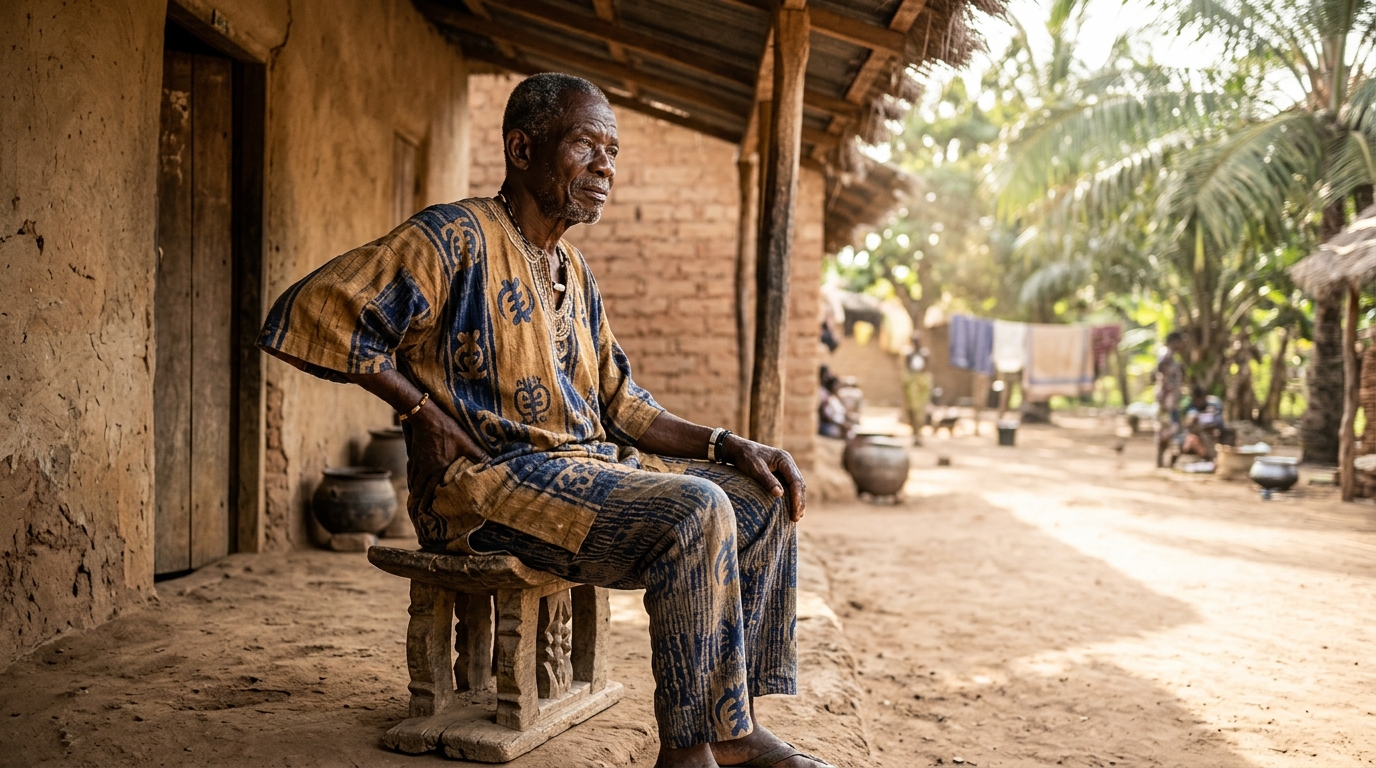
A qualitative study conducted in Ghana reveals how older adults construct meaning around chronic low back pain, showing that personal illness beliefs, emotional distress, functional restrictions, and spiritual coping actively shape how individuals self-regulate in later life. Researchers investigated the lived experiences of older patients seeking hospital care, exploring how persistent musculoskeletal discomfort reshapes day-to-day autonomy and psychological wellbeing. Rather than examining spinal mechanics in isolation, the inquiry applied the Common-Sense Model of Self-Regulation to clarify how patients form subjective cognitive models about their discomfort, develop emotional responses, and select adaptive coping practices. The findings indicate that chronic pain functions not merely as a physical impairment, but as a disruptive condition that renegotiates personal identity, household roles, and spiritual reliance.
Chronic low back pain, typically defined as discomfort persisting for twelve weeks or longer, represents a major contributor to disability and years lived with disability across the globe. Demographic ageing has accelerated substantially, leading to a rising prevalence of age-related conditions including degenerative disc disease, osteoarthritis, reduced muscle strength, and osteoporosis. According to Global Burden of Disease data, back conditions affect hundreds of millions worldwide, with the World Health Organization reporting that 619 million people experienced low back pain in 2020. In sub-Saharan Africa, where epidemiological research is expanding but formal care structures for older populations remain constrained, clinical inquiries have rarely examined how older adults conceptualize chronic back discomfort or manage chronic pain amidst significant sociocultural and economic demands.
To investigate these everyday realities, the researchers implemented an exploratory interpretive qualitative study at the Neurological Department of Komfo Anokye Teaching Hospital, a 1,200-bed tertiary referral facility situated in the Kumasi Metropolis of the Ashanti Region. The metropolis contains approximately 189 health facilities, yet older adults frequently encounter systemic challenges, travel distances, and out-of-pocket financial hurdles when attempting to obtain specialized care. Purposive sampling was used to enroll sixteen participants aged 60 years and above who presented with chronic low back pain and lived within the Kumasi Metropolis. The final participant cohort comprised eleven women and five men, ranging in age from 60 to 73 years, who brought varied occupational backgrounds including farming, teaching, trading, and secretarial employment.
Data collection involved individual, semi-structured face-to-face interviews administered between October and November 2023. An interview guide developed from the Common-Sense Model of Self-Regulation explored participants’ beliefs regarding causes, consequences, functional difficulties, and the influence of family, healthcare systems, and spirituality. Interviews were held either in private clinic rooms or at participants’ homes, with participants selecting whether to speak in English or Twi. Interviews lasted approximately 45 to 60 minutes and were transcribed verbatim, with Twi dialogues translated by bilingual researchers and independently audited for conceptual equivalence. The investigators analyzed the resulting transcripts using reflexive thematic analysis, systematically developing codes inductively while subsequently employing the theoretical constructs of the Common-Sense Model to organize overarching patterns.
The thematic analysis identified five interconnected themes, beginning with how participants actively construct the meaning of their chronic pain. Consistent with the identity and cause dimensions of the Common-Sense Model, participants explained that their condition was far more than an isolated anatomical ache, describing it as an unpredictable state characterized by severe stiffness, fatigue, reduced mobility, and sleep disruption. When searching for underlying causes, individuals attributed their pain to ageing, decades of physically strenuous farming, long hours of sedentary work, prior falls, heredity, and co-occurring conditions. At the same time, many participants reported persistent diagnostic uncertainty and confusion, feeling left to guess what had gone wrong in their bodies as they recognized that their condition was recurring, persistent, and unlikely to disappear entirely.
The second theme illustrated how persistent pain fundamentally redefines everyday life, reflecting the perceived consequences construct of the self-regulation framework. Participants reported that chronic discomfort severely restricted their physical independence, causing profound difficulties when standing, walking, lifting household items, bathing, or using toilet facilities. Beyond basic self-care, the disruption extended to meaningful occupational and community activities: retired and active workers found themselves unable to sustain farming, operate household enterprises, look after grandchildren, or attend social and religious gatherings. Furthermore, the loss of earning capacity and high cumulative expenditures for prescriptions, diagnostic scans, and prospective surgical consultations placed extreme financial strain on households, forcing some individuals to exhaust personal savings or seek informal loans.
Emotional responses represented the third major theme, revealing how prolonged impairment generates profound distress that challenges personal dignity and self-worth. Participants described ongoing feelings of sadness, fear, and frustration, frequently worrying that deteriorating spinal health would lead to total paralysis, surgical failure, or complete dependence on reluctant caregivers. For male participants in particular, functional limitations challenged traditional sociocultural expectations of strength and provision, provoking feelings of diminished masculinity and distress over being seen by children while needing physical assistance or bedpans. These emotional representations mirrored Common-Sense Model predictions, as negative cognitive evaluations of vulnerability, progressive physical decline, and role abandonment directly intensified feelings of sorrow and isolation.
In response to these pervasive disruptions, participants engaged in ongoing efforts to negotiate control over their pain, forming the fourth major theme. Reflecting the control and cure beliefs within the self-regulation framework, patients continuously evaluated available options to alleviate their suffering. Biomedical care included taking prescribed analgesics, attending physiotherapy sessions, and undergoing hospital diagnostic assessments, though several participants ceased formal physical therapy when sessions produced excessive fatigue or when expenses became unsustainable. In parallel, participants instituted individual self-management adaptations, including using firm mattresses, applying hot water massages, pacing physical movements, and resting frequently during short walks. In addition, participants relied heavily on family networks for practical and financial support, though several recounted painful experiences of emotional neglect or delayed assistance when household members were occupied with schooling or employment.
The fifth central theme demonstrated that spiritual faith functioned as a primary anchor of adaptation and emotional regulation. Participants maintained that ultimate healing rests in the hands of God, viewing physicians, medications, and clinical interventions as complementary instruments through which divine assistance operates. Religious engagement through personal prayer, Bible reading, singing, and pastoral visits served as an effective coping mechanism to reduce anxiety, alleviate loneliness, and rebuild hope. Rather than indicating passive resignation, spiritual practices allowed participants to contextualize their physical suffering, maintain emotional equilibrium, and preserve optimism for recovery despite recurrent pain flare-ups and unresolved musculoskeletal symptoms.
While providing detailed qualitative insights into the lived experiences of older patients in Ghana, the authors highlighted important methodological boundaries. Because participants were recruited purposively from a single tertiary referral hospital in Kumasi, their accounts reflect a treatment-seeking cohort and cannot be assumed to represent the broader population of older adults across Ghana who lack access to tertiary facilities. Furthermore, the investigation did not systematically document underlying clinical diagnoses such as radiculopathy or spinal spondylosis, nor did it track pain duration systematically. The authors emphasized that self-reported relief and coping outcomes should not be interpreted as experimental proof of clinical efficacy, noting that future investigations must prospectively test whether integrated psychosocial and person-centred rehabilitation models improve health outcomes in older adults.
Subject of Research: Qualitative analysis of chronic low back pain representations and coping strategies among older adults in Ghana
Article Title: Making sense of chronic low back pain in later life: illness representations and coping among older adults in Ghana
Article References: Eliason, C., Kponton, B. Y., Avadu, P., & Attafuah, P. Y. A. (2026). Making sense of chronic low back pain in later life: illness representations and coping among older adults in Ghana. Frontiers in Pain Research, 7, Article 1920987. https://doi.org/10.3389/fpain.2026.1920987
Image Credits: AI Generated
DOI: 10.3389/fpain.2026.1920987
Keywords: chronic low back pain, geriatric health, Ghana, qualitative research, Common-Sense Model, musculoskeletal health, coping strategies, illness representation, Making, sense, chronic, back
News Source: Ophelia Keating. (November 6, 2026). Qualitative Study Explores How Older Adults in Ghana Navigate Chronic Back Pain. Scienmag.