An intermediate pruning level designated as L3 in a nested U-Net deep learning model achieved superior noise reduction and substantial computational savings for 0.25-tesla low-field brain magnetic resonance imaging. In comparative evaluations across multiple architecture configurations, the L3 model demonstrated the highest peak signal to noise ratio and the lowest mean absolute error while maintaining structural similarity comparable to other pruning depths.
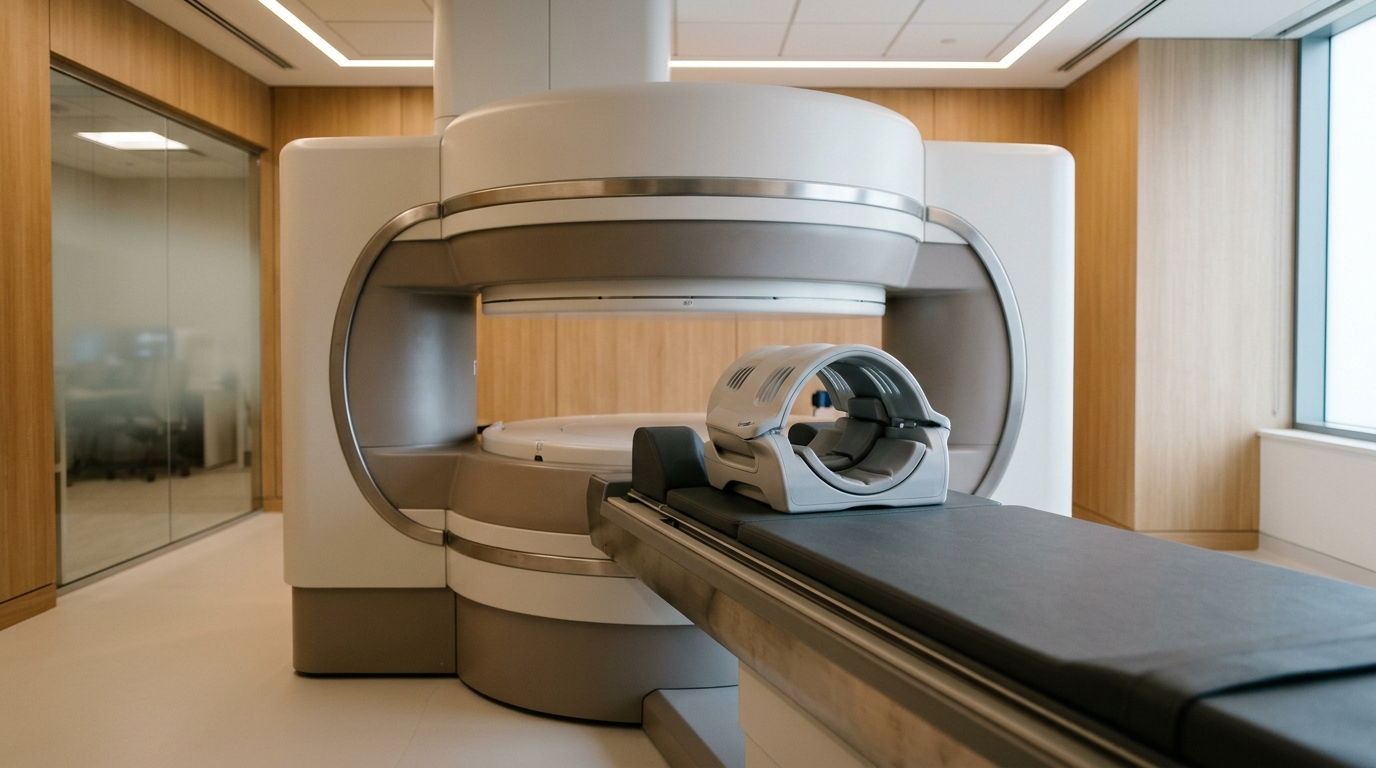
Low-field magnetic resonance imaging has attracted expanding interest in clinical and diagnostic settings because of its open-bore design, portability, lower operational cost, and improved accessibility. However, its inherently low signal to noise ratio limits image quality and clinical utility.
To establish the feasibility of enhancing image quality on a 0.25-tesla scanner, researchers evaluated four distinct model configurations spanning from L1 to L4. The L1 configuration represented the shallowest and most pruned architecture incorporating the fewest model parameters, while the L4 setup served as the full-depth nested U-Net without any parameter pruning applied.
The evaluation tracked reconstruction fidelity through the peak signal to noise ratio, the structural similarity index measure, and the mean absolute error, while measuring computational efficiency through training duration, inference time, and total parameter counts. The pruning level significantly affected all evaluated metrics.
Compared directly against the unpruned full-depth L4 model, the intermediate L3 configuration achieved a 75.6 percent reduction in parameter count, a 30.1 percent reduction in overall training duration, and a 24.3 percent reduction in inference time. These computational efficiency gains occurred alongside measurable image quality improvements, including a 1.75 percent increase in peak signal to noise ratio from 37.11 to 37.76 decibels, a 2.42 percent reduction in mean absolute error, and a comparable structural similarity index measure of 0.908 versus 0.914.
The intermediate L3 architecture also demonstrated the smallest performance variance associated with patient posture during data acquisition. Furthermore, L3 outperformed standard baseline noise reduction approaches, exceeding the performance of conventional Gaussian, median, Wiener, and non-local means filters, while surpassing a standard U-Net in both peak signal to noise ratio and mean absolute error while operating with only 28 percent of the standard U-Net parameter count.
The study authors concluded that an intermediate pruning level offers a favorable operational trade-off between image noise reduction performance and runtime computational efficiency for 0.25-tesla low-field brain imaging. The researchers noted that further validation in clinical populations is warranted.
Subject of Research: Optimization of nested U-Net noise reduction for low-field brain MRI
Article Title: Optimization of nested U-Net-based noise reduction for low-field brain MRI: effects of pruning level and patient posture
Article References: Kim, H., Yun, C.-S., Oh, C., Chung, J.-Y., Lee, Y., & Choi, G. (2026). Optimization of nested U-Net-based noise reduction for low-field brain MRI: effects of pruning level and patient posture. Frontiers in Neuroscience, 20, Article 1991875. https://doi.org/10.3389/fnins.2026.1991875
Image Credits: AI Generated
DOI: 10.3389/fnins.2026.1991875
Keywords: low-field brain MRI, nested U-Net, noise reduction, model pruning, peak signal to noise ratio, structural similarity index measure, mean absolute error, 0.25-T MRI, deep learning denoising, computational efficiency, inference time, patient posture effects, standard U-Net, Wiener filter, non-local means filter, Gaussian filter, median filter, brain imaging methods
News Source: Cassandra Pierce. (November 27, 2026). Pruned Nested U-Net Model Enhances 0.25-Tesla Brain MRI Quality and Efficiency. Scienmag.