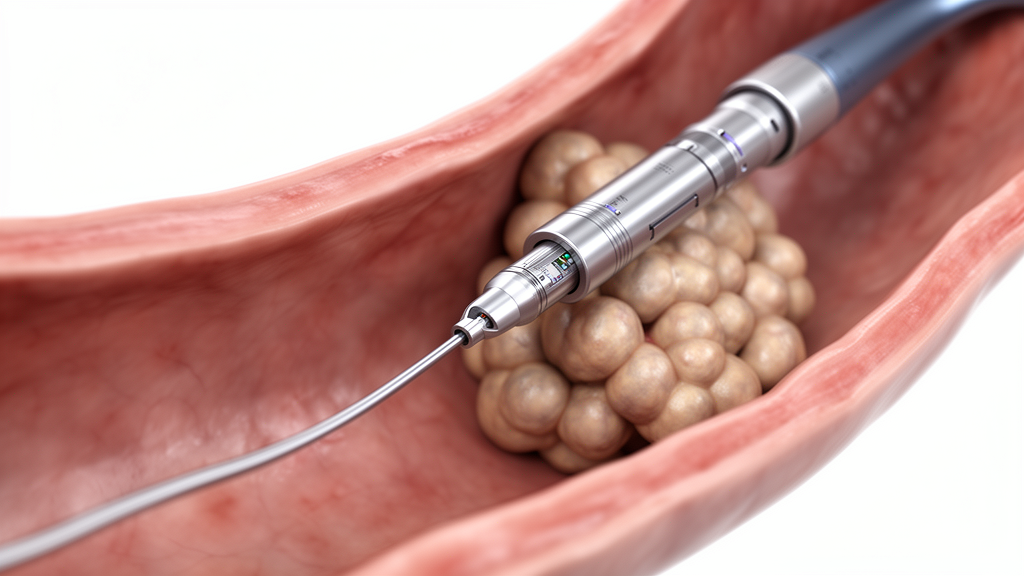
A prototype slim linear endobronchial ultrasound bronchoscope operated without an external contact balloon achieved significantly higher lymph node image quality than a conventional bronchoscope utilized with an inflated contact balloon in a crossover cadaveric trial. Published in CHEST Pulmonary, the study examined whether an experimental slim bronchoscope could maintain diagnostic visualization of thoracic lymph nodes without relying on acoustic contact balloons. Across standardized nodal assessments conducted by eleven bronchoscopists on two defrosted human cadaveric models, an independent panel of expert reviewers awarded the unballooned prototype scope a mean Likert image quality score of 2.03, which was statistically superior to the 1.88 mean score recorded for the conventional instrument evaluated with an inflated balloon (P = .03). The investigators concluded that the slim prototype provides noninferior and potentially superior ultrasound visualization for mediastinal and hilar assessment while demonstrating the viability of balloon-free bronchoscopy, providing essential pilot data prior to prospective human clinical evaluation.
Linear endobronchial ultrasound (EBUS) currently serves as the clinical gold standard for assessing mediastinal disease and proximal pulmonary lesions. Following its clinical introduction, linear EBUS revolutionized thoracic diagnostic practice by permitting real-time ultrasound imaging and fine-needle aspiration of structures within the mediastinum and proximal lungs. Compared with traditional invasive mediastinoscopy, linear EBUS established a safer, minimally invasive alternative capable of sampling multiple nodal stations on an outpatient basis. However, standard commercial linear EBUS bronchoscopes remain constrained to central and immediate proximal airways because of instrument size and limited scope flexibility. When pulmonary nodules occur in peripheral lung zones, clinicians must use alternative guidance tools that lack real-time tool-in-lesion confirmation, leading to limited diagnostic accuracy. While cone-beam computed tomography and robotic bronchoscopy assist peripheral navigation, they require substantial capital investment, involve radiation, and cannot perform mediastinal lymph node staging, which remains vital for cancer treatment planning.
To address peripheral lesion access while preserving mediastinal staging within a single platform, engineers developed a slimmer and more flexible linear EBUS prototype manufactured by Fujifilm. This newly designed prototype was evaluated to determine whether downsizing scope dimensions and enhancing maneuverability could maintain mediastinal imaging quality before testing peripheral reach. Mechanically, the prototype features a reduced distal outer diameter of 6.4 millimeters (with tip dimensions measuring 6.3 millimeters) compared to 6.7 millimeters on the standard conventional EB-530US instrument, along with an insertion tube diameter narrowed to 5.9 millimeters compared to 6.3 millimeters on the conventional scope. Additionally, the prototype expands working channel diameter from 2.0 millimeters to 2.2 millimeters, increases upward flexion angulation from 130 degrees to 180 degrees, and replaces the conventional scope’s internal balloon channel with an external balloon attachment system.
The study protocol was reviewed by the Institutional Review Board of Johns Hopkins University and determined to be exempt from review under federal regulation 45 CFR 46.104(d)(4) because it evaluated de-identified cadaveric specimens without links to living individuals or collection of private identifiable data. The investigation used two human cadaveric models with intrinsic lymphadenopathy that were defrosted prior to study initiation and evaluated without mechanical ventilation. Prior to procedural testing, two expert bronchoscopists performed comprehensive airway inspections on both specimens to identify the two most prominent unaltered lymph node stations in each body. The selected anatomical targets comprised subcarinal station 7 in both cadavers, accompanied by interlobar station 11L in one specimen and station 11R in the second, with short-axis lymph node diameters measuring between 0.6 and 1.25 centimeters.
The procedural cohort included eleven bronchoscopists with diverse clinical experience, categorized into three distinct operational tiers. The expert group comprised six bronchoscopists who had performed more than 1,000 linear EBUS procedures; the intermediate group included two operators with 200 to 400 prior cases; and the novice group consisted of three operators with fewer than 20 career procedures. The trial implemented a crossover design in which each operator served as their own control to reduce inter-subject variability. Testing followed a standardized procedural sequence: every participant performed procedures on the first cadaver starting with the prototype scope, followed by the conventional instrument on the same stations, before repeating the identical process on the second cadaver. This fixed order ensured that any procedural repetition or anatomical familiarity across runs would benefit the conventional scope rather than the prototype.
During the procedures, operators navigated to the designated lymph node stations and optimized ultrasound visualization across four standardized procedural steps per station: contact balloon inflated, contact balloon inflated with the biopsy needle extended into the node, contact balloon deflated, and contact balloon deflated with the needle extended into the node. After finishing these steps at the first station, operators repeated the protocol at the second station on the same cadaver using the prototype bronchoscope, subsequently switching to the conventional bronchoscope to repeat the sequence. This structured methodology established four distinct procedural arms for comparative analysis: prototype bronchoscope with external balloon inflated (PB), prototype without external balloon (PNB), conventional bronchoscope with contact balloon inflated (CB), and conventional bronchoscope without contact balloon inflated (CNB).
Across all procedural sessions, the eleven bronchoscopists generated 348 individual lymph node ultrasound screenshots. An independent study coordinator compiled, categorized, and de-identified the images, assigning randomized identification numbers detached from scope type, balloon condition, or operator background. An independent panel of five expert bronchoscopists, masked to image source and each other’s ratings, reviewed all 348 screenshots. The reviewers rated image quality on a validated four-point Likert scale (1 = poor, indicating inability to ascertain lymph node features; 2 = average; 3 = good; 4 = excellent, representing complete visualization of features) evaluating lymph node size, shape, margins, echogenicity, vascular patterns, and central hilar structures compared against historical in vivo clinical benchmarks.
Statistical analyses were performed using Stata software version 14.2, using Student t-tests for normally distributed continuous variables, Mann-Whitney U tests for non-normally distributed data, and one-way analysis of variance across three or more categories, with significance defined as P < .05. Across all 348 images, the aggregate mean Likert score was 1.86. Overall comparison between scope models demonstrated no statistically significant difference between the prototype (mean 1.90 ± standard error 0.04 across 174 images) and the conventional scope (mean 1.84 ± 0.05 across 174 images; P = .8). Furthermore, pooled comparison of balloon use revealed no statistically significant difference between inflated balloon utilization (mean 1.82 ± 0.04 across 176 images) and non-balloon utilization (mean 1.92 ± 0.05 across 172 images; P = .06).
Statistically significant differences emerged when imaging data were classified simultaneously by bronchoscope model and balloon deployment, as confirmed by one-way analysis of variance (P < .01). The prototype bronchoscope without an external balloon (PNB) achieved the highest overall score among all four arms, recording a mean Likert score of 2.03 ± 0.05 across 86 images. Direct pairwise t-tests showed that the unballooned prototype was statistically superior to each of the remaining arms: outperforming the standard clinical configuration of the conventional scope with an inflated balloon (CB: mean 1.88 ± 0.06 across 88 images; P = .03), the conventional scope without an inflated balloon (CNB: mean 1.80 ± 0.07 across 86 images; P < .01), and the prototype scope with an inflated external balloon (PB: mean 1.76 ± 0.06 across 88 images; P < .01).
Stratification by operator experience revealed significant overall differences in image scoring (ANOVA P < .01). Expert bronchoscopists recorded a mean Likert score of 1.96 ± 0.04 across 190 images, performing statistically significantly better than intermediate operators (mean 1.82 ± 0.08 across 64 images; P = .05) and novice operators (mean 1.73 ± 0.06 across 94 images; P = .007), while intermediate and novice scores showed no significant difference. Within the expert cohort, the prototype without balloon achieved a mean score of 2.07 ± 0.08 (46 images), compared with 1.91 ± 0.08 for the prototype with balloon (46 images; P = 0.07) and 1.93 ± 0.09 for the conventional scope with inflated balloon (46 images; P = 0.104). Across all experience levels, the unballooned prototype consistently recorded the highest numerical scores, demonstrating consistent diagnostic imaging capability.
In evaluating clinical implications, the researchers noted that operating the prototype bronchoscope without an external contact balloon preserves ultrasound image quality while offering meaningful procedural efficiencies. Eliminating balloon use can streamline procedural preparation, reduce consumable medical equipment costs, lower healthcare carbon emissions, and eliminate potential airway complications associated with balloon rupture or dislodgement during bronchoscopy.
The study authors recognized several limitations in their experimental design. The investigation utilized non-ventilated cadaveric models, precluding assessment of breathing motion or dynamic respiratory ultrasound artifacts. Target lymph nodes were restricted to mildly enlarged subcarinal and hilar stations (0.6 to 1.25 cm) because upper paratracheal stations (2R, 2L, 4R, 4L) were not identifiable in the specimens. Furthermore, procedural numbers in intermediate and novice cohorts were modest, reducing statistical power across those subgroups. Peripheral reach was not directly assessed in this trial, although published findings by Pastis and colleagues using an equivalent 5.9-millimeter prototype demonstrated peripheral advancement 20 millimeters beyond conventional instruments. The authors concluded that this cadaver study provides crucial pilot data supporting future human trials focusing on peripheral nodule reach, paratracheal staging accuracy, and human safety outcomes.
Subject of Research: Comparative image quality of a prototype slim linear EBUS bronchoscope versus conventional instruments in a cadaver model
Article Title: Quality of Lymph Node Visualization Using a Novel Slim Linear EBUS Bronchoscope vs a Conventional Linear EBUS Bronchoscope: A Crossover, Single-Blind Cadaveric Study
Article References: Kapp, C. M., Thiboutot, J., Wang, D., DeMarco, B., Argento, A. C., Gilbert, C., Akulian, J., Choi, H. J., Vachani, A., Gonzalez, V., Ajmani, G., Pai, C., Claxton, B. B., Reinoso, J., Holden, V., Latifi, A., & Yarmus, L. (2026). Quality of Lymph Node Visualization Using a Novel Slim Linear EBUS Bronchoscope vs a Conventional Linear EBUS Bronchoscope. CHEST Pulmonary, 4(4), Article 100202. https://doi.org/10.1016/j.chpulm.2025.100202
Image Credits: AI Generated
DOI: 10.1016/j.chpulm.2025.100202
Keywords: linear endobronchial ultrasound, EBUS bronchoscope, lymph node visualization, cadaveric study, mediastinal staging, contact balloon, prototype bronchoscope, EB-530US, subcarinal station 7, interlobar station 11, Likert image quality scale, bronchoscopist experience levels, crossover design, single-blind evaluation, distal tip diameter, thoracic diagnostics, Stata version 14.2
News Source: Ophelia Keating. (November 23, 2026). Prototype Slim EBUS Bronchoscope Improves Lymph Node Imaging Without Contact Balloons. Scienmag.