• HOME
  • NEWS
  • EXPLORE
    • CAREER
      • Companies
      • Jobs
    • EVENTS
    • iGEM
      • News
      • Team
    • PHOTOS
    • VIDEO
    • WIKI
  • BLOG
  • COMMUNITY
    • FACEBOOK
    • INSTAGRAM
    • TWITTER
Friday, November 6, 2026
BIOENGINEER.ORG
No Result
View All Result
  • Login
  • HOME
  • NEWS
  • EXPLORE
    • CAREER
      • Companies
      • Jobs
        • Lecturer
        • PhD Studentship
        • Postdoc
        • Research Assistant
    • EVENTS
    • iGEM
      • News
      • Team
    • PHOTOS
    • VIDEO
    • WIKI
  • BLOG
  • COMMUNITY
    • FACEBOOK
    • INSTAGRAM
    • TWITTER
No Result
View All Result
Bioengineer.org
No Result
View All Result
Home NEWS Science News Health

Proton Pump Inhibitor Use Not Linked to Higher Predicted Cardiovascular Risk

by
November 5, 2026
in Health
Reading Time: 2 mins read
0
Proton Pump Inhibitor Use Not Linked to Higher Predicted Cardiovascular Risk

Proton Pump Inhibitor Use Not Linked to Higher Predicted Cardiovascular Risk

Share on FacebookShare on TwitterShare on LinkedinShare on RedditShare on Telegram

Proton pump inhibitor use is not associated with higher predicted 10-year cardiovascular risk among adults without established cardiovascular disease, according to a cross-sectional study published in BMC Cardiovascular Disorders. Researchers evaluated predicted cardiovascular risk using both the Atherosclerotic Cardiovascular Disease (ASCVD) score and the Predicting Risk of Cardiovascular Disease EVENTS (PREVENT) score, finding that initial associations observed in unadjusted models were attenuated and became statistically nonsignificant once prespecified covariates were taken into account.

The study, conducted by Angel Goenawan and Julie C. Lauffenburger, analyzed data from the 2011–2018 National Health and Nutrition Examination Survey (NHANES). The investigation included 4,036 adults who had no prior cardiovascular disease and had complete components recorded for both the ASCVD and PREVENT risk scoring systems. Using survey-weighted multivariable linear regression, the investigators estimated mean differences and 95% confidence intervals in both cardiovascular risk scores between individuals who used proton pump inhibitors and non-users.

In unadjusted analyses, proton pump inhibitor use was initially associated with higher risk scores, showing a mean difference of 6.31 (95% confidence interval, 4.07 to 8.55) for the ASCVD score and a mean difference of 4.49 (95% confidence interval, 3.10 to 5.87) for the PREVENT score. Following multivariable adjustment for prespecified covariates, however, these associations were attenuated and statistically nonsignificant, with an adjusted mean difference of −0.72 (95% confidence interval, −2.65 to 1.22) for the ASCVD score and an adjusted mean difference of −0.80 (95% confidence interval, −1.98 to 0.39) for the PREVENT score. Among secondary component outcomes evaluated in the study, hypertension and diabetes remained statistically significant after applying Benjamini–Hochberg false discovery rate correction.

The authors noted that proton pump inhibitors are widely used medications, frequently taken without an appropriate indication, and have previously been linked to several adverse outcomes, including potential cardiovascular effects. Prior to this research, it remained unclear whether proton pump inhibitor use was associated with elevated predicted cardiovascular risk when assessed through validated risk scores. The researchers concluded that proton pump inhibitor use was not associated with higher predicted 10-year cardiovascular risk in this population of U.S. adults without established cardiovascular disease, emphasizing that the findings specifically concern predicted risk estimates rather than incident cardiovascular events.

Subject of Research: Proton pump inhibitor use and predicted cardiovascular disease risk

Article Title: Association be​tween proton pump inhibitors use and cardiovascular disease risk estimation: atherosclerotic cardiovascular disease (ASCVD) score and predicting risk of cardiovascular disease events (PREVENT) score

Article References: Goenawan, A., & Lauffenburger, J. C. (2026). Association be​tween proton pump inhibitors use and cardiovascular disease risk estimation: atherosclerotic cardiovascular disease (ASCVD) score and predicting risk of cardiovascular disease events (PREVENT) score. BMC Cardiovascular Disorders. https://doi.org/10.1186/s12872-026-06910-6

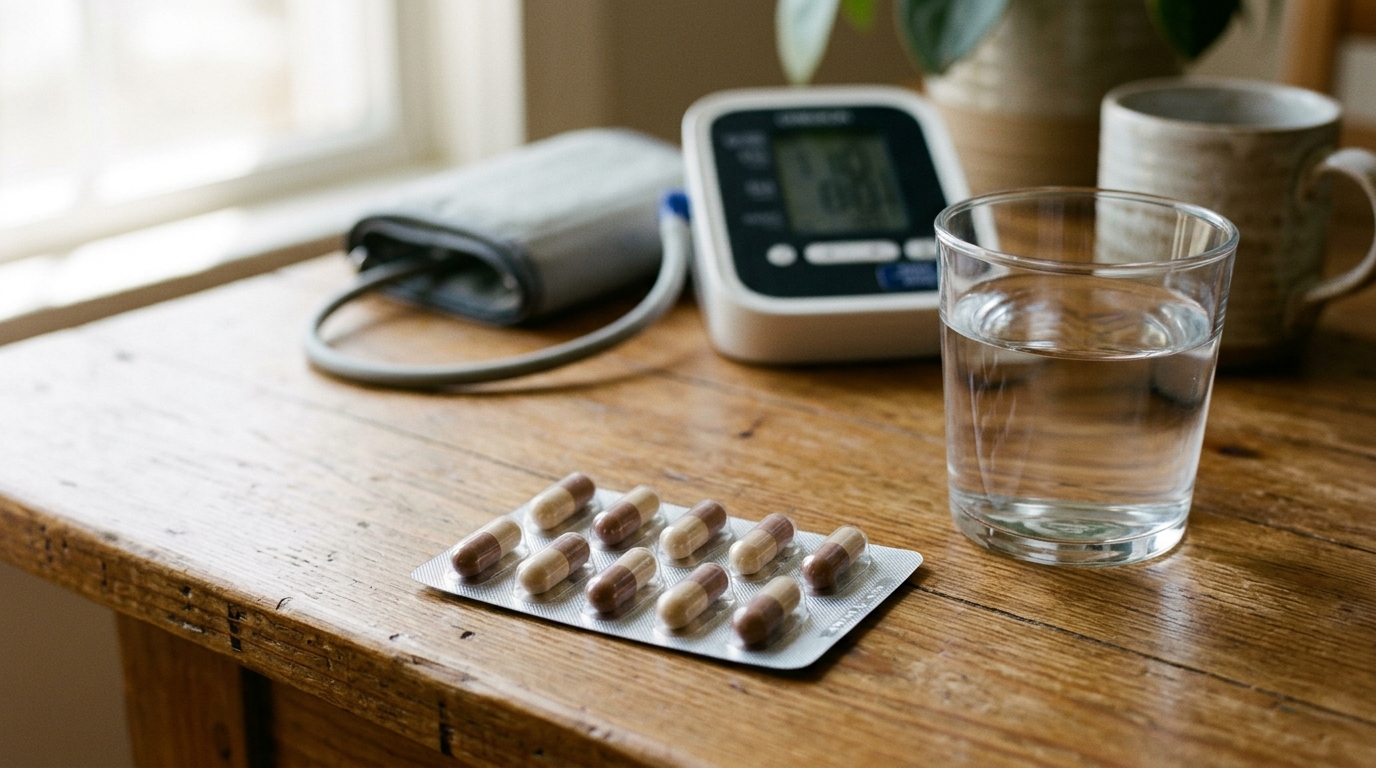
Image Credits: AI Generated

DOI: 10.1186/s12872-026-06910-6

Keywords: proton pump inhibitors, cardiovascular disease, ASCVD score, PREVENT score, cardiovascular risk, NHANES, hypertension, diabetes, Association, tween, proton, pump

News Source: Ophelia Keating. (November 5, 2026). Proton Pump Inhibitor Use Not Linked to Higher Predicted Cardiovascular Risk. Scienmag.


Tags: ASCVD scoreAssociationCardiovascular diseasecardiovascular riskDiabeteshypertensionNHANESPREVENT scoreProtonproton pump inhibitorspumptween
Share12Tweet7Share2ShareShareShare1

Related Posts

Sex May Modify Obesity-Related Heart Failure Physiology but Not Treatment Eligibility

Sex May Modify Obesity-Related Heart Failure Physiology but Not Treatment Eligibility

November 6, 2026
ADHD Medication Dispensing in Norway Rose Significantly Between 2005 and 2025

ADHD Medication Dispensing in Norway Rose Significantly Between 2005 and 2025

November 6, 2026

Survey Finds Gap Between Geriatric Prescribing Knowledge and Practice in Indian Dentists

November 6, 2026

Isoflurane Anaesthesia Leaves Rabbit Gut Transit and Appetite Largely Unchanged

November 6, 2026

POPULAR NEWS

  • Sex May Modify Obesity-Related Heart Failure Physiology but Not Treatment Eligibility

    Sex May Modify Obesity-Related Heart Failure Physiology but Not Treatment Eligibility

    29 shares
    Share 12 Tweet 7
  • ADHD Medication Dispensing in Norway Rose Significantly Between 2005 and 2025

    29 shares
    Share 12 Tweet 7
  • Survey Finds Gap Between Geriatric Prescribing Knowledge and Practice in Indian Dentists

    29 shares
    Share 12 Tweet 7
  • Isoflurane Anaesthesia Leaves Rabbit Gut Transit and Appetite Largely Unchanged

    29 shares
    Share 12 Tweet 7

About

We bring you the latest biotechnology news from best research centers and universities around the world. Check our website.

Follow us

Recent News

Sex May Modify Obesity-Related Heart Failure Physiology but Not Treatment Eligibility

ADHD Medication Dispensing in Norway Rose Significantly Between 2005 and 2025

Survey Finds Gap Between Geriatric Prescribing Knowledge and Practice in Indian Dentists

Subscribe to Blog via Email

Enter your email address to subscribe to this blog and receive notifications of new posts by email.

Join 86 other subscribers
  • Contact Us

Bioengineer.org © Copyright 2023 All Rights Reserved.

Welcome Back!

Login to your account below

Forgotten Password?

Retrieve your password

Please enter your username or email address to reset your password.

Log In
No Result
View All Result
  • Homepages
    • Home Page 1
    • Home Page 2
  • News
  • National
  • Business
  • Health
  • Lifestyle
  • Science

Bioengineer.org © Copyright 2023 All Rights Reserved.