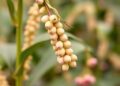
In the quest for sustainable and nutritious food sources to support a growing global population, researchers at RMIT University in Australia have turned their attention to an often-overlooked native shrub known as Old Man Saltbush (Atriplex nummularia). Traditionally esteemed within Indigenous Australian cultures for thousands of years and primarily used as livestock fodder, this drought-tolerant plant is emerging as a promising candidate for wider human consumption. Recent studies reveal Old Man Saltbush’s potential not only as a sustainable crop resilient to harsh climates but also as a highly nutritious and functional ingredient in food production, specifically in wheat-based products.
The groundbreaking research spearheaded by food scientists at RMIT seeks to decode the physicochemical properties of saltbush powder, exploring its capabilities as a novel food additive. Through rigorous analysis, the team sought to understand its macronutrient composition, amino acid profile, and mineral content, aiming to validate its suitability as a high-quality plant protein source. Such inquiries hold significant implications given the mounting demand for alternative proteins that combine nutritional density with environmental sustainability.
One of the most striking revelations from this study is the protein quality of saltbush, which closely aligns with the ideal amino acid requirements for human nutrition. PhD candidate Samiddhi Gunathilake, the study’s principal author, highlighted that saltbush’s protein content is competitive with, and in some respects superior to, well-established plant proteins such as soy, pea, and rice proteins. This finding challenges prevailing assumptions around traditional plant proteins and introduces saltbush as a compelling new option for diversifying protein sources in the human diet.
Beyond protein content, saltbush flourishes nutritionally with a notable abundance of essential minerals. The analysis underscored the presence of calcium, iron, phosphorus, zinc, and sodium—elements critically involved in various physiological functions including bone health, oxygen transport, cellular metabolism, and immune response. Such mineral richness lends saltbush an advantageous position in contributing to micronutrient adequacy, especially in populations at risk of deficiencies.
Apart from its nutritional profile, saltbush powder features a comparatively higher fat content than conventional plant flours. While at first glance this might appear as a nutritional compromise, the fats present could enhance the texture and mouthfeel of formulated foods, potentially improving sensory acceptance. Moreover, the inherent green hue of saltbush imparts a distinct visual appeal, opening avenues for its application in culinary products where aesthetics play a vital role.
To demonstrate practical applications, the researchers incorporated ground saltbush powder into wheat flour noodles, a staple food product with global consumption. This innovative blending yielded marked improvements in nutritional value: the protein concentration doubled relative to standard wheat pasta, and dietary fiber content increased eightfold. Such enhancements translate to one serving of saltbush-enriched pasta providing nearly half the recommended daily protein intake for an adult, a notable achievement in the realm of functional foods.
Dr. Mahsa Majzoobi, the study’s lead investigator, emphasized the nutritional superiority saltbush offers over wheat flour alone. She noted that the functional integration of saltbush not only enriches protein and fiber content but also serves as a natural salt substitute, signaling potential health benefits by reducing added sodium in processed foods. These dual advantages highlight both saltbush’s role in enhancing food quality and its alignment with public health nutrition priorities.
Of particular interest is saltbush’s amino acid composition, which addresses a common limitation in wheat-based diets. Wheat typically lacks sufficient lysine and tryptophan, two essential amino acids vital for protein synthesis and overall health. Saltbush, by contrast, exhibits substantial levels of these amino acids, presenting a complementary protein source. Mixing wheat flour with saltbush powder thus achieves a more balanced and complete protein profile, an important step toward meeting comprehensive dietary needs through plant-based foods.
Looking ahead, the research team recognizes that lab-scale findings require validation through more extensive studies. Future research will investigate the long-term impacts of saltbush on gut health and overall nutrition, incorporating sensory evaluation and consumer acceptance trials. Moreover, scaling production while maintaining supply chain consistency and processing efficiency remains a critical challenge to bring saltbush-based ingredients to mainstream food markets.
Collaboration with agricultural stakeholders and industry partners will be pivotal for sustainable cultivation and processing enhancements. The researchers plan to engage closely with growers to optimize farming practices suitable for saltbush, which thrives under drought conditions, thus offering a viable crop option amid climate variability. These efforts aim to create a resilient, localized supply chain that supports both economic and environmental sustainability.
Ultimately, this research aligns with a broader vision to integrate climate-resilient native plants into food systems, promoting dietary diversification and environmental stewardship. By transforming Old Man Saltbush from a niche fodder plant into a valuable food ingredient, the scientific community pioneers innovative pathways toward healthier, more sustainable diets adaptable to future challenges.
Published in the journal Food and Bioprocess Technology, this study, titled “Exploring the Physicochemical Properties of Saltbush (Atriplex nummularia) Powder as a Novel Sustainable Food Ingredient: Impact on Wheat Flour Noodle Quality,” represents a significant contribution to applied food science. It underscores the transformative potential of indigenous plants in addressing global food security and nutrition in the twenty-first century.
By embracing plants like Old Man Saltbush as functional ingredients, food innovators can leverage their unique nutritional profiles and sustainability advantages to craft new products that resonate with health-conscious consumers and environmentally minded markets alike. The integration of such ingredients offers a promising frontier in reducing reliance on traditional staples and supporting resilient agricultural ecosystems.
As this research progresses toward commercialization, it invites greater interdisciplinary dialogue among food scientists, nutritionists, agronomists, and policymakers. Collaborative approaches will be key to overcoming production bottlenecks, regulatory hurdles, and consumer education to fully realize saltbush’s promise. The journey from desert shrub to dietary staple epitomizes the innovative spirit essential for confronting future food system complexities.
Subject of Research: Not applicable
Article Title: Exploring the Physicochemical Properties of Saltbush (Atriplex nummularia) Powder as a Novel Sustainable Food Ingredient: Impact on Wheat Flour Noodle Quality
News Publication Date: 6-Dec-2025
Web References: http://dx.doi.org/10.1007/s11947-025-04094-z
References: ‘Exploring the Physicochemical Properties of Saltbush (Atriplex nummularia) Powder as a Novel Sustainable Food Ingredient: Impact on Wheat Flour Noodle Quality,’ Food and Bioprocess Technology, DOI: 10.1007/s11947-025-04094-z
Image Credits: Michael Quin, RMIT University
Keywords: Food additives, Sustainable agriculture, Agriculture, Nutritional physiology
Tags: alternative protein for global nutritionamino acid profile of saltbushdrought-tolerant crops for foodfunctional ingredients in wheat productsIndigenous Australian edible plantsOld Man Saltbush nutritional benefitsplant-based protein alternativesRMIT University food researchsaltbush as livestock and human foodsaltbush powder food additivesustainable agriculture in arid regionssustainable protein sources Australia