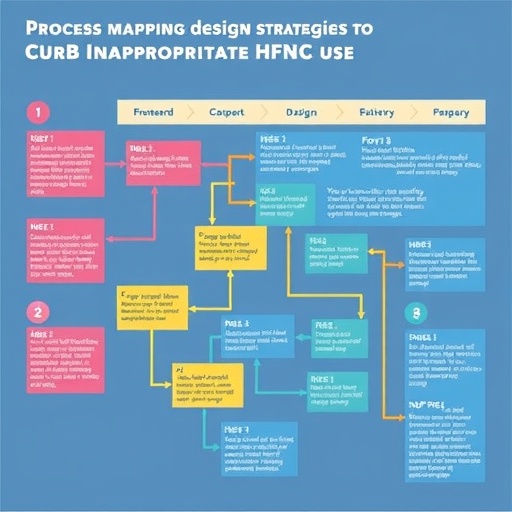
Emergency departments facing bronchiolitis in infants often rely on high-flow nasal cannula (HFNC) oxygen therapy, a tool that can help when respiratory distress escalates. Yet HFNC is also vulnerable to inconsistent use, where some patients receive escalated support despite signs that may not warrant it. In a new study published in Pediatric Research, researchers describe how process mapping—linked to design theory—can be used to reduce inappropriate HFNC administration during bronchiolitis care.
The team’s approach treats clinical workflow as a system rather than a checklist. By charting patient trajectories from triage to treatment decisions, they identify where ambiguity, variability in assessment, and communication gaps can steer teams toward unnecessary escalation. The resulting strategy emphasizes standardizing decision points and clarifying the logic behind when HFNC is indicated.
Design theory is central to the intervention: the researchers focus on how humans interpret signals under time pressure. Instead of only updating protocols, they engineer the care environment to make correct choices easier—such as by aligning documentation cues with clinical targets, and reinforcing consistent thresholds for escalation and de-escalation. This reframing aims to reduce “automation drift,” where clinicians unintentionally default to prior practices.
Technically, the work considers HFNC as part of a stepwise respiratory support pathway, where flow and oxygen delivery should respond to objective indicators of severity. The study highlights that inappropriate use can occur not because HFNC is ineffective, but because it may be applied when conventional supportive measures could suffice. Overuse carries risks including unnecessary discomfort and resource strain, especially in high-volume emergency settings.
To evaluate impact, the researchers track changes in how HFNC is initiated across care episodes. They also assess whether the updated workflow supports timely reassessment—key for ensuring that patients who improve can transition away from HFNC rather than remain on higher support by default.
Crucially, the intervention is designed to be implementable in real clinical environments. Process mapping helps teams visualize constraints such as staffing, time to clinician review, and variability in how symptom severity is recorded. By converting those observations into practical design features, the strategy seeks sustained behavior change.
While the study is focused on bronchiolitis, its message is broadly relevant: clinicians can use systems thinking to make guideline-concordant care the path of least resistance. If adopted widely, these methods could improve both patient outcomes and the efficiency of emergency respiratory therapy.
Overall, the research offers a “viral” idea for healthcare improvement: treat care delivery like a product that must be engineered—using mapping, feedback loops, and design principles—to align real-world decisions with evidence-based indications.
Subject of Research:
Bronchiolitis care in emergency settings; inappropriate HFNC use
Article Title:
Process mapping to design theory-informed strategies reducing inappropriate HFNC use in emergency bronchiolitis care.
Article References:
Shaw, L., Wilson, C., Haskell, L. et al. Process mapping to design theory-informed strategies reducing inappropriate HFNC use in emergency bronchiolitis care. Pediatr Res (2026). https://doi.org/10.1038/s41390-026-05304-w
Image Credits: AI Generated
DOI: https://doi.org/10.1038/s41390-026-05304-w
Keywords:
Tags: Bronchiolitis treatment protocolsclinical workflow analysiscommunication gaps in emergency caredesign theory in medical decision-makinghealthcare environment optimizationhigh-flow nasal cannula (HFNC) therapyhuman factors in clinical decisionspreventing automation drift in clinical practiceprocess mapping in healthcarereducing unnecessary oxygen therapyrespiratory support pathwaystandardizing escalation criteria