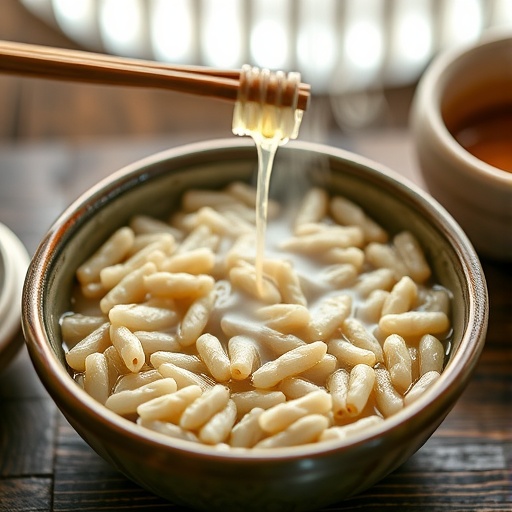
In a significant leap forward for both traditional fermentation processes and probiotic science, researchers have unveiled a novel approach to producing Korean rice wine by harnessing the power of indigenous Saccharomyces cerevisiae strains with probiotic properties. This breakthrough, detailed in a recent publication from the Food Science and Biotechnology field, offers a refreshing perspective on how ancient beverages such as Korean rice wine, or makgeolli, can be innovated through modern microbiological techniques to enhance both health benefits and fermentation efficacy.
The native microflora of fermented foods has long been a subject of scientific fascination. Saccharomyces cerevisiae, commonly known as baker’s or brewer’s yeast, is a staple in many fermentation traditions globally, but its indigenous strains isolated directly from specific environments carry unique characteristics that could be highly beneficial. The study in question meticulously isolated indigenous strains of this yeast from traditional Korean fermentation sites and explored their dual functionality—not only as fermentative agents but also as probiotic microorganisms capable of positively influencing gut health.
Probiotic functionality of yeasts generally remains less explored compared to lactic acid bacteria, and this research ventures into less-charted territory by evaluating how Saccharomyces cerevisiae strains can contribute beneficial effects beyond fermentation. By integrating probiotic strains into the production of Korean rice wine, the researchers are essentially breathing new life into an age-old beverage, potentially transforming it into a functional food with health-promoting properties.
The researchers began their study by sourcing indigenous Saccharomyces cerevisiae strains, characterizing their genomic and phenotypic traits to ascertain their fermentative capabilities. Critical parameters such as ethanol tolerance, sugar metabolism, and acid production were evaluated to ensure these strains could robustly handle the complex carbohydrate profile present in rice substrates. Unlike conventional industrial strains, these indigenous yeasts displayed distinctive metabolic patterns, suggesting a tailored suitability for the subtle nuances of Korean rice wine fermentation.
A unique aspect of the study involved rigorous safety assessments of the isolated strains. Before any probiotic application, evaluating cytotoxicity, antibiotic resistance profiles, and production of potentially harmful metabolites was paramount. The researchers confirmed that the selected strains were safe for human consumption, addressing a major hurdle in the application of yeasts as probiotics.
In addition to safety, the probiotic potential was gauged through in vitro simulations of gastrointestinal conditions. This included acid and bile salt tolerance tests, adhesion abilities to intestinal epithelial cells, and antimicrobial activity against common pathogens. The results were promising, indicating that these indigenous yeasts could survive and colonize in the human gut, a necessary criterion for effective probiotics.
Fermentation trials were then conducted comparing traditional Korean rice wine production with fermentations inoculated with the selected probiotic Saccharomyces cerevisiae strains. Parameters such as fermentation kinetics, ethanol yield, sugar consumption, and flavor compound profiles were meticulously recorded. The probiotic strains not only matched but in some cases surpassed the fermentation efficiency of standard industrial strains, showcasing their dual utility for both beverage production and health promotion.
Flavor profile analysis revealed intriguing biochemical shifts in aroma and taste compounds. The probiotic strains led to elevated production of desirable esters and higher alcohols, compounds associated with improved sensory attributes. This finding suggests that leveraging indigenous probiotic Saccharomyces cerevisiae could elevate traditional rice wines’ flavor complexity, making them more appealing to modern consumers seeking artisanal, healthier alternatives.
Beyond the lab-scale biochemistry, the study delved into the molecular mechanisms underpinning the functional properties of these yeasts. Gene expression analysis revealed upregulation of specific metabolic pathways related to stress resistance, carbohydrate metabolism, and bioactive compound synthesis. These genetic insights provide deeper understanding of how these strains adapt to fermentation environments and how their probiotic traits manifest in situ.
The implications of this research extend beyond Korean rice wine production alone. The integration of probiotic yeasts in alcoholic beverage fermentation could open new frontiers in functional alcoholic products, blending tradition with gut health benefits. It challenges the paradigm of probiotics being predominantly bacterial by highlighting yeast as a robust candidate in this domain.
Moreover, this innovation aligns with consumer trends towards natural, health-enhancing consumables. The concept of probiotic alcoholic beverages may initially seem paradoxical, yet this study provides a scientific basis for safely delivering beneficial microbes through culturally significant drinks without compromising sensorial quality.
The research also highlights the importance of preserving and exploiting indigenous microbial biodiversity. These strains represent a genetic reservoir shaped by millennia of fermentation traditions, harboring unique traits that industrial strains may lack. Protecting such microbial heritage ensures future biotechnological advances grounded in natural, locale-specific adaptations.
Future work inspired by this study may explore clinical evaluations of the health benefits of consuming probiotic-enriched Korean rice wine. It is essential to corroborate the in vitro findings with human trials demonstrating improvements in gut microbiota balance, immune modulation, or digestive wellness. Additionally, scaling up production while maintaining probiotic viability presents practical challenges to be addressed.
In conclusion, the preparation of Korean rice wine using probiotic indigenous Saccharomyces cerevisiae embodies a successful marriage of tradition and innovation. It leverages advanced microbial selection and characterization techniques to enhance a beloved cultural beverage’s functional properties. By bridging fermentation science and probiotic research, this pioneering approach promises to redefine how we conceive of alcoholic beverages and their role in promoting health.
As global interest in fermented foods and microbiome science continues to surge, such interdisciplinary research not only enriches our understanding but also paves the way for new products that satisfy both palate and wellness aspirations. The study’s insights into native yeast strain utility underscore a future where microbial stewardship and traditional craftsmanship can together foster sustainable and health-conscious food technologies.
The Korean rice wine industry, long celebrated for its rich heritage, thus stands on the cusp of a probiotic revolution. With indigenous Saccharomyces cerevisiae strains, artisans and scientists alike can craft beverages that honor time-tested flavors while advancing modern nutritional demands. This marriage of ancient and cutting-edge science marks an exciting frontier in functional foods and beverage innovation.
Subject of Research: Preparation of Korean rice wine incorporating probiotic indigenous Saccharomyces cerevisiae strains and their fermentation characteristics.
Article Title: Preparation of Korean rice wine with probiotic indigenous Saccharomyces cerevisiae and their fermentation properties.
Article References:
Khalid, F., Jin, H., Lee, EG. et al. Preparation of Korean rice wine with probiotic indigenous Saccharomyces cerevisiae and their fermentation properties. Food Sci Biotechnol (2026). https://doi.org/10.1007/s10068-025-02063-y
Image Credits: AI Generated
DOI: 12 January 2026
Tags: baker’s yeast and gut healthenhancing gut health with yeastfermentation efficacy of probiotic strainshealth benefits of rice wine fermentationindigenous microflora in food scienceindigenous yeast strains for healthmicrobiological techniques in fermentationnovel approaches to traditional beveragesProbiotic yeast in Korean rice wineprobiotics in fermented beveragesSaccharomyces cerevisiae fermentation benefitstraditional Korean makgeolli innovation