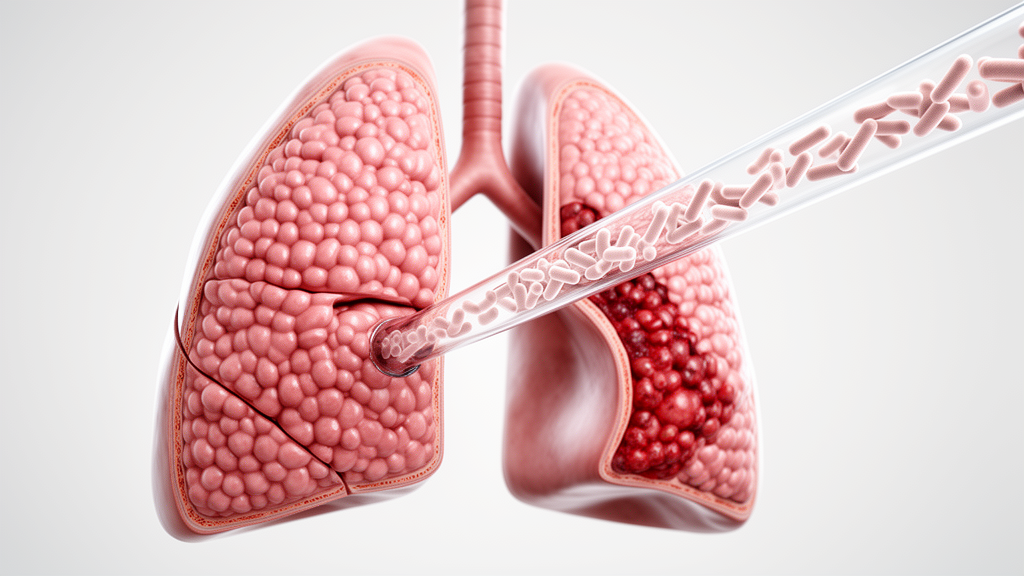
Researchers reported that supplementation with the probiotic bacterium Lactobacillus rhamnosus improved pulmonary function and reduced inflammatory markers in a rat model of chronic obstructive pulmonary disease. The study, published in AMB Express, investigated the protective effects of the bacteria on lung health, systemic inflammation, and gut microbiota composition. The findings suggest that the probiotic may attenuate COPD-associated tissue injury, although the authors emphasize that further studies are required to clarify the underlying mechanisms linking probiotic supplementation to the gut-lung axis.
Chronic obstructive pulmonary disease is described in the study as a progressive inflammatory respiratory disorder characterized by persistent airflow limitation and systemic inflammation. The research team noted that increasing evidence suggests intestinal microbiota influence respiratory diseases through the gut-lung axis. In this context, probiotics have emerged as potential therapeutic agents capable of modulating immune responses and restoring microbial balance. The study specifically aimed to determine whether L. rhamnosus could protect against pulmonary dysfunction in an animal model of the disease.
The experimental design involved male Wistar rats that were randomly assigned to five distinct groups: a Control group, a COPD model group, a Low-dose L. rhamnosus group, a High-dose L. rhamnosus group, and an Aminophylline group. The COPD condition was induced through a combination of chronic cigarette smoke exposure and intratracheal administration of lipopolysaccharide.
To assess the impact of the treatment, the researchers measured several pulmonary function parameters, including forced expiratory volume in 0.3 seconds (FEV0.3) and forced vital capacity (FVC). In addition to functional measurements, the team examined lung and colon tissues histopathologically to evaluate structural damage. Serum concentrations of specific cytokines, including TNF-alpha, IL-6, IL-1-beta, and IL-10, were determined using enzyme-linked immunosorbent assay (ELISA).
The results indicated that the COPD model rats experienced significant impairment of pulmonary function compared with the Control animals. These rats also showed marked increases in the serum levels of the pro-inflammatory cytokines TNF-alpha, IL-6, and IL-1-beta, alongside reduced levels of the anti-inflammatory cytokine IL-10. Histopathological examination revealed pronounced injury in both lung and colon tissues in the untreated COPD group, confirming the severity of the induced disease state.
Treatment with L. rhamnosus led to significant improvements in pulmonary function parameters. The probiotic treatment reduced the levels of pro-inflammatory cytokines while simultaneously restoring IL-10 levels. Furthermore, the bacteria attenuated the histopathological damage observed in the lung and colon tissues. The study found a dose-dependent effect, with the High-dose group exhibiting greater protective effects than the Low-dose group. This suggests that the concentration of the probiotic administered plays a role in the magnitude of the therapeutic response.
Microbiome analysis was conducted using 16S rRNA gene sequencing to evaluate changes in gut microbiota composition. The analysis demonstrated modest alterations in bacterial community composition among the groups. However, the researchers noted that most diversity indices and specific bacterial taxa did not differ significantly among the groups. This indicates that while the probiotic treatment had measurable effects on lung and systemic inflammation, its impact on the overall diversity and specific composition of the gut microbial community was limited in this experimental setup.
The authors conclude that L. rhamnosus attenuates COPD-associated inflammation and tissue injury in the rat model. They suggest that the beneficial effects may be exerted through the modulation of host inflammatory responses and gut microbial composition. However, the study is limited to an animal model, and the mechanisms linking probiotic supplementation to the gut-lung axis in COPD remain to be fully clarified.
Subject of Research: Effects of Lactobacillus rhamnosus on pulmonary function and inflammation in a rat model of COPD
Article Title: Lactobacillus rhamnosus ameliorates pulmonary dysfunction in a rat model of chronic obstructive pulmonary disease
Article References: Yan, R., Zhang, J., Li, Y., & Ge, G. (2026). Lactobacillus rhamnosus ameliorates pulmonary dysfunction in a rat model of chronic obstructive pulmonary disease. AMB Express, 16(1), Article 107. https://doi.org/10.1186/s13568-026-02096-4
Image Credits: AI Generated
DOI: 10.1186/s13568-026-02096-4
Keywords: Lactobacillus rhamnosus, COPD, rat model, pulmonary function, inflammation, gut microbiota, probiotics, AMB Express, Lactobacillus, rhamnosus, ameliorates, pulmonary
News Source: Gregory Coleman. (November 9, 2026). Probiotic bacteria improve lung function in COPD rat model. Scienmag.