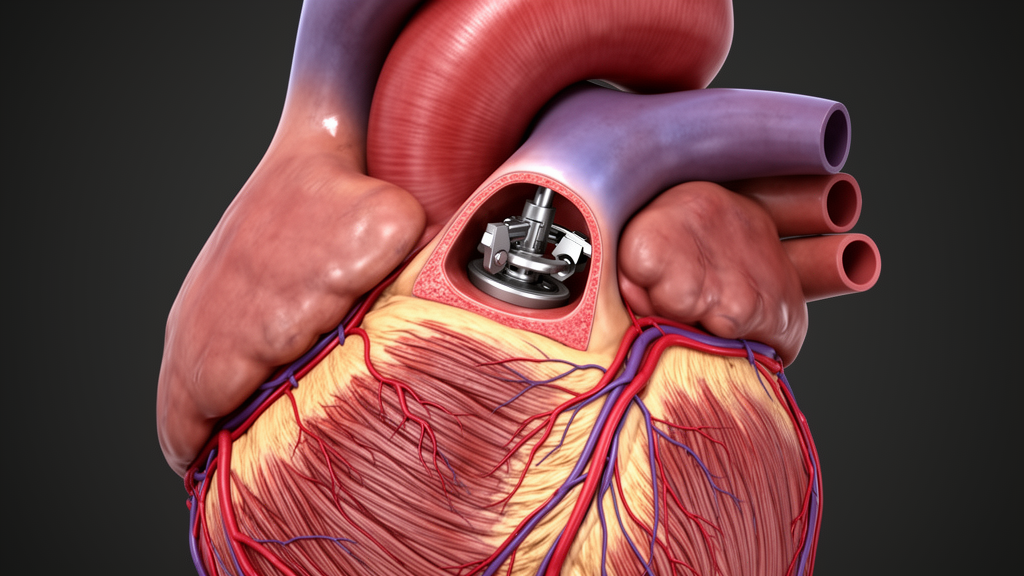
A retrospective observational investigation assessing patients with severe aortic stenosis and preserved ejection fraction undergoing surgical aortic valve replacement has demonstrated that preoperative global longitudinal strain reflects the extent of preexisting left ventricular hypertrophy but does not independently predict the magnitude of postoperative structural reverse remodeling. Conducted using longitudinal echocardiographic assessments across multiple clinical intervals, the investigation examined whether impaired subclinical myocardial deformation limits the capacity of the left ventricle to recover normal geometry once mechanical outflow obstruction is relieved. Across primary complete-case comparisons, continuous correlation analyses, and multivariable regression models adjusting for baseline hemodynamic and structural severity, preoperative strain values correlated strongly with persistent post-procedural ventricular dimensions and mass index. However, once baseline disease severity was incorporated into adjusted models, baseline myocardial strain failed to predict the relative or absolute degree of change observed in interventricular septal dimension, relative wall thickness, or ventricular ejection fraction over time.
Severe aortic stenosis represents the most common degenerative valvular heart disease in developed countries, characterized by the progressive narrowing and calcification of the aortic valve orifice that impedes forward flow from the left ventricle. In response to this chronic elevation in afterload and hemodynamic wall stress, the left ventricular myocardium undergoes compensatory concentric remodeling and concentric hypertrophy to preserve stroke volume and normalize systolic tension. While initially adaptive, prolonged pressure overload progressively induces subendocardial ischemia, myocyte degeneration, interstitial and replacement myocardial fibrosis, diastolic dysfunction, and eventual symptomatic heart failure. Surgical aortic valve replacement provides definitive mechanical decompression by eliminating outflow tract obstruction, thereby removing the pathological stimulus and initiating left ventricular reverse remodeling. This structural recovery process encompasses left ventricular mass regression, reduction in wall thickness, and geometry normalization, which together serve as pivotal determinants of long-term postoperative functional status and overall clinical outcomes.
Over the past decade, speckle-tracking echocardiography has advanced the clinical characterization of myocardial mechanics through the quantification of global longitudinal strain, offering substantial sensitivity over standard left ventricular ejection fraction for detecting subclinical myocardial dysfunction. Because longitudinally arranged subendocardial fibers are particularly vulnerable to elevated intracavitary pressure, wall stress, and localized ischemia, subtle reductions in myocardial deformation manifest well before overt changes in global ejection fraction occur. In clinical literature, preoperative global longitudinal strain has been identified as a robust predictor of postoperative morbidity and all-cause mortality following surgical intervention. However, clinical uncertainty persisted regarding whether baseline impairment in longitudinal shortening dictates or constrains the restorative capacity of the myocardium after surgery. Clinicians frequently hypothesized that severely altered strain might indicate irreversible fibrosis that caps postoperative structural reverse remodeling, whereas physiological principles such as the law of initial values suggested that hearts with greater baseline hypertrophy inherently exhibit larger capacity for mass regression.
To investigate this clinical question, investigators evaluated ninety-four consecutive adult patients with symptomatic severe aortic stenosis and preserved left ventricular ejection fraction, defined as an ejection fraction exceeding fifty percent, who underwent surgical aortic valve replacement at the National Cardiovascular Center Harapan Kita in Indonesia. The study protocol received institutional review board approval from the institutional ethics committee under reference number DP.04.03/KEP092/EC049/2025, with informed consent obtained in accordance with the Declaration of Helsinki. To isolate the specific mechanical effects of aortic valve decompression, the study applied strict exclusion criteria, removing individuals presenting with concomitant significant mitral valvular disease, congenital cardiac anomalies, prior cardiac surgical procedures, or suboptimal transthoracic echocardiographic acoustic windows that precluded accurate speckle tracking or geometric dimension measurements.
Comprehensive transthoracic echocardiography was performed offline by an experienced sonographer blinded to clinical data, following standardized protocols established by the American Society of Echocardiography and the European Association of Cardiovascular Imaging. Imaging was conducted across three distinct intervals: prior to surgical intervention at baseline, during early in-hospital post-surgical evaluation, and at mid-term ambulatory follow-up occurring at a mean duration of 8.5 ± 6.2 months following discharge. The primary predictor was baseline global longitudinal strain, calculated across seventeen segments from apical four-, two-, and three-chamber views using dedicated speckle-tracking software. A normative cutoff of –16% stratified patients into two functional cohorts: a normal strain group characterized by values lower than –16% signifying preserved longitudinal shortening, and an abnormal strain group with values equal to or greater than –16% denoting subclinical dysfunction. Structural remodeling outcomes included end-diastolic interventricular septal dimension, left ventricular internal diameter, posterior wall thickness, relative wall thickness calculated as twice the posterior wall thickness divided by internal diameter, and left ventricular mass index derived from the cube formula indexed to body surface area.
Methodological planning addressed missing follow-up data, as forty of the ninety-four enrolled patients, representing 42.6 percent of the cohort, lacked completed mid-term follow-up echocardiograms due to residing far outside the metropolitan center and being unable to attend scheduled hospital outpatient appointments. Systematic testing confirmed that baseline clinical parameters, initial hemodynamic gradients, valve areas, and echocardiographic remodeling indices showed no significant differences between patients with completed follow-up and those lost to follow-up, with baseline strain classification demonstrating no association with missingness (chi-square = 0.005, P = 0.946). To prevent bias associated with excessive missingness under mixed models, the investigators established a complete-case framework across the fifty-four patients with complete three-point echocardiographic datasets as the primary analytic strategy. Furthermore, analysis of echocardiographic acquisition intervals confirmed that elapsed time from baseline to surgery, surgery to post-operative evaluation, and surgery to follow-up did not differ between strain categories (all P ≥ 0.122), demonstrating that timing variability did not confound remodeling trajectories.
Among the ninety-four evaluated patients, seventy-two individuals, comprising 76.6 percent of the cohort, exhibited abnormal baseline global longitudinal strain of –16% or greater, whereas twenty-two individuals, or 23.4 percent, demonstrated normal strain. Patients in the abnormal strain category presented with markedly worse baseline structural and hemodynamic remodeling. Baseline left ventricular ejection fraction was significantly lower in the abnormal strain group compared with the normal cohort (60.50% ± 7.48% versus 65.00% ± 7.61%, P = 0.017). Hypertrophic burden was substantially elevated, evidenced by greater interventricular septal thickness (14.40 ± 3.16 mm versus 12.06 ± 2.67 mm, P = 0.024) and significantly higher left ventricular mass index (164.00 ± 66.25 g/m2 versus 111.50 ± 102.25 g/m2, P = 0.011). Right ventricular systolic performance was lower in the abnormal group as indicated by reduced tricuspid annular plane systolic excursion (21.62 ± 5.40 mm versus 24.81 ± 3.68 mm, P = 0.011). Hemodynamic obstruction was also more severe, demonstrated by higher peak transvalvular pressure gradients (107.03 ± 32.25 mmHg versus 85.72 ± 29.83 mmHg, P = 0.007), higher mean transvalvular gradients (68.04 ± 22.01 mmHg versus 57.36 ± 17.29 mmHg, P = 0.040), and smaller aortic valve areas (0.50 ± 0.23 cm2 versus 0.69 ± 0.15 cm2, P < 0.001).
In the primary complete-case analysis of fifty-four patients, longitudinal comparison revealed that while absolute structural differences persisted throughout recovery, the relative trajectory of reverse remodeling was largely equivalent between cohorts. A statistically significant strain-by-time interaction was identified exclusively for left ventricular mass index at the early postoperative evaluation (P = 0.030) and at mid-term follow-up (P = 0.005), denoting differential gross mass regression between baseline categories. However, no statistically significant interaction was detected for any other structural or functional metric, including interventricular septal thickness, relative wall thickness, or left ventricular ejection fraction across either phase (all P > 0.05). Identical patterns appeared when evaluating the entire ninety-four-patient cohort using all available pairwise data, where the mass index interaction at follow-up remained statistically significant (P = 0.005) while interactions across septal dimension, relative wall thickness, and ejection fraction remained nonsignificant. These primary findings indicated that baseline strain is linked to left ventricular mass regression but does not govern broader geometric recovery.
To rigorously delineate continuous relationships and eliminate categorization artifacts, the researchers evaluated preoperative global longitudinal strain as a continuous variable against absolute postoperative measures and interval changes. While continuous strain correlated significantly with absolute post-procedural septal thickness and mass index, reflecting persistent baseline disease severity, it exhibited no statistically significant correlation with interval change in septal thickness (P = 0.264), mass index (P = 0.083), or relative wall thickness (P = 0.711) at follow-up. Continuous strain demonstrated a positive correlation with ejection fraction change at follow-up (rho = +0.43, P = 0.001), indicating that individuals with less negative baseline strain experienced larger absolute gains in ejection fraction. This trend reflects regression toward the mean and Wilder’s law of initial values, where depressed baseline parameters experience greater numerical recovery rather than constrained functional potential. When multivariable linear regression adjusted for baseline value of the outcome, peak gradient, mean gradient, aortic valve area, sex, smoking status, and tricuspid annular plane systolic excursion, continuous strain ceased to be independently associated with any remodeling outcome (all P ≥ 0.121). Borderline unadjusted associations for follow-up septal change (P = 0.016) and mass change (P = 0.047) attenuated to P = 0.121 and P = 0.214, respectively, confirming that apparent predictive effects stemmed from confounding by baseline valvular and structural disease severity.
Complementary secondary linear mixed-effects models across all ninety-four patients under the missing-at-random assumption corroborated these observations, exhibiting significant main effects for time and strain category without a significant interaction term, with the main-effects model providing superior parsimony over the interaction model (Akaike information criterion: 834.5 versus 837.9). The authors highlighted key study limitations, including the retrospective, single-center design, variable mid-term follow-up duration averaging 8.5 months, lack of cardiac magnetic resonance late gadolinium enhancement to quantify focal myocardial scar, and modest sample size in the normal strain subset which limited statistical power for very small interactions. Ultimately, the data support a revised clinical paradigm: preoperative global longitudinal strain indicates baseline hypertrophy burden and systemic prognostic risk, but subclinical impairment does not signify irreversible structural damage or restrict the heart’s intrinsic capacity for post-surgical reverse remodeling.
Subject of Research: Preoperative global longitudinal strain and reverse remodeling after surgical aortic valve replacement in severe aortic stenosis
Article Title: Preoperative global longitudinal strain predicts myocardial hypertrophy burden but not the magnitude of reverse remodeling after surgical aortic valve replacement in severe aortic stenosis
Article References: Purba, J. W., Kuncoro, A. S., Ariani, R., Rudiktyo, E., & Soesanto, A. M. (2026). Preoperative global longitudinal strain predicts myocardial hypertrophy burden but not the magnitude of reverse remodeling after surgical aortic valve replacement in severe aortic stenosis. Journal of Cardiovascular Imaging, 34(1), Article 30. https://doi.org/10.1186/s44348-026-00089-2
Image Credits: AI Generated
DOI: 10.1186/s44348-026-00089-2
Keywords: Aortic Stenosis, Surgical Aortic Valve Replacement, Global Longitudinal Strain, Reverse Remodeling, Left Ventricular Hypertrophy, Speckle-Tracking Echocardiography, Left Ventricular Mass Index, Ejection Fraction, Interventricular Septal Dimension, Relative Wall Thickness, Tricuspid Annular Plane Systolic Excursion, Aortic Valve Area, Myocardial Mechanics, Harapan Kita, Law of Initial Values, Transvalvular Pressure Gradient
News Source: Ophelia Keating. (November 18, 2026). Preoperative Strain Predicts Hypertrophy Burden but Not Reverse Remodeling After Valve Replacement. Scienmag.