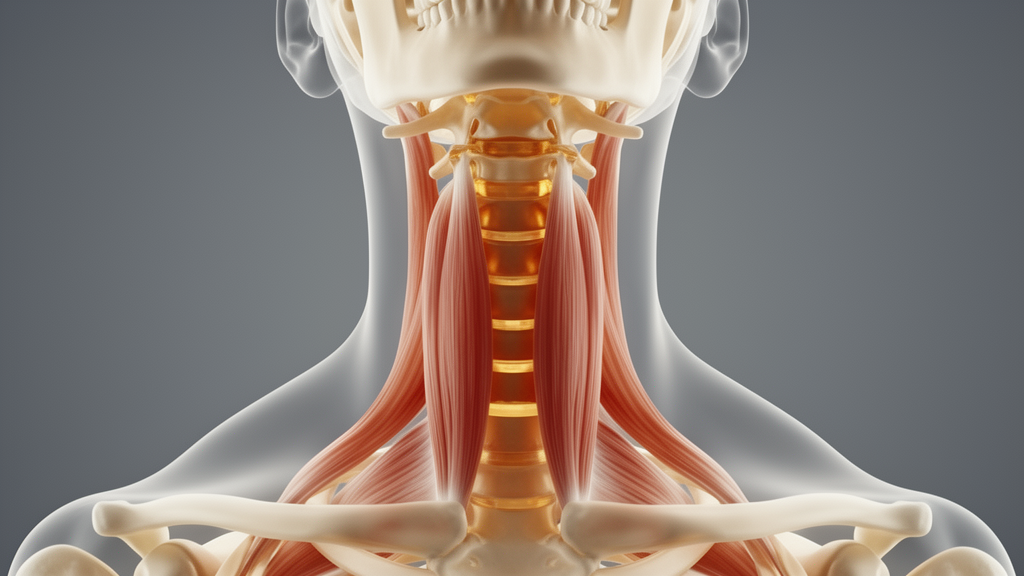
Preoperative functional cross-sectional area of the longus colli muscle at the C5–C6 level is independently associated with postoperative changes in the C2–C7 sagittal vertical axis among patients undergoing laminectomy and fusion for degenerative cervical myelopathy. According to a retrospective study published in BMC Musculoskeletal Disorders, patients presenting with a smaller functional cross-sectional area at this specific cervical segment were significantly more likely to experience an increase in the sagittal vertical axis following surgical intervention.
The study evaluated a cohort of 168 patients diagnosed with degenerative cervical myelopathy who had a mean age of 59.2 years. All analyzed individuals underwent posterior C3–C6 laminectomy and fusion and completed a minimum postoperative follow-up duration of 24 months to assess cervical alignment and clinical recovery.
Investigators categorized the patient cohort into three distinct groups based on the postoperative change in the C2–C7 sagittal vertical axis, designated as ΔcSVA. The cSVA decrease group included 25 patients with a ΔcSVA of less than or equal to −10 mm; the cSVA stable group comprised 95 patients with a ΔcSVA between −10 mm and 10 mm; and the cSVA increase group contained 48 patients whose ΔcSVA exceeded 10 mm.
Preoperative axial T2-weighted magnetic resonance imaging at the C3–C4, C4–C5, and C5–C6 disc levels was utilized to measure longus colli cross-sectional area, fatty infiltration, functional cross-sectional area, and the asymmetry index. Significant differences among the three alignment groups were observed exclusively at the C5–C6 level. At this disc level, the cSVA increase group demonstrated greater fatty infiltration as well as lower total cross-sectional area and lower functional cross-sectional area compared with both the stable and decreased cSVA groups (P < 0.05). In contrast, longus colli parameters evaluated at C3–C4 and C4–C5 showed no significant associations with postoperative ΔcSVA.
Partial correlation analysis revealed that C5–C6 functional cross-sectional area was negatively correlated with ΔcSVA (r = −0.547), changes in Neck Disability Index scores (r = −0.473), and changes in Visual Analogue Scale scores (r = −0.400), with all correlations reaching statistical significance (P < 0.05). In multiple linear regression modeling, a lower C5–C6 functional cross-sectional area was independently associated with greater ΔcSVA (β = −0.549, P < 0.05). Furthermore, receiver operating characteristic curve analysis for predicting postoperative cSVA increase greater than 10 mm yielded an area under the curve of 0.759 (95% confidence interval, 0.676–0.834), with an exploratory cohort-specific functional cross-sectional area cutoff of 98.3 mm² demonstrating a sensitivity of 81.3% and a specificity of 64.2%.
Clinical outcome scores, including the Neck Disability Index, Visual Analogue Scale, and modified Japanese Orthopaedic Association score, alongside sagittal radiographic parameters, were compared across groups to assess postoperative functional status. The study concluded that reduced preoperative longus colli functional cross-sectional area at C5–C6 is independently associated with greater postoperative cSVA increase after laminectomy and fusion for degenerative cervical myelopathy, while emphasizing that this segment-specific association remains exploratory and requires validation through prospective trials and biomechanical studies.
The study was designed to clarify whether morphometric properties of the longus colli muscle serve as preoperative indicators of sagittal alignment change and functional recovery following cervical laminectomy and fusion. In tracking 168 patients treated for degenerative cervical myelopathy across a minimum follow-up duration of 24 months, the investigators specifically examined how regional muscular anatomy relates to structural outcomes across the C3 to C6 spinal segments.
To evaluate muscle morphology, axial T2-weighted magnetic resonance imaging was assessed across three separate disc spaces: C3–C4, C4–C5, and C5–C6. A key observation from these multi-level comparisons was that longus colli degeneration did not demonstrate a uniform association throughout the cervical spine. Morphological measurements at the C3–C4 and C4–C5 levels showed no significant association with postoperative sagittal vertical axis change, whereas significant intergroup differences in fatty infiltration and cross-sectional areas were detected exclusively at the C5–C6 level.
In evaluating postoperative sagittal vertical axis increases exceeding 10 mm, the researchers noted that the exploratory functional cross-sectional area cutoff of 98.3 mm² and its corresponding receiver operating characteristic area under the curve of 0.759 reflect findings from a single retrospective cohort. The authors explicitly concluded that because these findings reflect a level-specific association, the cutoff and clinical correlations remain exploratory. Consequently, they emphasized that further prospective clinical trials and biomechanical studies are necessary to validate these morphometric relationships and confirm their predictive value after laminectomy and fusion.
Subject of Research: Association between preoperative longus colli muscle morphology and postoperative cervical sagittal alignment
Article Title: Preoperative longus colli functional cross-sectional area is associated with postoperative C2–C7 sagittal vertical axis change after laminectomy and fusion for degenerative cervical myelopathy
Article References: Jin, P., Feng, H., Yuan, F., Sun, W., & Wu, D. (2026). Preoperative longus colli functional cross-sectional area is associated with postoperative C2–C7 sagittal vertical axis change after laminectomy and fusion for degenerative cervical myelopathy. BMC Musculoskeletal Disorders. https://doi.org/10.1186/s12891-026-10636-z
Image Credits: AI Generated
DOI: 10.1186/s12891-026-10636-z
Keywords: longus colli, degenerative cervical myelopathy, laminectomy and fusion, functional cross-sectional area, sagittal vertical axis, fatty infiltration, cross-sectional area, C2–C7 sagittal alignment, C5–C6 disc level, postoperative alignment, neck disability index, visual analogue scale, modified Japanese Orthopaedic Association score, cervical spine surgery, axial T2-weighted MRI, asymmetry index, receiver operating characteristic analysis
News Source: Ophelia Keating. (November 12, 2026). Preoperative Longus Colli Muscle Area Linked to Postoperative Cervical Alignment Changes. Scienmag.