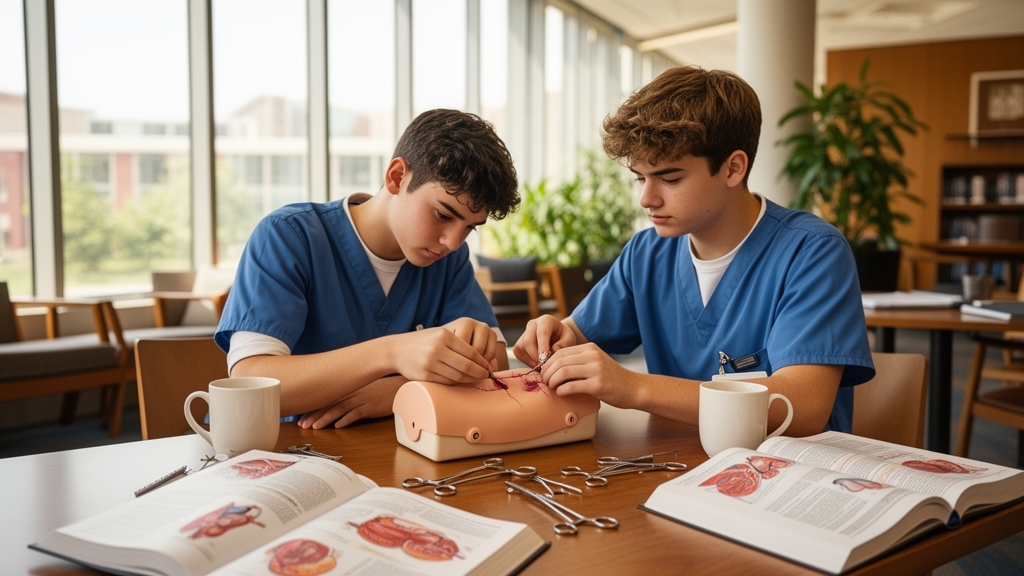
A single-centre exploratory survey of preclinical medical students has revealed that early-stage learners largely perceive surgical disciplines as physically demanding, highly competitive, and difficult to reconcile with personal life, even as a strong majority demonstrate enthusiasm for support initiatives that promote work-life compatibility. The findings, published in BMC Medical Education by lead author Hannes Becker alongside co-authors Hanna Gött, Jonas Tellermann, Patrick Haas, Constantin Roder, Marcos Tatagiba, and Felix Behling, provide empirical insight into the perceptions formed before students enter formal clinical training. By evaluating the attitudes of trainees at an early educational juncture, the investigation addresses persistent questions regarding how prospective physicians evaluate surgical careers in light of personal lifestyle considerations and structural demands.
The research was initiated against a backdrop of ongoing recruitment and staffing pressures across the surgical disciplines. According to the study authors, surgical professions currently face serious challenges in inspiring students to pursue surgical careers and in counteracting broader demographic change within the medical workforce. Medical students’ decisions to pursue specialized clinical paths are heavily shaped by socio-economic factors, among which work-life balance, flexible working hours, and professional appreciation play prominent roles. Despite widespread recognition of these influences, the authors noted that robust data concerning how surgical professions are perceived during the earliest, preclinical stages of medical education has historically been lacking.
To address this knowledge gap, the investigators developed and administered a voluntary online questionnaire targeting students who participated in an elective neurosurgical course during the preclinical phase of their medical studies. Importantly, the investigator-developed survey was completed prior to the students entering the elective coursework, capturing their baseline perceptions rather than impressions acquired during the class itself. A total of 109 students participated in the voluntary evaluation. Within this respondent sample, 66.1 percent identified as female, 33.0 percent identified as male, and 0.9 percent did not specify their gender. In addition, 56.0 percent of the participants reported having prior experience with surgical professions, while 33.9 percent stated that they planned to pursue a surgical career.
The survey specifically probed perceptions regarding unspecified surgical professions, examining the perceived personal requirements of the field, the impact of the profession on health and lifestyle, and issues surrounding family planning. When evaluating the physical rigors of the work, 68.8 percent of respondents rated surgical disciplines as more physically demanding than other medical specialties. Health impacts were also a central concern, with 49.5 percent of the student cohort—nearly half of all respondents—stating that they considered surgical professions to be more harmful to physicians’ health than alternative medical paths. In contrast, perceived cognitive strain was viewed differently: only 26.6 percent of surveyed students rated the mental burden in surgical fields as being higher than in other specialties.
The investigation also featured an exploratory gender comparison that evaluated participant responses regarding professional equity and advancement. Survey items examined whether students perceived differences in career opportunities based on gender within surgical fields. The analysis revealed a clear divergence in perspective: female participants more often agreed with the assertion that male residents have better career chances in surgery. In comparison, male participants more frequently offered a neutral response when presented with the same statement, demonstrating distinct assessments of gender disparities between male and female students prior to their clinical immersion.
In addition to exploring career perceptions and perceived burdens, the survey directly evaluated participant viewpoints on mechanisms designed to facilitate the compatibility of surgical training and personal life. Overall, 89.0 percent of the surveyed students expressed interest in unspecified support programs established to improve the harmony between professional responsibilities and personal life. Moreover, when asked about potential structural adjustments to residency training, 65.1 percent of respondents indicated that they would be willing to accept a one-year extension of their surgical residency if it accommodated such balance.
Summarizing their findings, the authors concluded that preclinical medical students in this preselected cohort tend to view surgical specialties as demanding, competitive, and challenging to balance with private life. The researchers emphasized the exploratory nature of the study, noting that the cohort was drawn from students enrolled in an elective neurosurgical course at a single centre rather than a representative cross-section of all medical trainees. Given that most participants expressed active interest in institutional support programs for combining surgical training with family life, the research team noted that such initiatives require further evaluation in future studies to determine their potential role in recruitment and retention.
Subject of Research: Preclinical medical students' perceptions of surgical careers and work-life compatibility
Article Title: Pre-clinical medical students’ perception of surgical professions and balance with personal life – a single-centre exploratory analysis
Article References: Becker, H., Gött, H., Tellermann, J., Haas, P., Roder, C., Tatagiba, M., & Behling, F. (2026). Pre-clinical medical students’ perception of surgical professions and balance with personal life – a single-centre exploratory analysis. BMC Medical Education, 26(1), Article 1856. https://doi.org/10.1186/s12909-026-10822-6
Image Credits: AI Generated
DOI: 10.1186/s12909-026-10822-6
Keywords: medical education, preclinical medical students, surgical professions, work-life balance, surgical training, physical demands, mental burden, physician health, career perception, gender disparities, family planning, residency extension, support programs, elective neurosurgical course, career choice, surgical residency
News Source: Ophelia Keating. (November 14, 2026). Preclinical Students Rate Surgery as Demanding While Seeking Work-Life Support Programs. Scienmag.