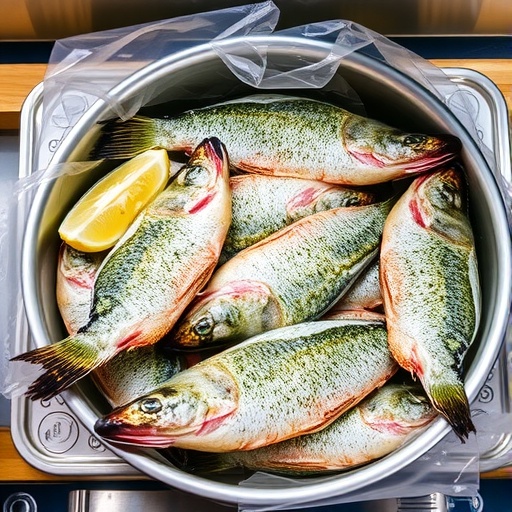
A groundbreaking study by researchers at the Universitat Rovira i Virgili (URV) in Tarragona delves into the presence and risk assessment of various high-volume chemical contaminants in pre-cooked seafood meals—a staple increasingly favored in modern diets. This pioneering experimental study investigates 29 chemical compounds across five families, including phthalates, organophosphates, benzothiazoles, and synthetic fragrances, offering a comprehensive picture of chemical exposure from ready-to-eat fish and seafood.
Analyzing 18 commercially available dishes comprising species popular in Catalonia—such as hake, cod, salmon, mussels, squid, sardines, and prawns—the team utilized advanced analytical methodologies to quantify contaminants widely employed in plastics, packaging, personal care products, and industrial applications. This multifaceted approach revealed most target chemicals in at least one of the samples, with phthalates notably prevalent in hake-based dishes and organophosphates dominating in mussels.
Intriguingly, the study underscores how the chemical load is not solely attributable to environmental bioaccumulation from aquatic habitats but is exacerbated by factors intrinsic to commercial food processing and packaging. The researchers’ data indicate that ready-meal samples exhibit elevated chemical levels compared to raw seafood, suggesting significant contributions from industrial practices during preparation, storage, and reheating—processes known to facilitate the migration of contaminants from plastic materials into the food matrix.
Further technical insights reveal a nuanced relationship between species’ lipid content and contaminant profiles. Organophosphates and certain synthetic musk compounds demonstrated a strong affinity for fatty tissues, resulting in higher concentrations in lipid-rich seafood. Conversely, phthalates showed greater abundance in leaner species such as hake, reinforcing hypotheses of external contamination sources linked to direct plastic contact and preservation techniques rather than intrinsic bioaccumulation.
To assess public health implications, the team conducted detailed exposure modeling across six demographic groups stratified by age and sex. Their risk assessment, grounded in toxicological thresholds for carcinogenic and non-carcinogenic effects, concluded that contaminant levels remain below concern thresholds. Notably, older men exhibited the highest estimated intake, mainly due to greater fish consumption, with cod dishes identified as primary contributors given their widespread popularity and detected chemical concentrations.
The study’s findings carry important implications for food safety surveillance, emphasizing the necessity of analyzing processed ready meals alongside raw seafood to reflect real consumer exposure. Importantly, authors caution against undermining seafood’s nutritional benefits, including its essential proteins, omega-3 fatty acids, and vitamins, advocating instead for improved industrial standards to minimize chemical contamination during packaging and processing.
This research marks a pivotal advancement in environmental chemistry and public health fields, combining rigorous chemical analyses with exposure risk modeling. Its revelations call for further interdisciplinary efforts to safeguard seafood products and ensure consumer safety in an era of evolving dietary habits and increasing reliance on convenience foods.
Subject of Research: Animals
Article Title: High production volume chemicals in pre-cooked seafood-based meals consumed by inhabitants of Tarragona (Catalonia, Spain): presence and risk assessment
News Publication Date: 25-Apr-2026
Web References: http://dx.doi.org/10.1007/s00216-026-06521-2
Keywords
Chemical contaminants, seafood, ready meals, phthalates, organophosphates, packaging migration, risk assessment, Tarragona, food safety, environmental chemistry
Tags: advanced analytical techniques for food safetybioaccumulation versus processing contaminationchemical contaminants in commercial seafood disheschemical exposure from seafood reheatingchemical migration from food packagingchemical risk assessment in seafoodexposure to phthalates and organophosphates in seafoodfood packaging chemical leachinghealth risks of synthetic fragrances in seafoodindustrial processing impact on food safetyplastic additives in ready-to-eat fishPre-cooked seafood chemical contamination