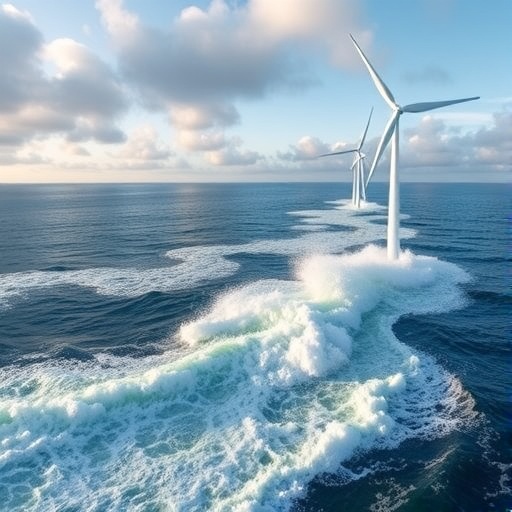
In the quest for a sustainable future and effective exploitation of marine renewable energy resources, researchers from the University of Surrey have unveiled promising advances in hybrid offshore energy systems. Their recent comprehensive review, published in the reputable journal Energy Conversion and Management, explores the integration of wind turbines with wave, solar, and tidal energy devices on shared offshore platforms. This multidisciplinary approach not only optimizes construction costs but also significantly boosts power generation efficiency while ensuring structural stability. Such innovations could fundamentally reshape how humanity taps into the vast and mostly untapped potential of offshore renewable energies.
Offshore wind farms presently consume vast swaths of oceanic space—with turbines themselves occupying less than 1% of that footprint. This under-utilization of the marine environment forms the basis for hybrid system development, where multiple energy harvesting technologies coalesce on a single foundation. By effectively co-locating these devices, each platform amplifies its electricity output without exacerbating marine spatial usage. The University of Surrey team highlights that incorporating wave energy converters, tidal turbines, or floating solar panels alongside wind turbines can drastically increase the energy yield from a fixed oceanic area, paving the way for more sustainable ocean energy extraction.
The research critically evaluates data from major demonstration projects such as Norway’s W2Power wind-wave system and the NoviOcean platform, which uniquely combines wind, wave, and solar energy generation capabilities. Their findings reveal cost reductions of 10 to 15 percent in electricity production compared to traditional offshore wind farms. In particular, tidal turbine integration with wind installations showcased power generation increases by up to 70 percent. This substantial uplift stems from the complementary nature of these renewable sources, as tidal flows and wave patterns often complement wind variability, resulting in more consistent and reliable power delivery.
A pivotal concern with hybrid platforms revolves around the impact of added equipment on structural stability and durability under harsh marine conditions. Surprisingly, it was found that adding wave energy devices to floating wind turbines enhances overall platform stability. These devices mitigate unwanted platform motions by approximately 15 percent and reduce mechanical stresses on tower foundations. Such dynamic synergies between devices not only improve operational reliability but also potentially extend the lifespan of critical infrastructure components under cyclic loading conditions inherent in offshore environments.
As Europe aggressively pursues its renewable energy ambitions—aiming for at least 42.5 percent of final energy consumption from renewables by 2030—hybrid offshore systems could play a crucial role in meeting these targets. According to Yukun Ma, a PhD co-author, the anticipated cost savings and increased power consistency translate directly into lower consumer energy bills and higher grid reliability. The steady, round-the-clock power supply enabled by integrating varying marine renewable sources could reduce dependency on fossil fuel backup and mitigate challenges posed by wind intermittency.
Among hybrid technologies, wind-wave energy combinations are the most technologically mature, already demonstrated at various pilot scales around the world. In contrast, wind-solar and wind-tidal synergy, while promising, remain emergent with critical technological and economic development needed before widespread commercial adoption. Encouragingly, platforms that integrate three or more energy sources, such as NoviOcean, have achieved capacity factors near 40 percent, a substantial improvement over conventional offshore wind-only farms. This multidimensional integration could unlock previously unattainable efficiencies on a global scale.
Nonetheless, several daunting challenges prevent immediate large-scale commercial deployment. The bulk of existing research concentrates on idealized operational settings, lacking comprehensive data about hybrid system resilience during extreme marine events including hurricanes, earthquakes, and tsunamis. Furthermore, the long-term mechanical and structural performance of platform foundations after decades of exposure to cyclic wave and tidal forces remains inadequately understood. Robust engineering frameworks and accelerated testing protocols in real-world environments are necessary to build confidence in these advanced systems’ durability.
Professor Suby Bhattacharya, co-supervisor and senior author, underscores the environmental significance of hybrid offshore platforms in minimizing ecological disturbance. Efficient ocean space utilization inherently reduces spatial conflicts with marine life habitats and migratory paths. However, the ecological benefits can only be fully realized through extensive long-term environmental monitoring accompanying demonstration projects. Such data are critical to ensuring these systems harmonize with sensitive marine ecosystems while delivering clean, reliable energy over projected operational lifetimes of 20 to 30 years.
The study advocates for comprehensive, systematic research frameworks that converge technical performance metrics with holistic assessments of economic feasibility, environmental impact, and policy integration. The viability of hybrid offshore energy systems depends equally on engineering breakthroughs and enabling regulatory environments with supportive financial incentives, grid infrastructure expansion, and a skilled workforce trained in cutting-edge offshore installation and maintenance techniques. Developing specialized vessels optimized for multi-technology platform deployment represents another critical infrastructure component.
As the global community intensifies efforts to decarbonize the energy sector, hybrid offshore renewable platforms could revolutionize ocean energy extraction. By synergizing wind, wave, tidal, and solar technologies within unified offshore platforms, the energy sector stands poised to reap unprecedented gains in output and reliability while preserving marine ecosystems. Continued multidisciplinary collaboration, investment in demonstration projects, and long-term monitoring will be vital to transitioning these vibrant innovations from experimental prototypes to mainstream renewable energy assets critical for a sustainable energy future.
Subject of Research: Hybrid offshore renewable energy systems integrating wind, wave, tidal, and solar energy technologies.
Article Title: Hybrid offshore renewable energy harvest system: a review
News Publication Date: 15-Jan-2026
Web References:
https://www.sciencedirect.com/science/article/abs/pii/S0196890425011781?via%3Dihub
References:
DOI: 10.1016/j.enconman.2025.120654
Keywords
Electrical power generation, Wind power, Tides, Tidal energy, Tidal waves, Renewable energy
Tags: combined wind and tidal energyfloating solar panels offshorehybrid offshore energy systemsmarine renewable energy technologiesmarine spatial utilization efficiencymulti-device offshore platformsoffshore power generation enhancementoffshore renewable energy integrationoffshore wind farm optimizationsustainable ocean energy extractiontidal turbine power generationwave energy converters