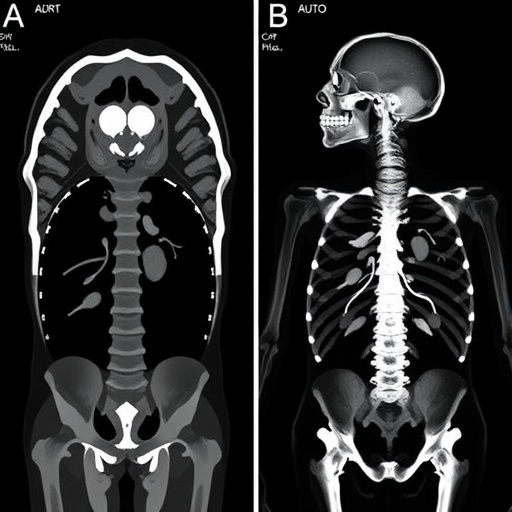
In a groundbreaking meta-analysis published in the International Journal of Legal Medicine, researchers have unveiled critical insights into the comparative diagnostic capabilities of postmortem computed tomography (PMCT) versus traditional autopsy in detecting fractures. This comprehensive study synthesizes numerous datasets spanning multiple forensic settings, marking a pivotal advancement in forensic pathology and medical imaging. As technology increasingly intertwines with forensic science, this research provides a crucial assessment of how non-invasive imaging modalities can complement or even rival age-old autopsy methods in fracture diagnosis.
The forensic community has long relied on traditional autopsies to uncover fractures and other internal injuries in deceased individuals. Autopsies, with their hands-on approach, allow for direct visualization and manual examination of skeletal and soft tissue structures. However, these procedures are invasive, time-consuming, and sometimes limited by decomposition or anatomical complexity. The emergence of PMCT offers a revolution in postmortem examinations, providing non-destructive, rapid imaging capable of visualizing internal structures in intricate detail. This meta-analysis rigorously evaluates the diagnostic efficacy of PMCT compared to autopsy, highlighting the strengths and limitations of each approach.
The study pooled data from a broad range of forensic case reports and controlled investigations, casting a wide net to capture the full spectrum of fracture types, anatomical locations, and forensic scenarios. By aggregating findings from diverse populations and imaging protocols, the meta-analysis enhances the statistical power and generalizability of its conclusions, providing forensic practitioners with evidence-based guidance on integrating PMCT into standard postmortem workflows. The results indicate nuanced performance differences between PMCT and traditional autopsy, presenting a nuanced landscape for forensic diagnostics.
First and foremost, PMCT demonstrated superior sensitivity in detecting certain types of complex fractures, particularly subtle cranial and facial fractures that are often challenging to discern visually. The three-dimensional reconstructions generated by PMCT allow forensic radiologists to examine bony structures layer by layer without dissection, revealing minute fractures that may be obscured during autopsy due to tissue distortion or restricted access. This advanced imaging capability marks a significant step forward for forensic radiology, emphasizing the potential of non-invasive methods to enhance diagnostic accuracy.
Conversely, the study also identified unique advantages of traditional autopsy, particularly in the assessment of soft tissue injuries accompanying fractures. While PMCT excels at skeletal visualization, its ability to detect periosteal or ligamentous damage and subtle hemorrhagic changes remains limited compared to direct visual and tactile examination. The meta-analysis highlights that a hybrid approach—utilizing PMCT as an adjunct rather than a replacement—may yield the most comprehensive forensic assessment, preserving the strengths of both modalities and mitigating their individual shortcomings.
Importantly, the meta-analysis discusses the implications of technological advancements in computed tomography, including higher resolution scanners and enhanced image processing algorithms. These innovations promise to further narrow the diagnostic gap between PMCT and autopsy, potentially enabling even finer detection of microfractures and subtle bone pathology. The research underscores the ongoing need for forensic practitioners to stay abreast of imaging technology developments and incorporate these tools judiciously into multidisciplinary forensic investigations.
The findings also carry profound ramifications for forensic practice logistics and ethics. PMCT’s non-invasive nature facilitates postmortem examination in cultures or scenarios where autopsies are culturally sensitive or legally constrained. Additionally, rapid acquisition of PMCT images allows for expedited case processing, which is especially valuable in mass disaster settings or when timely documentation is critical for legal proceedings. This meta-analysis provides empirical support for expanding PMCT’s role in forensic contexts thus balancing scientific rigor with societal considerations.
Another significant aspect addressed by this work is the reproducibility and objectivity of PMCT findings. Unlike autopsy, which can be subject to the variability of examiner skill and experience, PMCT data offers digital permanence, enabling review and reanalysis by multiple experts remotely. This attribute not only enhances diagnostic reliability but also facilitates training and quality assurance in forensic pathology units. The authors propose structured PMCT interpretation protocols to standardize fracture detection, aiming to reduce interobserver variability and improve diagnostic consensus.
The study does not shy away from discussing current limitations of PMCT. For instance, differentiating between ante-mortem and post-mortem fractures remains challenging with imaging alone; autopsy tissue assessments and histological analyses often provide indispensable context. The meta-analysis calls for integrated multimodal forensic approaches that combine imaging with molecular and histopathological expertise to establish comprehensive injury timelines, thereby strengthening medicolegal conclusions.
Clinically, the meta-analysis affirms the growing role of cross-disciplinary collaboration between radiologists, pathologists, and forensic scientists. As PMCT becomes more entrenched in forensic workflows, collaborative interpretation is paramount to harness its full diagnostic potential. The study encourages ongoing training programs and interdisciplinary exchanges to ensure effective translation of imaging data into forensic evidence, thereby reinforcing the medico-legal chain of custody and courtroom validity.
The authors emphasize that future research should focus on refining PMCT protocols tailored for various forensic scenarios—such as pediatric cases, highly decomposed remains, or complex polytrauma. Moreover, artificial intelligence applications in imaging analysis represent a promising frontier to automate fracture detection and classification, which could revolutionize postmortem diagnostics with unprecedented speed and accuracy. This meta-analysis sets a robust foundation for such innovations, proving the clinical and forensic value of such technological evolution.
Importantly, the meta-analysis shines a light on the cost-effectiveness dimension of incorporating PMCT in forensic settings. While the initial investment in CT scanners and software is considerable, the potential savings from reduced autopsy times, improved case throughput, and enhanced evidence quality may justify widespread adoption. The balance of fiscal and scientific benefits, as discussed, prompts forensic institutions to carefully evaluate their resource allocations in modernization plans.
Beyond its technical insights, this research carries broader societal significance. The increasing acceptance of PMCT aligns with public demand for respectful and minimally invasive postmortem examinations. This cultural shift toward less intrusive death investigations may enhance acceptance of forensic processes, reduce family distress, and support more transparent legal outcomes. By empirically validating PMCT’s diagnostic reliability, the meta-analysis supports a paradigm shift in forensic death investigations worldwide.
In conclusion, Han and colleagues’ meticulous meta-analysis not only bridges a crucial knowledge gap but also charts a forward-looking path for forensic medicine. It robustly confirms that PMCT is a powerful tool capable of complementing traditional autopsy by enhancing fracture detection and documentation. However, it stresses that optimal forensic practice involves leveraging both methods, embracing technological progress while respecting the irreplaceable insights of direct postmortem examination. This synthesis of old and new holds promise to profoundly transform forensic diagnostics and justice in the coming decades.
As forensic science evolves rapidly with technological innovation, this landmark study will undoubtedly serve as a cornerstone reference for forensic pathologists, radiologists, and legal medicine professionals. It encourages a balanced, evidence-driven integration of computed tomography into routine forensic practice, highlighting how interdisciplinary knowledge and cutting-edge imaging technology can jointly improve the accuracy, efficiency, and humanity of death investigations worldwide.
Subject of Research: Diagnostic efficacy of postmortem computed tomography (PMCT) versus traditional autopsy in fracture detection.
Article Title: Comparison of the diagnostic efficacy of postmortem computed tomography and traditional autopsy in fracture detection: a meta-analysis.
Article References:
Han, Jy., Li, Y., Xia, X. et al. Comparison of the diagnostic efficacy of postmortem computed tomography and traditional autopsy in fracture detection: a meta-analysis. Int J Legal Med (2026). https://doi.org/10.1007/s00414-026-03724-1
Image Credits: AI Generated
DOI: https://doi.org/10.1007/s00414-026-03724-1
Tags: challenges in autopsy procedurescomparative analysis of PMCT and autopsydiagnostic capabilities of imaging technologiesevolution of postmortem examination methodsforensic case report synthesisforensic imaging advancementsfracture detection in forensicsinternal injury visualization techniquesmeta-analysis in forensic sciencenon-invasive imaging in forensic pathologypostmortem computed tomographytraditional autopsy methods