• HOME
  • NEWS
  • EXPLORE
    • CAREER
      • Companies
      • Jobs
    • EVENTS
    • iGEM
      • News
      • Team
    • PHOTOS
    • VIDEO
    • WIKI
  • BLOG
  • COMMUNITY
    • FACEBOOK
    • INSTAGRAM
    • TWITTER
Saturday, February 7, 2026
BIOENGINEER.ORG
No Result
View All Result
  • Login
  • HOME
  • NEWS
  • EXPLORE
    • CAREER
      • Companies
      • Jobs
        • Lecturer
        • PhD Studentship
        • Postdoc
        • Research Assistant
    • EVENTS
    • iGEM
      • News
      • Team
    • PHOTOS
    • VIDEO
    • WIKI
  • BLOG
  • COMMUNITY
    • FACEBOOK
    • INSTAGRAM
    • TWITTER
  • HOME
  • NEWS
  • EXPLORE
    • CAREER
      • Companies
      • Jobs
        • Lecturer
        • PhD Studentship
        • Postdoc
        • Research Assistant
    • EVENTS
    • iGEM
      • News
      • Team
    • PHOTOS
    • VIDEO
    • WIKI
  • BLOG
  • COMMUNITY
    • FACEBOOK
    • INSTAGRAM
    • TWITTER
No Result
View All Result
Bioengineer.org
No Result
View All Result
Home NEWS Science News Biology

PostDoc Project Plan invites collaborators to study how plant lice…

Bioengineer by Bioengineer
February 9, 2018
in Biology
Reading Time: 2 mins read
0
Share on FacebookShare on TwitterShare on LinkedinShare on RedditShare on Telegram
IMAGE

While Climate change steadily takes its toll, promising to raise temperatures around the world by at least 1.5 °C within the next 100 years, organisms have already started defending their species' existence in their own ways. Possibly, such is the case of plant lice, which evoked the curiosity of PhD student Jens Joschinski with their reproductive strategy, which shifts from sexual to asexual as the days grow shorter in the autumn.

Entomologist Jens Joschinski, currently studying at the University of Würzburg, Germany, is interested in finding out to what extent this advanced reproductive strategy is affected by variable and unpredictable conditions. Do plant lice spread their risks to reduce their losses (like investors that buy hedge funds), or do they put all their eggs in one basket? If plant lice manage their risks, does this adaptation compromise fitness?

By formally publishing his research idea as a PostDoc Project Plant in the open access journal Research Ideas and Outcomes, he hopes to find fellow scientists to collaborate with, as well as a host institutions.

Plant lice reproduce asexually during summer, which means that the mother give live birth to offspring by cloning herself. Then, as the days become shorter, indicating the approaching winter, the plant lice begin to produce eggs, since only they tolerate low temperature and can overwinter. However, there is a transitional period when a fraction of the same species still produce asexual offspring, which is what made Jens Joschinski wonder if this is an intended evolutionary response to climate change.

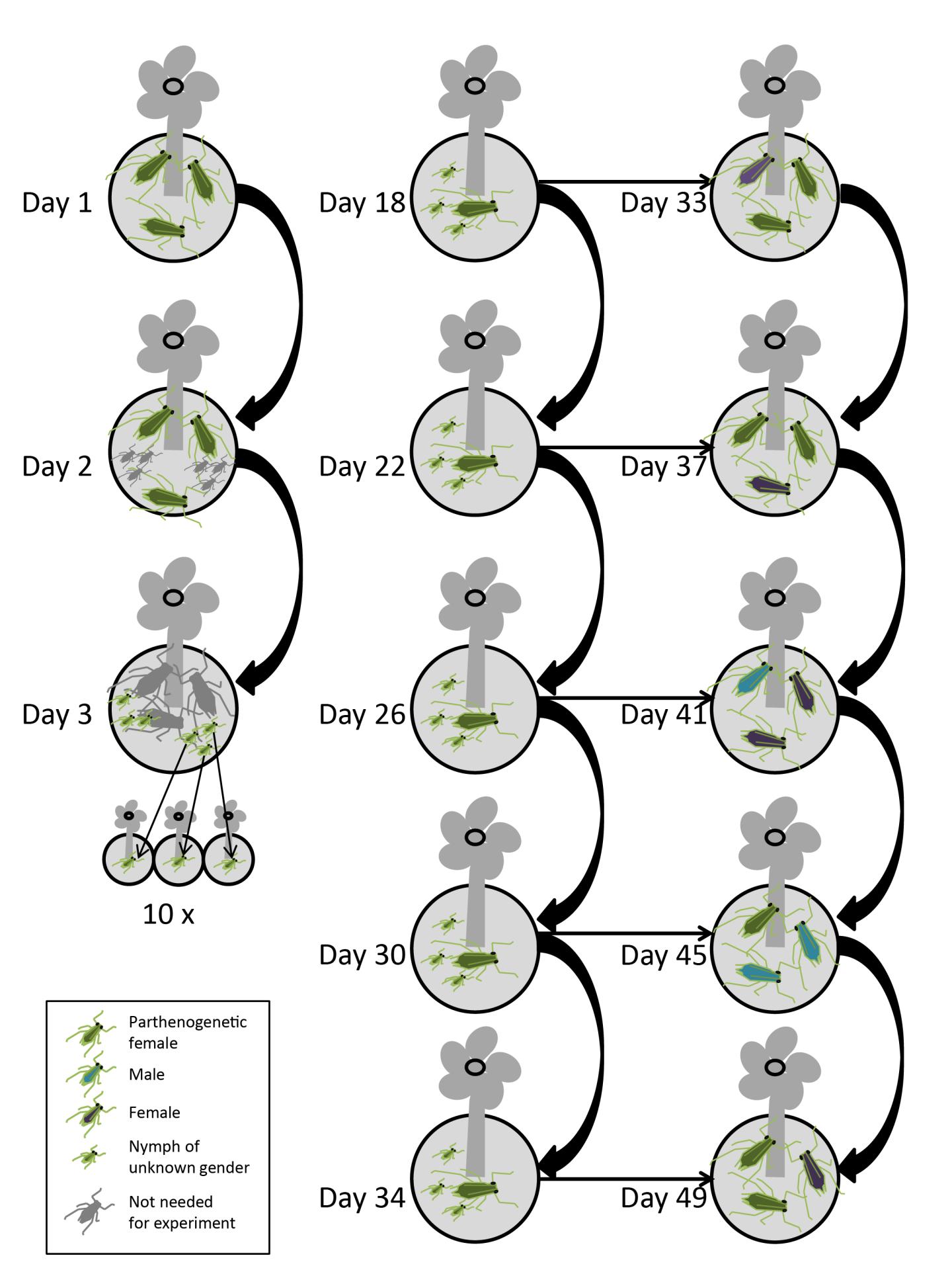
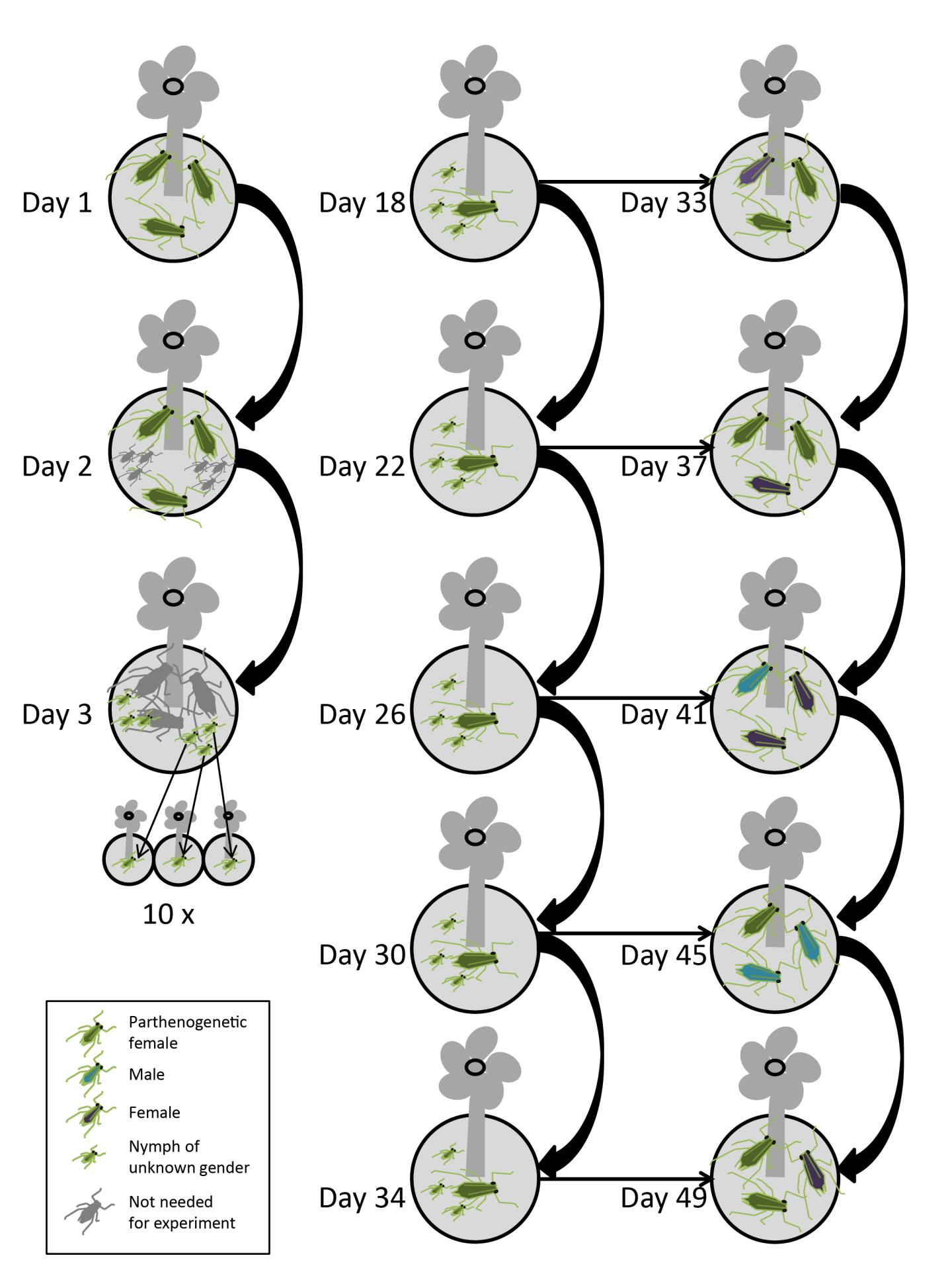
In order to assess the link between variable climates and the transition to sexual offspring, the PhD student plans to study at least 12 plant lice clones from different environments across Europe, and induce reproductive switches under controlled laboratory conditions. Afterwards, he is to assess the fitness and the 'cost' of this microevolution phenomenon.

The PostDoc Project Plan is to build on Jens Joschinski's research done as part of his doctoral thesis, which is to be submitted for publication later this year. Then, while also being trained in evolutionary biology, he concluded that the plant lice are active during the day, which explains why they suffer fitness constraints related to the shorter days.

"The intended methods leave room for collaborative side-projects beyond the study question (e.g. molecular control of photoperiodism, or sharing aphid lines from throughout Europe), so this article might be of interest to anyone working with aphids", he points to his fellow entomologists. "In addition, I would be happy to receive feedback from experts in bet-hedging theory, phenotypic plasticity and photoperiodism."

###

Original source:

Joschinski J (2016) Benefits and costs of aphid phenological bet-hedging strategies. Research Ideas and Outcomes 2: e9580. doi: 10.3897/rio.2.e9580

Additional information:

Funding was provided by the German Research Foundation (DFG), collaborative research center SFB 1047 "Insect timing".

Media Contact

Jens Joschinski
[email protected]
@Pensoft

http://www.pensoft.net

Share12Tweet7Share2ShareShareShare1

Related Posts

Florida Cane Toad: Complex Spread and Selective Evolution

Florida Cane Toad: Complex Spread and Selective Evolution

February 7, 2026
New Study Uncovers Mechanism Behind Burn Pit Particulate Matter–Induced Lung Inflammation

New Study Uncovers Mechanism Behind Burn Pit Particulate Matter–Induced Lung Inflammation

February 6, 2026

DeepBlastoid: Advancing Automated and Efficient Evaluation of Human Blastoids with Deep Learning

February 6, 2026

Navigating the Gut: The Role of Formic Acid in the Microbiome

February 6, 2026
Please login to join discussion

POPULAR NEWS

  • Robotic Ureteral Reconstruction: A Novel Approach

    Robotic Ureteral Reconstruction: A Novel Approach

    82 shares
    Share 33 Tweet 21
  • Digital Privacy: Health Data Control in Incarceration

    63 shares
    Share 25 Tweet 16
  • Study Reveals Lipid Accumulation in ME/CFS Cells

    57 shares
    Share 23 Tweet 14
  • Breakthrough in RNA Research Accelerates Medical Innovations Timeline

    53 shares
    Share 21 Tweet 13

About

We bring you the latest biotechnology news from best research centers and universities around the world. Check our website.

Follow us

Recent News

Decoding Prostate Cancer Origins via snFLARE-seq, mxFRIZNGRND

Digital Health Perspectives from Baltic Sea Experts

Florida Cane Toad: Complex Spread and Selective Evolution

Subscribe to Blog via Email

Enter your email address to subscribe to this blog and receive notifications of new posts by email.

Join 73 other subscribers
  • Contact Us

Bioengineer.org © Copyright 2023 All Rights Reserved.

Welcome Back!

Login to your account below

Forgotten Password?

Retrieve your password

Please enter your username or email address to reset your password.

Log In
No Result
View All Result
  • Homepages
    • Home Page 1
    • Home Page 2
  • News
  • National
  • Business
  • Health
  • Lifestyle
  • Science

Bioengineer.org © Copyright 2023 All Rights Reserved.