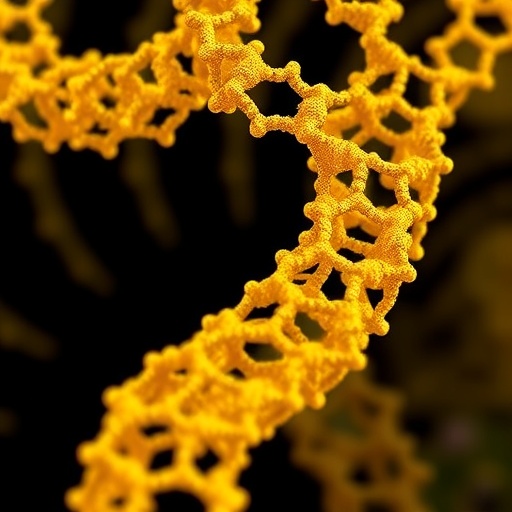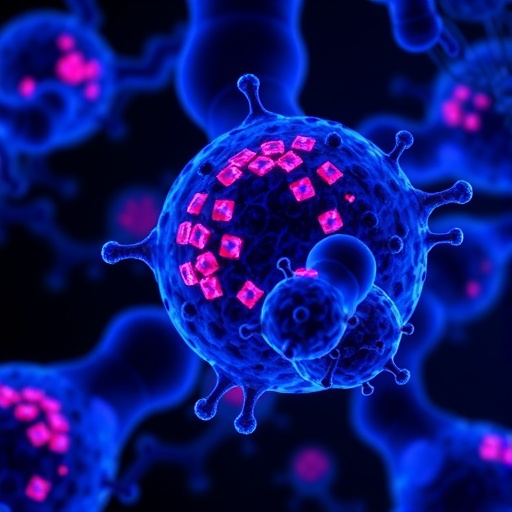
In a groundbreaking discovery with profound implications for the treatment of transthyretin (TTR) amyloidosis, researchers at Kumamoto University have identified a potent natural compound derived from pomegranate leaves and branches capable of dismantling harmful protein aggregates directly. This disease, characterized by the misfolding and subsequent deposition of transthyretin into insoluble amyloid fibrils, leads to devastating consequences in peripheral nerves and cardiac tissue. The revelation of a bioactive molecule that can actively break down existing TTR amyloid deposits marks a promising advancement over current treatments that primarily focus on protein stabilization or synthesis inhibition.
The study, recently published in the journal iScience, focuses on 1,2,3,4,6-penta-O-galloyl-β-D-glucose (PGG), a specialized glycosidic molecule bearing multiple galloyl groups attached to a glucose core. The compound was isolated following an extensive screening of a comprehensive natural product library encompassing 1,509 plant extracts. Among these, extracts from the leaves and branches of Punica granatum demonstrated a remarkable capacity to disrupt pre-formed TTR amyloid fibrils, leading researchers to chemically pinpoint PGG as the key active ingredient responsible for this effect.
TTR amyloidosis results from the aberrant folding of transthyretin, a transport protein responsible for carrying thyroxine and retinol-binding protein in the bloodstream. When mutated or destabilized, the TTR tetramer dissociates, allowing monomers to aggregate into beta-sheet-rich amyloid fibrils that deposit in tissues. These insoluble fibrils compromise organ function, manifesting clinically in neuropathy and cardiomyopathy. Present therapeutic strategies, including TTR stabilizers like tafamidis and gene silencers such as patisiran, primarily prevent amyloid formation but do not effectively clear existing deposits, leaving a significant treatment gap.
The reported discovery of PGG’s selective amyloid-disrupting activity against both mutant and wild-type TTR fibrils offers a paradigmatic shift. Laboratory, animal, and patient-derived tissue experiments collectively demonstrate PGG’s efficacy in disassembling TTR aggregates without affecting amyloid-β fibrils implicated in Alzheimer’s disease, highlighting the molecular specificity of its mechanism. This precision lowers the risk of unintended disruption of other biologically relevant protein assemblies, an essential consideration for therapeutic applications.
Using the nematode Caenorhabditis elegans engineered to express human TTR fragments, the researchers observed that PGG treatment leads to a significant reduction in amyloid deposits within the organism. Remarkably, this clearance correlated with measurable improvements in both lifespan and healthspan, suggesting that disaggregation of toxic amyloid fibrils translates into functional and biological benefits. These in vivo findings provide important proof of concept that PGG has therapeutic potential beyond the test tube.
Chemical and structural analyses reveal that the galloyl moieties—multiple phenolic groups tethered to the glucose scaffold—play a crucial role in mediating the interactions between PGG and the TTR amyloid fibrils. This multi-point attachment may induce conformational destabilization or solubilization of amyloid aggregates, effectively destabilizing the beta-sheet stacking that underpins fibrillar structure. The study’s molecular insights pave the way for rational design of analogs or derivatives with enhanced bioavailability and efficacy.
Crucially, ex vivo assays using cardiac tissue obtained from patients with hereditary TTR amyloidosis validated PGG’s disruptive activity on native amyloid deposits. This translational approach bridges the gap between laboratory findings and clinical applicability, indicating that the compound’s efficacy extends to complex human tissue environments. Such patient-derived validation is essential to bolster the case for advancing PGG toward human trials.
The identification of PGG from a widely available natural source underscores the potential for plant-derived molecules as a reservoir of bioactive compounds targeting protein misfolding diseases. Leveraging traditional medicinal plants through systematic screening enables scientists to uncover novel molecular scaffolds capable of modulating pathological protein assemblies that have thus far evaded effective pharmacological intervention.
While these findings are auspicious, translating PGG into a clinical therapy will necessitate further studies to comprehensively assess its pharmacokinetics, toxicity profile, and long-term safety in humans. Moreover, optimizing compound delivery to affected tissues, overcoming metabolic degradation, and evaluating synergistic effects with existing treatments constitute pivotal future research directions.
The discovery exemplifies how combining advanced biochemical screening with model organism genetics and patient-derived tissue analysis generates a powerful multidisciplinary approach to therapeutic development. It also highlights the growing appreciation that natural products can yield innovative solutions to complex biomedical challenges such as amyloid diseases.
In summary, 1,2,3,4,6-penta-O-galloyl-β-D-glucose exhibits promising capabilities as an amyloid disrupter with specificity against transthyretin fibrils, offering hope for more effective interventions in TTR amyloidosis. If successfully developed into a therapeutic agent, this compound could markedly improve patient outcomes by not only halting progression but actively reversing accumulated pathology.
As neurodegenerative and systemic amyloid diseases continue to impose large health burdens globally, breakthroughs like the identification of PGG provide a beacon of progress toward disease-modifying treatments. The Kumamoto University team’s work advances the frontier of amyloid research and opens new horizons for harnessing nature’s chemical diversity in combating protein misfolding disorders.
Subject of Research: Animals
Article Title: Glycosidic scaffold bearing multiple galloyl moieties from pomegranate disrupts transthyretin amyloids
News Publication Date: 16-Jan-2026
Web References: http://dx.doi.org/10.1016/j.isci.2025.114170
Image Credits: Kagami A. et al.
Keywords: Amyloidosis, Amyloids, Misfolded proteins, Plant leaves, Plant products, Alzheimer disease, Glucose, Molecules, Medical treatments
Tags: 12346-penta-O-galloyl-β-D-glucose bioactivityamyloid fibril dismantling agentsamyloid fibril disruptionbioactive plant-derived glycosidesnatural product screening for amyloidosisnovel amyloidosis therapiesperipheral nerve amyloid depositspomegranate leaf natural compoundprotein aggregation inhibitorsPunica granatum medicinal propertiestransthyretin amyloidosis treatmentTTR protein misfolding diseases