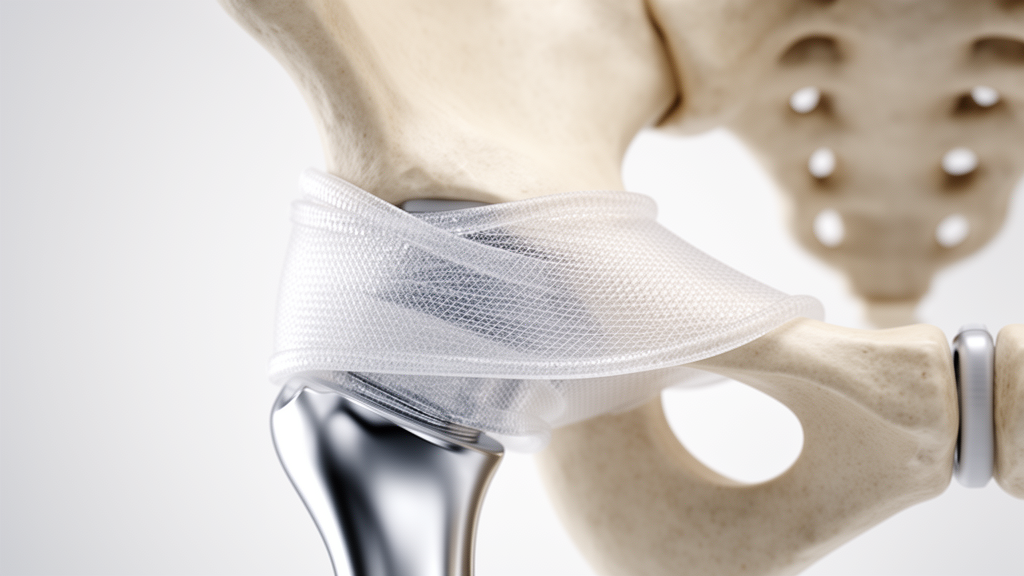
A clinical study evaluating a novel figure-of-eight polymeric cerclage wiring technique for greater trochanter fixation in complex hip arthroplasty demonstrated favorable mechanical stability and low complication rates among thirty-six patients. The investigation evaluated individuals undergoing revision total hip arthroplasty or conversion procedures following failed intertrochanteric fracture fixations, addressing a major source of postoperative morbidity. The greater trochanter serves as the critical insertion zone for the hip abductor musculature, making secure reattachment essential for restoring normal gait mechanics and preventing joint dislocation. Over an average follow-up exceeding four hundred days, patients treated with the non-metallic construct experienced minimal hardware complications, low rates of abductor dysfunction, and reliable radiographic retention. The retrospective analysis provides clinical evidence supporting polymeric figure-of-eight cerclage as an effective alternative to traditional metallic wires, cables, and claw plates.
Periprosthetic femoral fractures represent an escalating concern in orthopedic surgery, occurring in zero point eight to ten percent of primary total hip arthroplasties and climbing to seventeen point five percent in revision arthroplasties at twenty years. Isolated fractures of the greater trochanter constitute the most predominant pattern among these injuries, with eighty-three point seven percent occurring intraoperatively during femoral canal preparation or component insertion. Concurrently, elderly patients suffering complex and unstable intertrochanteric femur fractures frequently encounter fixation failure, necessitating salvage conversion to total hip arthroplasty using revision stems. In both scenarios, reattaching the displaced trochanter represents a major challenge due to bone weakness and displacing abductor forces. Failure to achieve stable fixation results in prolonged recovery, compromised functional outcomes, and elevated revision rates.
Surgeons have evaluated diverse trochanteric fixation options, including monofilament wires, multifilament cables, cable-grip systems, and locking or claw plates, yet no single technique has established definitive superiority. Monofilament wires remain challenging to tighten adequately and are prone to fatigue breakage when kinked, yielding nonunion rates between zero and twenty-eight percent. Multifilament cables offer higher tensile strength but exhibit comparable breakage rates while releasing metallic fretting debris that accelerates periprosthetic osteolysis and acetabular loosening. Rigid claw plates provide enhanced stability with unicortical screws in poor bone stock, yet published series document substantial reoperation rates and hardware irritation. In contrast, non-absorbable polymeric braided tension-band constructs have achieved favorable outcomes and significantly reduced hardware complications in patellar and olecranon fractures, prompting adaptation to proximal femoral reconstruction.
To investigate polymeric cerclage performance in proximal femoral reconstruction, researchers conducted a single-center retrospective cohort study between April 2021 and June 2023, analyzing data collected from December 2024 through March 2025. Conducted under the Declaration of Helsinki and STROBE guidelines, the study screened forty-two consecutive surgical candidates. Six patients were excluded: four due to missing required six-month clinical visits and radiographs, and two who declined participation consent. The final cohort comprised thirty-six patients representing thirty-six operated hips with a mean follow-up of 404.76 ± 22.51 days, spanning 359 to 440 days. The study cohort presented a mean age of 76.5 ± 12.3 years, an average body mass index of 25.8 ± 4.5 kilograms per square meter, and female predominance at seventy-three point eight percent.
All surgical procedures were completed by two surgeons utilizing SuperCable polymeric cerclage through either a posterior-lateral or anterior base muscle-sparing approach based on case-specific indications. In the classic anatomical presentation where the lesser trochanter remained intact, a dedicated loop instrument passed the polymeric cable around the proximal femoral shaft immediately distal to the lesser trochanter. The intact lesser trochanter acted as a stable anchor preventing distal slippage. The two cerclage ends were crossed over the lateral aspect of the greater trochanter, and the gluteus medius fan was isolated. Using a Deschamps passer, the longer limb looped from lateral to medial around the tendon through the pouch at the trochanteric apex. The ends were coupled to an anterolateral locking clip and tensioned strictly at the device low setting to prevent fragment splitting.
When the lesser trochanter was detached or fractured, the surgical technique was adapted depending on whether anatomical reconstruction remained feasible. If the lesser trochanter could be reduced, surgeons initially applied a sling fixation technique before placing the figure-of-eight construct, utilizing two polymeric cerclages in total. When the lesser trochanter was absent or severely comminuted due to osteolysis or failed fracture hardware, two alternative stabilization methods were employed. Surgeons either placed a primary circumferential cerclage around the intact diaphysis and anchored a second lateral sling cable beneath it, or drilled a three point five millimeter eyelet through the lateral femoral cortex to guide the cable in the figure-of-eight pattern. After securing the construct, mechanical stability was intraoperatively validated through rotational, adduction, and abduction stress testing.
Clinical and radiographic endpoints were prospectively tracked at one, six, and twelve months postoperatively to evaluate functional outcomes and construct stability. Primary clinical measures included positive Trendelenburg sign indicating abductor muscle dysfunction, deep periprosthetic infection diagnosed according to International Consensus Meeting criteria, and postoperative hip dislocation rates. Secondary radiographic evaluations utilized TraumaCad calibrated digital imaging software, analyzed by two independent observers blinded to clinical outcomes. Interobserver reliability proved excellent, yielding intraclass correlation coefficients of zero point nine four at one month, zero point nine four at six months, and zero point nine three at twelve months. Femoral stem subsidence was calculated according to Engh criteria, defining changes surpassing ten millimeters as clinically significant. Vertical displacement of the greater trochanter exceeding twenty millimeters was classified as clinically significant migration.
At the final follow-up evaluation across the thirty-six analyzed patients, the overall incidence of clinical complications remained low. One patient, representing two point eight percent of the cohort, developed a post-surgical periprosthetic infection, and one patient, also accounting for two point eight percent, sustained a postoperative hip dislocation. Physical examination demonstrated a positive Trendelenburg sign in three individuals, establishing an abductor deficiency rate of eight point three percent. The vast majority of patients preserved satisfactory abductor muscle function without experiencing uncompensated pelvic instability or severe limping during daily activities. This favorable complication profile indicated that the polymeric figure-of-eight construct delivered reliable soft-tissue and skeletal stabilization across complex reconstructive scenarios, avoiding acute construct failure while maintaining abductor integrity throughout the primary recovery period.
Radiographic monitoring documented gradual stabilization of the greater trochanter alongside dependable stem seating throughout follow-up. Mean trochanteric migration was 1.87 millimeters at one month, 3.56 millimeters at six months, and 4.01 millimeters at twelve months. Only one patient exhibited clinically significant trochanteric displacement, presenting 30.4 millimeters of migration and 2.3 millimeters of subsidence; this seventy-five-year-old female treated after nail breakage demonstrated minimal subjective impairment with a subtle compensated Trendelenburg sign and chose not to undergo revision. Mean femoral stem subsidence was 1.3 ± 2.7 millimeters, with maximum subsidence generally reached by one month. A single clinically significant subsidence of 16.4 millimeters occurred at six months, remaining stationary without further reintervention due to high anesthetic risk.
Statistical comparisons revealed no significant differences in mechanical stability between surgical exposures. Mean trochanteric migration was 4.93 ± 7.08 millimeters in the posterior-lateral group versus 2.89 ± 4.83 millimeters in the anterior group (p = 0.276, Cohen’s d = 0.33). Mean stem subsidence measured 1.69 ± 3.48 millimeters in the posterior-lateral group and 0.89 ± 1.36 millimeters in the anterior group (p = 0.324, Cohen’s d = 0.29). Linear regression indicated that patient age, body mass index, surgical approach, and treatment type did not significantly predict trochanteric migration or stem subsidence. Furthermore, migration and subsidence were virtually uncorrelated (r = -0.025, p = 0.874), and neither displacement metric exhibited significant correlations with Trendelenburg sign, infection, or dislocation.
When compared to published outcomes for alternative fixation systems, the figure-of-eight polymeric cerclage demonstrated favorable performance. The observed eight point three percent Trendelenburg rate compares well against literature values of 5.42 percent for monofilament wires, 13.23 percent for cables, 18.72 percent for claw or locking plates, and 24.80 percent for cable-grip plates. The dislocation rate of two point eight percent was similarly comparable or lower than reported rates of two point seventeen percent for cable grips and five point thirty-five percent for claw plates. Furthermore, the mean trochanteric migration of 4.01 millimeters at twelve months was substantially lower than the 7.31 millimeters reported for traditional cerclage wiring techniques. These results indicate that polymeric cerclage achieves reliable bony stability and abductor preservation without introducing the fretting corrosion or osteolysis risks associated with multifilament metal cables.
The authors acknowledged several key limitations that qualify the interpretation of their findings. The investigation was constrained by its retrospective design, single-institution setting, and modest sample size of thirty-six patients, which precluded formal subgroup analyses across varied bone defect patterns. Additionally, the lack of a concurrent control group receiving alternative fixation hardware prevented direct comparative evaluation. The mean follow-up of 404.76 days may not capture late-onset failures, nonunion, or delayed displacement. Furthermore, the evaluation lacked validated functional outcome instruments such as Harris Hip Scores, relying on clinical signs and calibrated radiographs. The researchers concluded that while polymeric figure-of-eight cerclage represents a promising technique with low complication rates for greater trochanter fixation, prospective comparative trials are warranted to establish long-term durability.
Subject of Research: Polymeric figure-of-eight cerclage wiring for greater trochanter fixation in complex hip arthroplasty
Article Title: A novel figure-of-eight polymeric cerclage wiring technique for greater trochanter fixation in revision arthroplasty and conversion of failed proximal femur fracture fixations to total hip arthroplasty
Article References: Leggieri, F., Martín Cocilova, F. N., Secci, G., Stimolo, D., Zanna, L., Civinini, R., & Innocenti, M. (2026). A novel figure-of-eight polymeric cerclage wiring technique for greater trochanter fixation in revision arthroplasty and conversion of failed proximal femur fracture fixations to total hip arthroplasty. Journal of Orthopaedics and Traumatology, 27(1), Article 37. https://doi.org/10.1186/s10195-026-00952-4
Image Credits: AI Generated
DOI: 10.1186/s10195-026-00952-4
Keywords: greater trochanter fixation, polymeric cerclage, figure-of-eight wiring, revision total hip arthroplasty, failed intertrochanteric fracture, periprosthetic femoral fractures, trochanteric migration, femoral stem subsidence, Trendelenburg sign, abductor mechanism, SuperCable, posterior-lateral approach, anterior base muscle sparing, orthopedic trauma surgery, implant stability, hip dislocation rate
News Source: Ophelia Keating. (November 19, 2026). Polymeric Cerclage Technique Shows High Stability in Complex Hip Replacement Fixation. Scienmag.