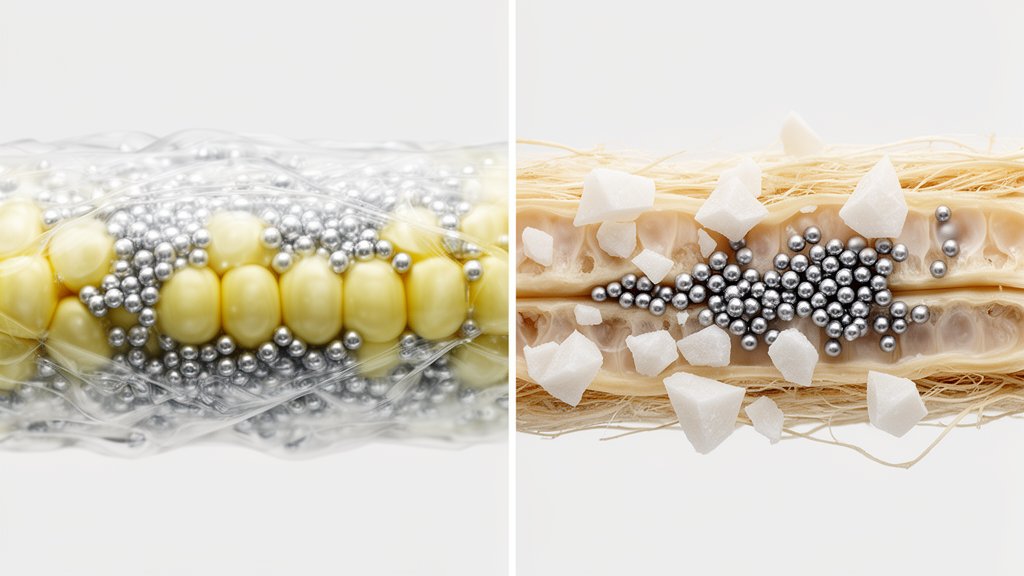
Polyethylene microplastics mitigate silver nanoparticle toxicity in maize while polylactic acid microplastics exacerbate it, according to a 21-day hydroponic study published in the Journal of Nanoparticle Research. Researchers evaluated how the adsorption of uncoated silver nanoparticles onto pristine microplastic particles influences seed germination, seedling growth, and silver accumulation in maize plants. The findings demonstrate that polymer type governs interactive toxicity when microplastics and nanoparticles co-occur in aquatic growth environments.
The investigation examined uncoated silver nanoparticles at concentrations of 1, 10, and 50 milligrams per liter alongside pristine polyethylene and polylactic acid microplastics at five percent weight by weight. Over the 21-day hydroponic exposure period, the researchers tested both individual and combined impacts of particle size and surface chemistry on maize. The team tracked seed germination rates, seedling height, shoot biomass, solution pH, and tissue-level silver accumulation.
Adsorption tests revealed that both polyethylene and polylactic acid microplastics effectively adsorbed silver nanoparticles from solution. Polyethylene microplastics exhibited a higher kinetic rate and higher adsorption constants than polylactic acid microplastics. As a result of this stronger binding, polyethylene microplastics yielded lower aqueous silver concentrations in the exposure medium than polylactic acid microplastics.
When administered alone without silver nanoparticles, the two plastic types produced sharply contrasting biological outcomes on the plants. Polyethylene microplastics alone showed negligible effects on maize seed germination and seedling growth. In contrast, polylactic acid microplastics alone significantly impaired plant development, reducing maize seed germination by 37.9 percent, seedling height by 56.8 percent, and shoot biomass by 47.9 percent.
Under silver nanoparticle exposure, the addition of polyethylene microplastics mitigated toxicity and aided plant performance. Polyethylene microplastics enhanced the maize seed germination rate by 13.8 to 36.2 percent relative to silver nanoparticles alone. Furthermore, the addition of polyethylene decreased silver accumulation in maize shoots by 25.8 to 72.6 percent and lowered root silver accumulation by 45.2 to 56.9 percent.
In marked contrast to polyethylene, the addition of polylactic acid microplastics exacerbated the harmful impacts of silver nanoparticles. Polylactic acid microplastics reduced the maize seed germination rate by 3.4 to 25.8 percent and decreased plant height by 12.4 to 55.6 percent compared with silver nanoparticles alone. Polylactic acid microplastics also lowered the solution pH to between 4.77 and 5.68, compared to 5.86 to 6.46 for silver nanoparticles alone, without significantly altering silver accumulation in maize.
Multivariate statistical analyses substantiated the divergence between the two plastic treatments. Principal component analysis revealed that co-exposure with polyethylene microplastics narrowed the multivariate trait space of maize seed germination and growth relative to silver nanoparticles alone, whereas polylactic acid microplastics expanded it. Hierarchical cluster analysis corroborated this pattern, showing that polylactic acid treatments formed a distinct outlying cluster, particularly when combined with silver nanoparticles.
Overall, the researchers observed that maize seed germination and growth are more sensitive to combined exposure to polylactic acid microplastics and silver nanoparticles than to either treatment alone. Conversely, maize was less sensitive to combined polyethylene and silver nanoparticles than to silver nanoparticles alone. The authors concluded that polymer type governs microplastic-nanoparticle interactive toxicity, with high-adsorption polyethylene mitigating toxicity and degradable polylactic acid exacerbating it, offering critical insight for evaluating risks of co-occurring environmental contaminants.
Subject of Research: Interactive toxicity of microplastics and silver nanoparticles in maize
Article Title: Influences of microplastics on the fate and toxicity of silver nanoparticles to maize
Article References: Fan, C., Guo, N., Han, Y., Huang, L., Zhu, W., Zhong, Y., Li, F., & Cao, J. (2026). Influences of microplastics on the fate and toxicity of silver nanoparticles to maize. Journal of Nanoparticle Research, 28(12), Article 293. https://doi.org/10.1007/s11051-026-06817-5
Image Credits: AI Generated
DOI: 10.1007/s11051-026-06817-5
Keywords: silver nanoparticles, polyethylene microplastics, polylactic acid microplastics, maize, seed germination, seedling growth, silver accumulation, hydroponic exposure, adsorption kinetics, plant toxicity, shoot biomass, solution pH, principal component analysis, hierarchical cluster analysis, co-occurring contaminants, environmental risk assessment
News Source: Alan Morgan. (November 17, 2026). Polyethylene Mitigates While Polylactic Acid Exacerbates Silver Nanoparticle Toxicity in Maize. Scienmag.