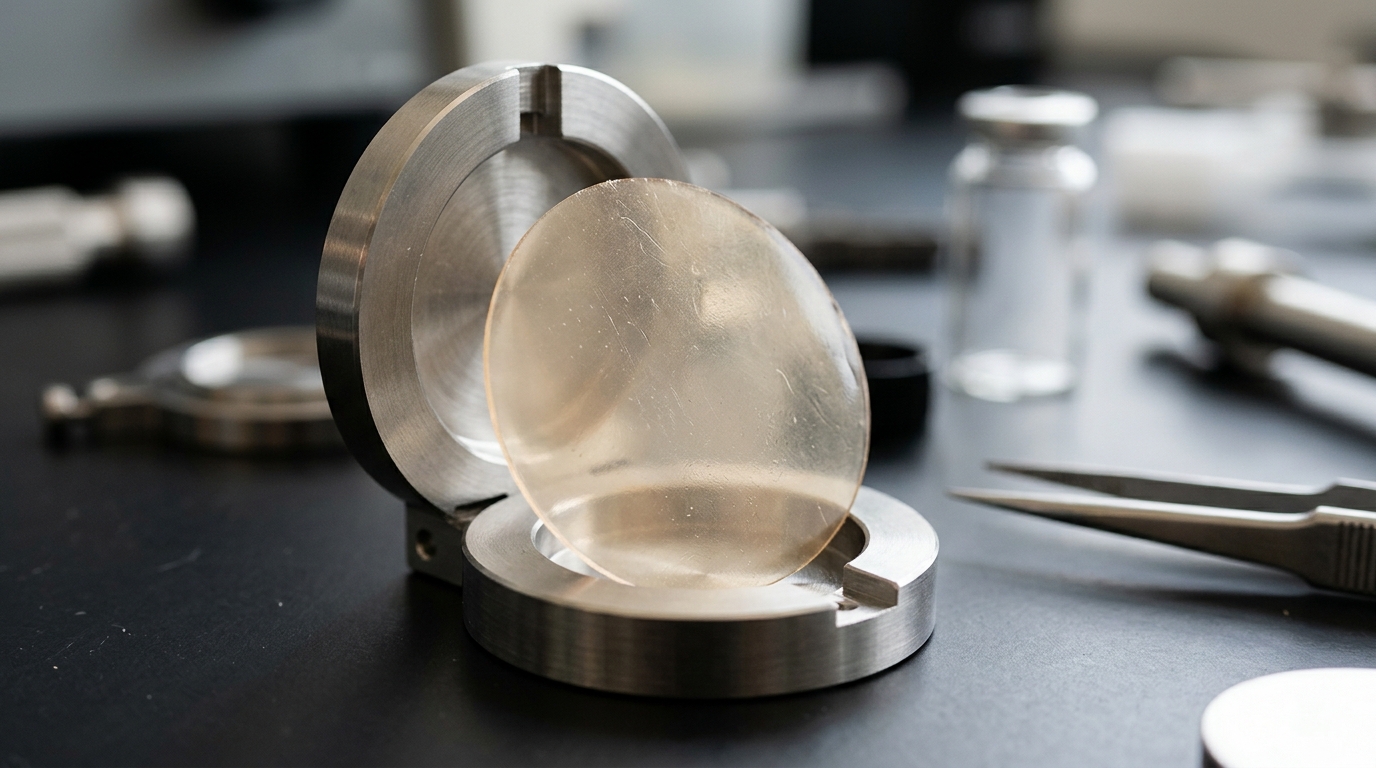
Researchers from the Department of Chemistry, Materials and Chemical Engineering \”Giulio Natta\” at Politecnico di Milano have developed a non-flammable, quasi-solid gel polymer electrolyte designed to enable the transport of fluoride ions inside batteries at room temperature. The experimental study, published in the peer-reviewed journal Energy Storage Materials under the title \”Toward room temperature fluoride-ion batteries: quaternary ammonium-bearing fluoride-exchange membrane as a quasi-solid polymer electrolyte,\” establishes an electrochemical framework intended to replace lithium ions in rechargeable battery systems. By synthesizing an innovative polymer electrolyte that operates under ambient thermal conditions, the research addresses critical operational hurdles that have historically constrained fluoride-based electrochemical energy storage, offering a pathway toward devices characterized by higher energy density, enhanced operational safety, and greater environmental sustainability.
The published research emerged from an interdisciplinary collaborative effort connecting multiple laboratories and academic disciplines within the Department of Chemistry, Materials and Chemical Engineering \”Giulio Natta.\” The project integrated specialized proficiencies across chemistry, materials engineering, electrochemistry, and molecular dynamics. The study was coordinated by Maurizio Sansotera, Professor of Fundamentals of Chemistry and head of the Fluoritech laboratory. Electrochemical characterization of the quasi-solid gel membrane was directed by Luca Magagnin, Professor of Applied Physical Chemistry and head of the Surface Engineering and Electrochemistry Laboratory, designated as the SEE Lab. Fundamental theoretical analysis was provided by Giuseppina Raffaini, Professor of Chemistry and Materials, whose contribution in molecular dynamics was fundamental to understanding the mechanisms underlying fluoride ion transport through the polymer membrane, which included obtaining a three-dimensional model of the membrane via molecular dynamics simulations.
A primary conceptual milestone defined in the investigation is the formal establishment of a Fluoride Exchange Membrane, abbreviated as FEM. The researchers formulated this concept by direct analogy with proton exchange membranes, or PEMs, which are already employed across numerous applications, as well as anion exchange membranes, known as AEMs. In this work, the pioneering material functions as a quaternary ammonium-bearing fluoride-exchange membrane serving as a quasi-solid polymer electrolyte. By demonstrating that fluoride ions can be transported through this quasi-solid gel matrix at ambient temperatures, the authors presented a new polymer electrolyte capable of replacing lithium ions in electrochemical energy storage devices.
The ability to facilitate fluoride ion transport at room temperature is a fundamental aspect of the newly developed polymer electrolyte. In previous generations of fluoride-ion batteries, operating temperatures of around 100 to 150 degrees were required to improve ionic conductivity, a condition that consumed part of the stored energy by dissipating it as heat. Professor Giuseppina Raffaini emphasized that the quasi-solid membrane designed by the team enables fluoride ion transport at room temperature, thereby making it possible to avoid wasting the energy required to preheat the battery.
In addition to operating at room temperature, fluoride-ion batteries offer substantial performance benefits by enabling lighter cells capable of lasting longer, as they could offer higher theoretical energy densities. As Professor Luca Magagnin explained, the theoretical energy density reaches approximately 600 watt-hours per kilogram, compared with around 150 to 250 watt-hours per kilogram for standard lithium-ion batteries. In practical terms, this would mean roughly twice the battery life, allowing an electric car to travel twice as many kilometres. Magagnin highlighted that there are many possible applications for this technology, extending from stationary energy storage systems to drones, satellites and aircraft.
A fundamental characteristic of the innovative quasi-solid gel membrane is its non-flammability, which allows fluoride-ion batteries to address pressing challenges in energy storage systems needed to store energy generated from renewable sources. Renewable energy sources exhibit production peaks that occur at times that do not coincide with peak consumption. Although several European countries are actively developing storage systems for the energy produced from renewables, the widespread adoption of these systems is often limited by concerns about the fire risk associated with batteries. Professor Maurizio Sansotera pointed out that the technology under development uses a non-flammable polymer membrane that reduces the risk of fire, while providing the advantage of using an element that is abundant and evenly distributed in nature.
The advantages of fluoride-ion batteries also begin with their environmental impact, as they could make use of materials that are more readily available and far more abundant than lithium. Overcoming dependence on lithium through this fluoride-ion gel membrane represents an important step forward towards the development of next-generation batteries. By uniting room-temperature fluoride ion transport, non-flammability, and higher theoretical storage capacity, the research conducted at Politecnico di Milano advances the prospect of delivering energy storage solutions characterized by higher energy density, greater safety, and improved sustainability.
Subject of Research: Quasi-solid fluoride exchange membrane for room-temperature lithium-free batteries
Article Title: Lithium-free, non-flammable batteries lasting twice as long by Politecnico di Milano
Article References: Lithium-free, non-flammable batteries lasting twice as long by Politecnico di Milano. Original publication (Bibliographic details unavailable.)
Image Credits: AI Generated
DOI: Not provided
Keywords: fluoride-ion batteries, polymer electrolyte, Politecnico di Milano, energy storage, battery safety, materials engineering, renewable energy, solid-state batteries, Lithium-free, non-flammable, batteries, lasting
News Source: Faith Mcneil. (November 7, 2026). Politecnico di Milano Engineers Develop Room-Temperature Fluoride Battery Membrane. Scienmag.