• HOME
  • NEWS
  • EXPLORE
    • CAREER
      • Companies
      • Jobs
    • EVENTS
    • iGEM
      • News
      • Team
    • PHOTOS
    • VIDEO
    • WIKI
  • BLOG
  • COMMUNITY
    • FACEBOOK
    • INSTAGRAM
    • TWITTER
Monday, November 23, 2026
BIOENGINEER.ORG
No Result
View All Result
  • Login
  • HOME
  • NEWS
  • EXPLORE
    • CAREER
      • Companies
      • Jobs
        • Lecturer
        • PhD Studentship
        • Postdoc
        • Research Assistant
    • EVENTS
    • iGEM
      • News
      • Team
    • PHOTOS
    • VIDEO
    • WIKI
  • BLOG
  • COMMUNITY
    • FACEBOOK
    • INSTAGRAM
    • TWITTER
No Result
View All Result
Bioengineer.org
No Result
View All Result
Home NEWS Science News Technology

Plastic Pollution Research Remains Dominated by Natural Sciences Despite Interdisciplinary Calls

by
November 23, 2026
in Technology
Reading Time: 2 mins read
0
Plastic Pollution Research Remains Dominated by Natural Sciences Despite Interdisciplinary Calls

Plastic Pollution Research Remains Dominated by Natural Sciences Despite Interdisciplinary Calls

Share on FacebookShare on TwitterShare on LinkedinShare on RedditShare on Telegram

Analysis of conference submissions reveals research on plastic pollution remains overwhelmingly concentrated in natural science disciplines, despite widespread calls from leading scholars for interdisciplinary work. The investigation evaluated whether scientific activity is shifting toward critical socio-economic, behavioural, governance, and health dimensions. Across recurring international meetings, engagement with these broader social perspectives remained comparatively limited, pointing to a persistent gap between advocated research priorities and actual academic presentations.

The study examined all 1,794 abstracts submitted to the biennial MICRO conference series between 2018 and 2024, recognized as one of the largest international gatherings focused on plastic contamination. Over the past two decades, scientific inquiry into microplastics and larger plastics has expanded rapidly. However, investigations have maintained a dominant historical focus on determining where plastics are located in the environment, identifying specific polymer types, and characterizing associated chemical additives.

To evaluate how research priorities have evolved, researchers processed the submitted conference texts by removing stop words, uncovering 276 meaningful lemmas where variant spellings were consolidated. These linguistic units were inductively categorized into 12 overarching thematic groups. From this classification, investigators selected four specific focal areas for detailed evaluation: One Health, Human Dimensions, Policy and Governance, and Lifecycle and Waste Management. Researchers tracked the prevalence of these four themes over time and evaluated the qualitative context surrounding high-frequency terms.

The evaluation demonstrated that natural science themes dominated the proceedings throughout all analyzed conference years from 2018 to 2024. Submissions addressing behavioural, educational, socio-economic, and policy dimensions made up a comparatively small share of the research presented. In addition, contributions from researchers in the Global South remained underrepresented across the dataset, showing virtually no evidence of meaningful increase or structural change over the six-year observation period.

These persistent imbalances indicate that scientific presentations at major international forums have not caught up with appeals for integrated socio-ecological frameworks. The authors highlighted urgent implications for conference design, abstract selection criteria, funding priorities, and global inclusion. Addressing this disconnect requires deliberate emphasis on cultural, educational, behavioural, and socio-economic perspectives to inform equitable and effective action on plastic pollution worldwide.

Subject of Research: Analysis of research priorities and trends in plastic pollution conference abstracts

Article Title: Plastic pollution: What is researched and where the field is heading – Insights from the MICRO conferences from 2018 to 2024

Article References: Groeneveld, W., Grindeland, J. M., Richter, I., Cyvin, J. K., & Cyvin, J. B. (2026). Plastic pollution: What is researched and where the field is heading – Insights from the MICRO conferences from 2018 to 2024. Cambridge Prisms: Plastics, 4, Article e19. https://doi.org/10.1017/plc.2026.10066

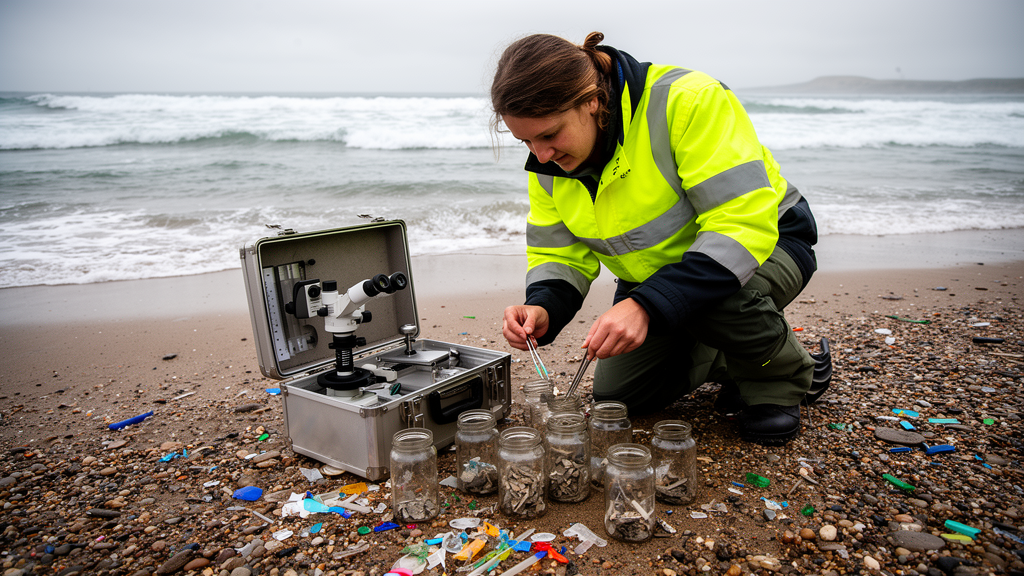
Image Credits: AI Generated

DOI: 10.1017/plc.2026.10066

Keywords: plastic pollution, microplastics, MICRO conference, abstract analysis, interdisciplinary research, natural sciences, human dimensions, policy and governance, lifecycle and waste management, One Health, Global South, socio-economic factors, behavioural science, environmental polymers, chemical additives, research priorities, lemma analysis

News Source: Reese Ellison. (November 23, 2026). Plastic Pollution Research Remains Dominated by Natural Sciences Despite Interdisciplinary Calls. Scienmag.


Tags: abstract analysisbehavioural sciencechemical additivesenvironmental polymersGlobal Southhuman dimensionsinterdisciplinary researchlemma analysislifecycle and waste managementMICRO conferencemicroplasticsnatural sciencesOne Healthplastic pollutionpolicy and governanceresearch prioritiessocio-economic factors
Share12Tweet7Share2ShareShareShare1

Related Posts

Survey of Fifty Binary Type Inference Tools Traces Evolution Across Decades

Survey of Fifty Binary Type Inference Tools Traces Evolution Across Decades

November 23, 2026
Agricultural Robot Swarms Cut Weeding Time but Require Weed Density Planning

Agricultural Robot Swarms Cut Weeding Time but Require Weed Density Planning

November 23, 2026

Pulsating Water Jets Modify Stainless Steel Texture Based on Droplet Trajectory

November 23, 2026

Review Traces Volumetric Medical AI from Early Networks to Reasoning Agents

November 23, 2026

POPULAR NEWS

  • Olive Pollen Immunotherapy Was Well Tolerated Across Sensitization Profiles in Retrospective Study

    Olive Pollen Immunotherapy Was Well Tolerated Across Sensitization Profiles in Retrospective Study

    29 shares
    Share 12 Tweet 7
  • Tirzepatide and Semaglutide Show Similar Low Spinal Infection Risk in Diabetes

    29 shares
    Share 12 Tweet 7
  • Real-World TRK Fusion Cancer Study Details Testing Intervals and Survival Outcomes

    29 shares
    Share 12 Tweet 7
  • Survey Reveals Widespread Delays in Recognizing Abnormal Bleeding and Cancer Risk

    29 shares
    Share 12 Tweet 7

About

We bring you the latest biotechnology news from best research centers and universities around the world. Check our website.

Follow us

Recent News

Invasive Shrub Removal Reduces Forest Canopy and Native Plant Cover in Ash Stands

Survey of Fifty Binary Type Inference Tools Traces Evolution Across Decades

Postnatal Maternal Mental Health Admissions Linked to Preventable Hospitalisations in Aboriginal Children

Subscribe to Blog via Email

Enter your email address to subscribe to this blog and receive notifications of new posts by email.

Join 88 other subscribers
  • Contact Us

Bioengineer.org © Copyright 2023 All Rights Reserved.

Welcome Back!

Login to your account below

Forgotten Password?

Retrieve your password

Please enter your username or email address to reset your password.

Log In
No Result
View All Result
  • Homepages
    • Home Page 1
    • Home Page 2
  • News
  • National
  • Business
  • Health
  • Lifestyle
  • Science

Bioengineer.org © Copyright 2023 All Rights Reserved.