• HOME
  • NEWS
  • EXPLORE
    • CAREER
      • Companies
      • Jobs
    • EVENTS
    • iGEM
      • News
      • Team
    • PHOTOS
    • VIDEO
    • WIKI
  • BLOG
  • COMMUNITY
    • FACEBOOK
    • INSTAGRAM
    • TWITTER
Wednesday, April 1, 2026
BIOENGINEER.ORG
No Result
View All Result
  • Login
  • HOME
  • NEWS
  • EXPLORE
    • CAREER
      • Companies
      • Jobs
        • Lecturer
        • PhD Studentship
        • Postdoc
        • Research Assistant
    • EVENTS
    • iGEM
      • News
      • Team
    • PHOTOS
    • VIDEO
    • WIKI
  • BLOG
  • COMMUNITY
    • FACEBOOK
    • INSTAGRAM
    • TWITTER
  • HOME
  • NEWS
  • EXPLORE
    • CAREER
      • Companies
      • Jobs
        • Lecturer
        • PhD Studentship
        • Postdoc
        • Research Assistant
    • EVENTS
    • iGEM
      • News
      • Team
    • PHOTOS
    • VIDEO
    • WIKI
  • BLOG
  • COMMUNITY
    • FACEBOOK
    • INSTAGRAM
    • TWITTER
No Result
View All Result
Bioengineer.org
No Result
View All Result
Home NEWS Science News Biology

Plant response to carbon dioxide emissions depends on their neighbors

Bioengineer by Bioengineer
February 9, 2018
in Biology
Reading Time: 2 mins read
1
Share on FacebookShare on TwitterShare on LinkedinShare on RedditShare on Telegram
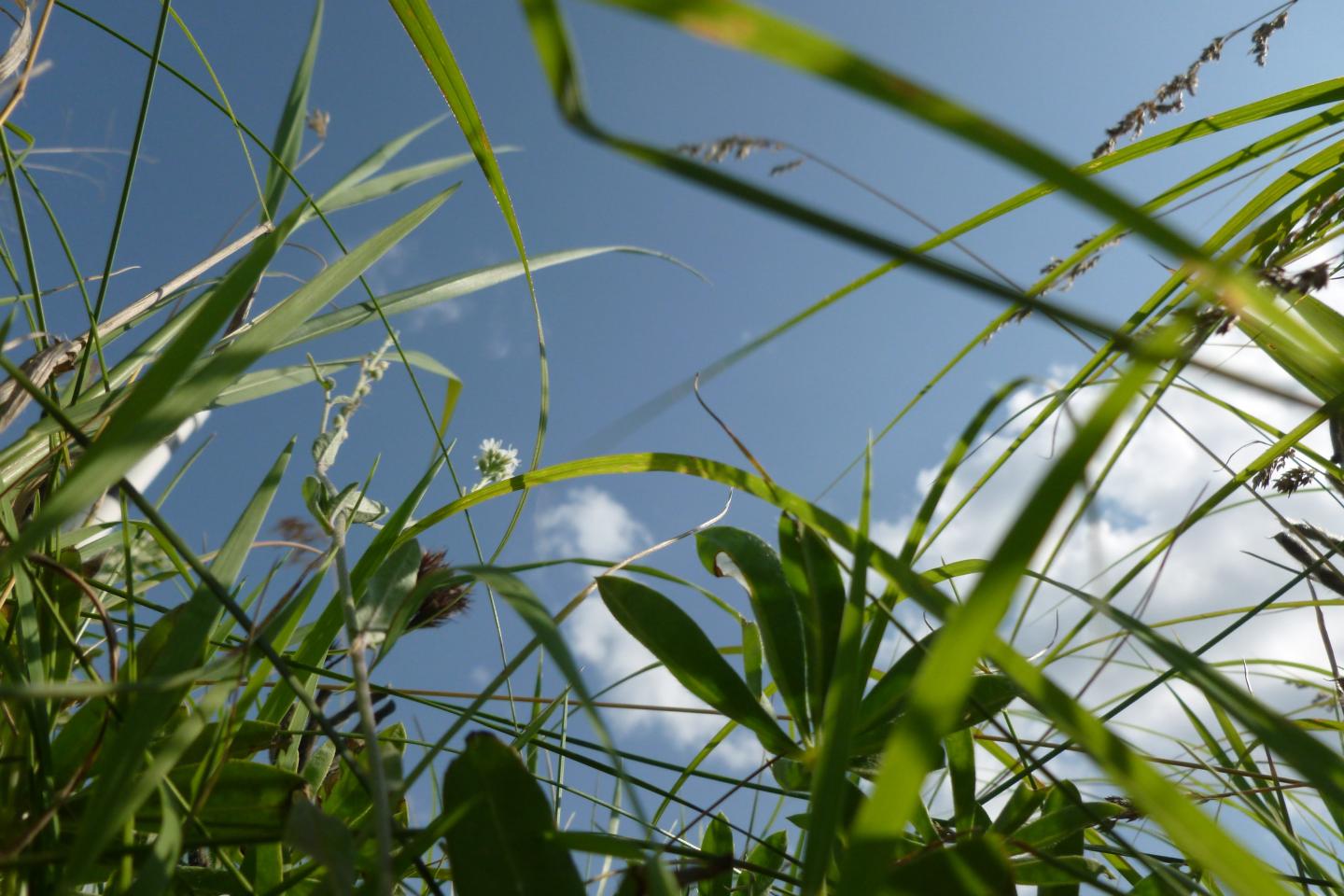
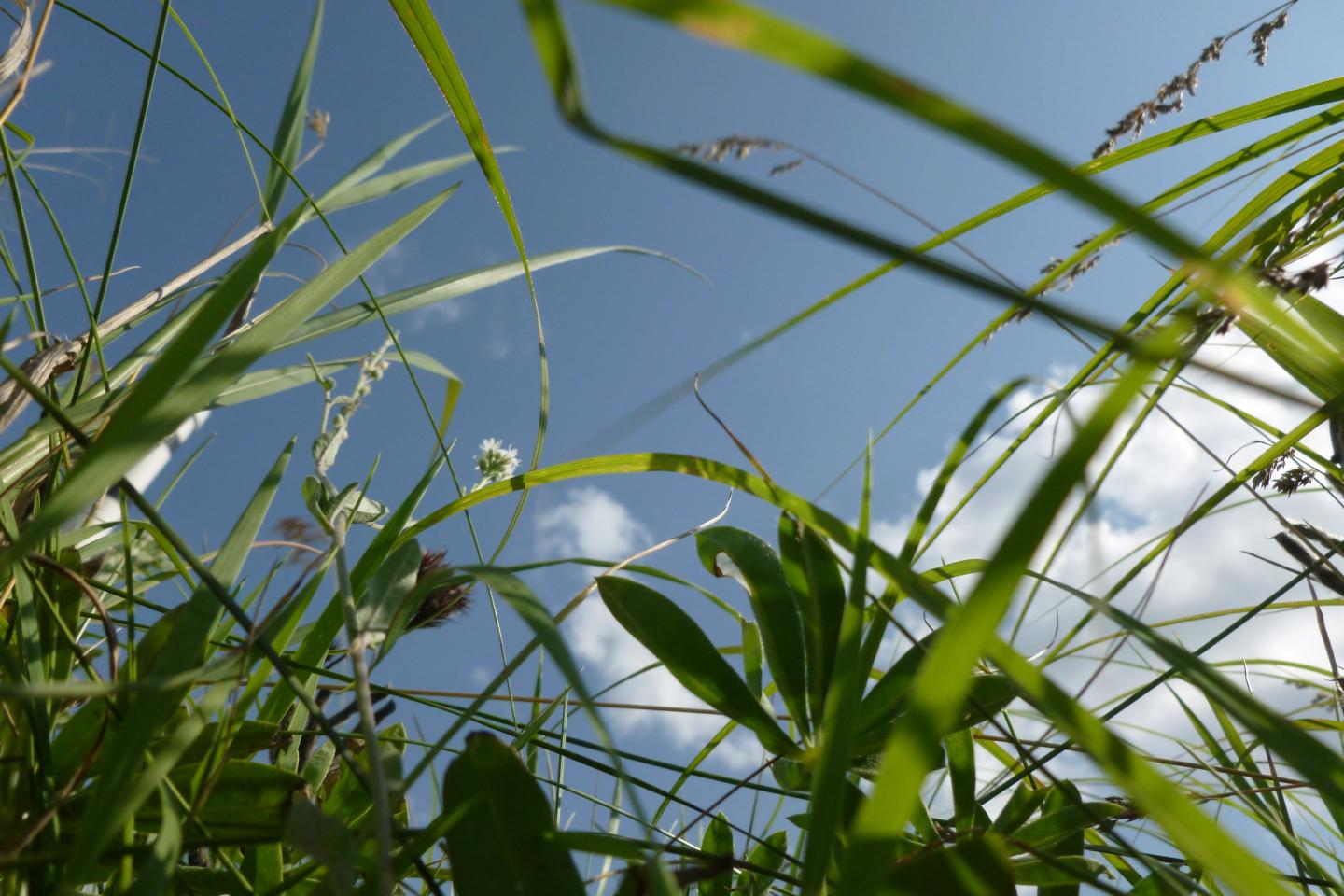
IMAGE

Plant species that have evolved to withstand elevated levels of carbon dioxide grow poorly when moved to a plant community with a different make up, according to a new study in Nature Communications.

"In an effort to save certain species, there has been an interest in the movement of plants or animals to more climatically suitable habitats," said University of British Columbia ecologist Elizabeth Kleynhans, lead author of the study. "Our research indicates how one species adapts in one community may not transfer to other communities."

The researchers tested the impact of community diversity on plant evolution by looking at Kentucky bluegrasses which were exposed to elevated levels of carbon dioxide (CO2) in plots of low or high species diversity for 14 years, part of a long-term climate change experiment in Minnesota. Seeds of these grasses were then transported to Vancouver and their offspring were transplanted back into plots with either the same diversity of species they had experienced as they evolved to elevated CO2, or a different diversity of species.

The response of the grasses to the carbon dioxide depended on whether the grasses were surrounded by the same plant species or by a variety of different plant species.

"If plants evolved to elevated carbon dioxide in one neighbourhood, then experienced elevated carbon dioxide in a different neighbourhood, the benefits disappeared. This result was very surprising to us," said Mark Vellend, a biologist at the Université de Sherbrooke also involved in the study.

The researchers suggest further studies could focus on exposing plants of various species to other environmental changes, such as increases in temperature.

"We might not be able to predict how plants are going to respond to climate change by looking at physical factors like carbon dioxide or temperature alone. We also need to account for who else a species is living with because interactions between species influence evolution as well, " Kleynhans concluded.

###

The project was supported by NSERC, LTER-NSF grants, the Zoology department and Biodiversity Research Center, University of British Columbia.

Media Contact

Chris Balma
[email protected]
604-822-5082
@UBCnews

http://www.ubc.ca

Share13Tweet8Share2ShareShareShare2

Related Posts

Do Your Genes Influence How Lifestyle Choices Affect Aging?

Do Your Genes Influence How Lifestyle Choices Affect Aging?

April 1, 2026
Combining Single-Cell Multiomics Unlocks Precise Identification of Rare Cell Types and States

Combining Single-Cell Multiomics Unlocks Precise Identification of Rare Cell Types and States

March 31, 2026

Genetically Engineered Marmosets Pave the Way for Advancements in Human Deafness Research

March 31, 2026

How Great Hammerhead Sharks Outsmart Ocean Temperature Swings: Insights from FIU Researchers

March 31, 2026
Please login to join discussion

POPULAR NEWS

  • blank

    Revolutionary AI Model Enhances Precision in Detecting Food Contamination

    96 shares
    Share 38 Tweet 24
  • Imagine a Social Media Feed That Challenges Your Views Instead of Reinforcing Them

    1006 shares
    Share 398 Tweet 249
  • Promising Outcomes from First Clinical Trials of Gene Regulation in Epilepsy

    51 shares
    Share 20 Tweet 13
  • Popular Anti-Aging Compound Linked to Damage in Corpus Callosum, Study Finds

    43 shares
    Share 17 Tweet 11

About

We bring you the latest biotechnology news from best research centers and universities around the world. Check our website.

Follow us

Recent News

Creating Desktop Particle Accelerators to Open New Frontiers in Scientific Research

Do Your Genes Influence How Lifestyle Choices Affect Aging?

Urban Systems and Traffic: Unequal Two-Way Links

Subscribe to Blog via Email

Enter your email address to subscribe to this blog and receive notifications of new posts by email.

Join 78 other subscribers
  • Contact Us

Bioengineer.org © Copyright 2023 All Rights Reserved.

Welcome Back!

Login to your account below

Forgotten Password?

Retrieve your password

Please enter your username or email address to reset your password.

Log In
No Result
View All Result
  • Homepages
    • Home Page 1
    • Home Page 2
  • News
  • National
  • Business
  • Health
  • Lifestyle
  • Science

Bioengineer.org © Copyright 2023 All Rights Reserved.