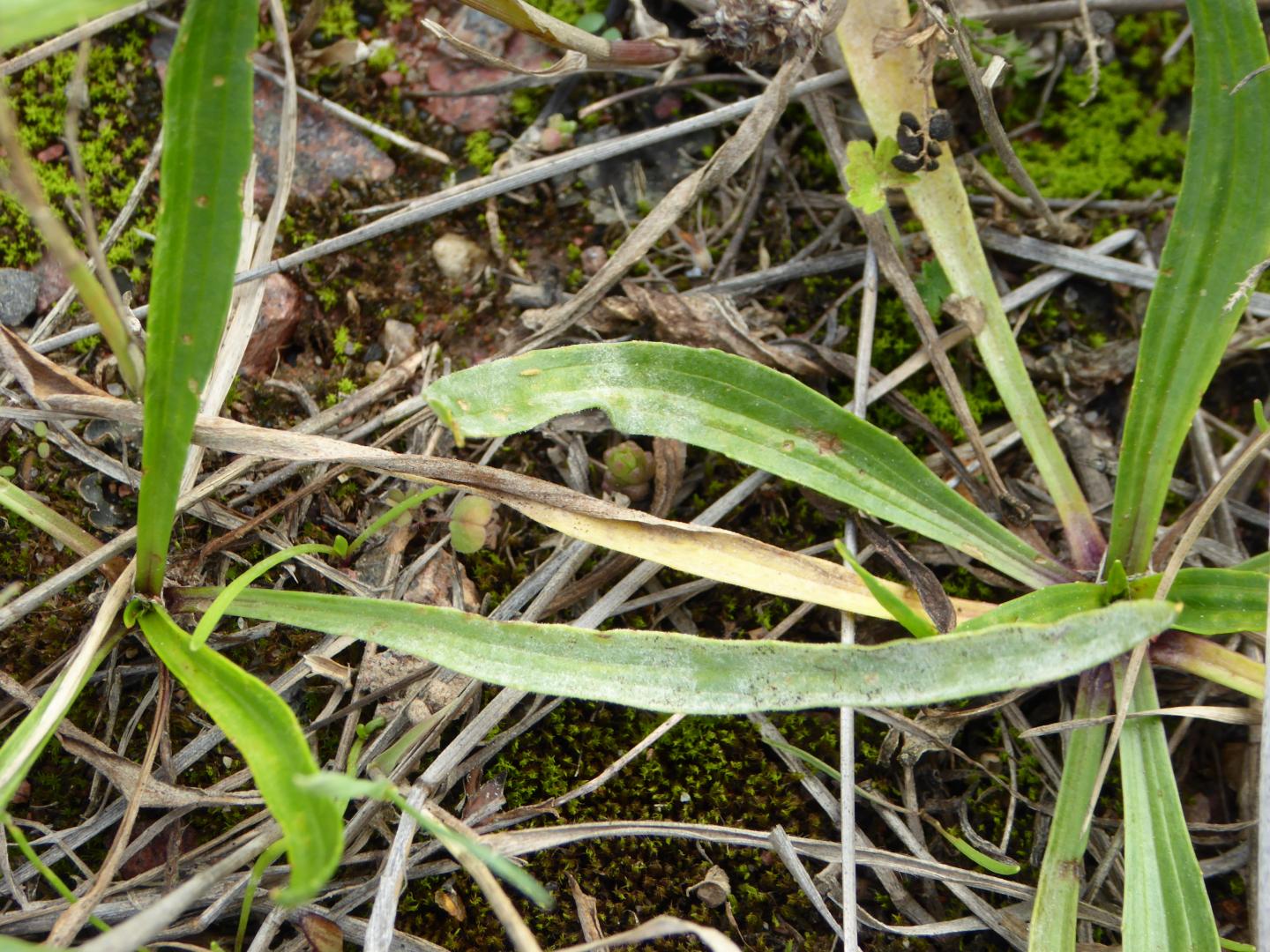
Credit: Elina Numminen
An analysis based on mathematical statistics more precise than those previously carried out uncovered the reason why powdery mildew fungi on Åland are most abundant in roadsides and crossings. Identified as the specific cause was that traffic raises the spores found on roadsides efficiently into the air.
New statistical methods make it possible to identify complex mechanisms in nature that could potentially fundamentally alter our understanding of how diseases spread, among other things.
A recently published study utilised a comprehensive monitoring dataset on fungal diseases and the environmental variables affecting their distribution, collected over several years on Åland by Anna-Liisa Laine, professor of ecology at the University of Helsinki. The findings were published in the PLoS Computational Biology journal.
“Consolidating data collected on the road network, plants and the occurrence of plant diseases is no simple task. It required both new kinds of statistical models and computing power, which were not available only roughly ten years ago,” says postdoctoral researcher Elina Numminen from the Department of Mathematics and Statistics, University of Helsinki.
With the adapted statistical model, the researchers were also able to demonstrate how epidemics caused by powdery mildew fungi were usually more extensive and persistent when originating in roadsides compared to epidemics originating in meadows or elsewhere further away from roads.
Plant diseases are common among both wild and cultivated plants, with many plants having a specific powdery mildew fungus of their own. For instance, in the autumn symptoms of such diseases are in evidence on the leaves of many trees.
In this study, the researchers examined on the Åland Islands a powdery mildew fungus that is a common parasite of the ribwort plantain. The fungus is primarily dispersed by wind in the summer, as the small fungal spores fly from one plant to another. To the naked eye, the infection appears as white fungal spore growth covering the plant.
Rivers, ocean currents and forest paths also potential routes of transmission
The researchers are interested in disease transmission, as it helps explain the occurrence and biology of diseases. There are plant diseases that spread along riversides, bird migration routes, ocean currents or, for example, air traffic networks, much like human diseases that spread through social networks.
The transmission process determines the abundance and location of occurrence, while the method of transmission determines how the diversity of the disease branches off temporally and spatially, and, in the end, how the disease evolves through natural selection.
Typically, diseases that spread very efficiently and over long distances do not evolve to adapt well to local conditions. They make do in a range of environments and potentially are more harmful to their hosts. On the other hand, there are diseases that spread less efficiently and over shorter distances.
“New techniques in statistical ecology can significantly expand our previous understanding of not only plant diseases but also, say, the distribution of various invasive or threatened species,” Numminen notes. What is more, this makes them essential to predicting future environmental change. According to Numminen, distribution and strain estimates may be based on very simple statistical analyses, whose reliability could be boosted by an injection of ecological realism.
###
Further information:
Elina Numminen, postdoctoral researcher, [email protected], phone +358 408253322
Reference: Numminen E, Laine A-L (2020) The spread of a wild plant pathogen is driven by the road network. PLoS Comput Biol 16(3): e1007703. https:/
Media Contact
Riitta-Leena Inki
[email protected]
Original Source
https:/
Related Journal Article
http://dx.