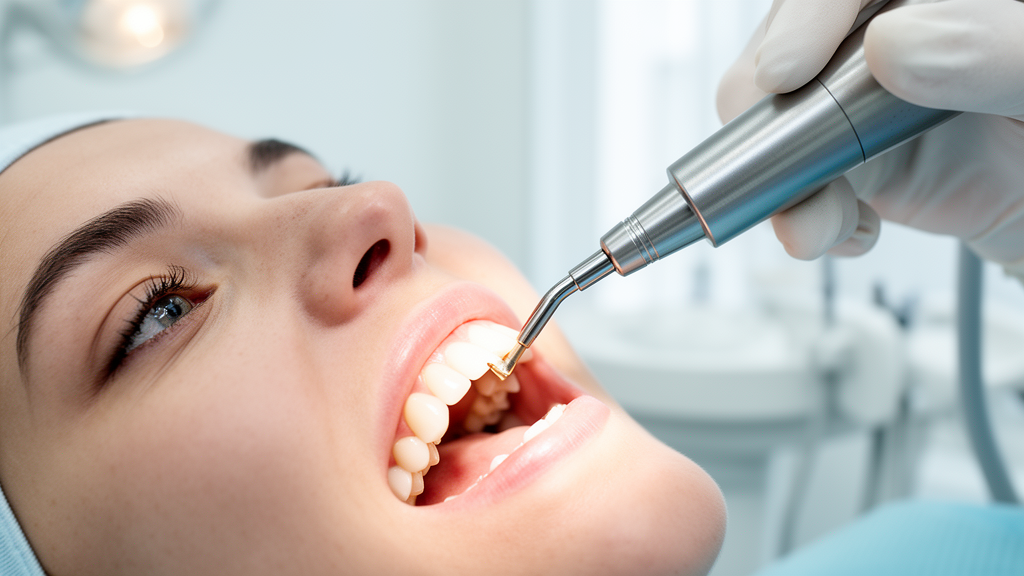
In a randomized controlled trial investigating postoperative sequelae following the surgical removal of impacted mandibular third molars, researchers found that piezosurgery significantly decreased facial swelling on the second postoperative day compared with conventional rotary instrumentation. However, this physiological advantage proved transient, as the statistically significant difference in tissue edema disappeared by the seventh postoperative day. Throughout the entire post-extraction observation window, the investigative team observed no statistically significant variations between piezoelectric osteotomy and standard rotary drilling with respect to patient-reported pain intensity, maximum mouth opening capacity, or overall oral health–related quality of life scores. The findings demonstrate that while ultrasonic microvibrations provide targeted benefits during the acute inflammatory phase of wound healing, the overall trajectory of recovery remains largely comparable between both surgical approaches.
Surgical extraction of impacted lower wisdom teeth is among the most frequently executed interventions in oral and maxillofacial clinical practice. The procedure is routinely indicated when impacted teeth trigger pathological conditions such as pericoronitis, localized pain, soft tissue infections, odontogenic cysts, or structural damage to adjacent second molars. Despite being a common procedure, third molar surgery routinely induces postoperative complications, including acute pain, progressive facial edema, trismus resulting from restricted jaw mobility, surgical site infection, and potential sensory nerve impairment, with complication rates documented between 0% and 30% across surgical literature. Bone removal during these extractions has traditionally relied on high-speed rotary handpieces and surgical burs. While conventional rotary instruments achieve rapid bone clearance, they inherently generate substantial friction and thermal stress, presenting an ongoing risk of mechanical trauma to neighboring anatomical structures, localized bleeding, and delayed tissue restoration.
To mitigate the biological trauma associated with standard rotary instrumentation, piezoelectric surgery was introduced as an alternative osteotomy technique. Operating via high-frequency ultrasonic microvibrations, piezosurgery permits the selective cut of mineralized tissue such as cortical bone while sparing delicate adjacent soft tissues, periosteum, and vascular networks. Prior investigations evaluating piezoelectric systems against rotary drills yielded conflicting evidence across maxillofacial literature, with some trials identifying substantial improvements in patient morbidity and others showing equivalent outcomes. Much of this existing clinical heterogeneity stemmed from divergent assessment methodologies, variable postoperative observation schedules, and an overreliance on two-dimensional or linear tape-measurement techniques for estimating facial edema. Consequently, the investigators designed this prospective clinical trial to rigorously test whether piezoelectric osteotomy offers measurable clinical benefits when evaluated using standardized evaluation intervals and objective three-dimensional volumetric scanning protocols.
The clinical trial enrolled 50 systemically healthy adult participants presenting to the Department of Oral and Maxillofacial Surgery within the Faculty of Dentistry at Kahramanmaras Sutcu Imam University. Candidates were screened to ensure the absence of active oral infections, such as acute pericoronitis, and were excluded if they presented with systemic pathologies that could impair wound healing, including diabetes, immunodeficiency, bleeding diathesis, peptic ulcers, or a smoking history exceeding ten cigarettes per day. Preoperative panoramic radiographs were analyzed to assess tooth angulation, impaction depth, and spatial relationships relative to the mandibular ramus using Winter’s and Pell and Gregory’s classification systems. Surgical complexity was quantified using the Pederson difficulty index, grouping extractions into minimally, moderately, or very difficult categories. To eliminate confounding anatomical complexity, patients with matched difficulty profiles were paired and randomized via sealed envelopes into either the piezosurgery group or the conventional surgery group, with 25 participants allocated to each cohort.
To maintain rigorous experimental controls, a single experienced maxillofacial surgeon performed every surgical operation under local regional anesthesia, employing inferior alveolar nerve blocks combined with buccal and lingual infiltrations using 2% lidocaine containing 1:100,000 epinephrine. Surgical access was achieved via a standardized modified envelope mucoperiosteal flap across all participants. In the conventional control arm, bone excision was performed using a surgical handpiece running between 20,000 and 40,000 revolutions per minute fitted with a #10 round bur, also cooled continuously with sterile saline. Odontotomy, when required for tooth delivery, followed identical principles using piezoelectric tips or rotary burs respectively, before wound margins were smoothed, irrigated, and closed primarily with standard sutures.
A primary methodological feature of the trial was the objective quantification of facial swelling through three-dimensional optical scanning rather than subjective caliper or linear surface measurements. Each patient was scanned immediately before surgical intervention at baseline, on the second postoperative day, and on the seventh postoperative day under identical ambient lighting and spatial positioning. Surface facial topology was captured using the Qlone scanning software on an iPhone 14 equipped with TrueDepth structured-light sensor technology, producing stereolithography files of the patient’s facial geometry. These three-dimensional digital meshes were subsequently imported into 3D Slicer software, where baseline and postoperative facial scans were superimposed and aligned through surface registration based on stable anatomical facial landmarks, strictly isolating the operated facial hemisphere while excluding mobile soft tissue regions such as hair.
Following registration, aligned models were transferred into Blender software to compute precise volumetric differences using Boolean subtraction algorithms. By subtracting baseline preoperative facial models from postoperative meshes, investigators isolated the excess digital mass representing tissue edema as an independent three-dimensional geometry. This isolated swelling structure was converted into a closed manifold solid and analyzed with CITUBOX volumetric software to extract exact physical displacement values in milliliters. In parallel, functional recovery was monitored by recording maximum unassisted interincisal mouth opening in millimeters using a standard monoblock caliper, self-reported daily pain intensity using a validated 10-centimeter Visual Analog Scale from day one through day seven, and patient-reported social and functional well-being via the Oral Health Impact Profile-14 questionnaire administered at baseline and on postoperative days two and seven.
The demographic profile of the cohort consisted of 32 female and 18 male participants ranging from 18 to 44 years of age, with equivalent mean ages of 23.96 years in the piezosurgery cohort and 23.88 years in the conventional rotary cohort. Analysis of the volumetric swelling data revealed a statistically significant reduction in tissue edema in the piezosurgery group on the second postoperative day compared with the rotary drill cohort. By postoperative day seven, however, volumetric differences between the two surgical groups diminished and ceased to demonstrate statistical significance, indicating that conventional rotary trauma resolves toward an equivalent anatomical baseline by the end of the initial healing week. Both surgical modalities exhibited an overall downward trend in inflammatory swelling between the second and seventh days, consistent with standard postoperative physiological recovery pathways.
Regarding functional jaw rehabilitation and pain perception, the data revealed no statistically significant differences between the two surgical methods at any designated observation point. Caliper measurements of maximum interincisal distance showed slightly higher mean opening values in the piezosurgery group on days two and seven, yet these variations did not achieve statistical significance, confirming that trismus developed and subsided at comparable rates regardless of the bone-cutting technology employed. Similarly, daily Visual Analog Scale scores revealed intense discomfort within the initial 24 hours that progressively declined over the course of the week, with piezosurgery recording marginally lower pain scores on days one and seven and conventional surgery displaying minor reductions on other days, none of which crossed the threshold of statistical significance.
Evaluation of oral health–related quality of life via the 14-item Oral Health Impact Profile similarly failed to demonstrate a decisive advantage for either surgical instrumentation system. While the conventional surgery group exhibited numerically lower cumulative OHIP-14 scores on both the second and seventh postoperative days—theoretically indicating slightly less perceived impairment—these variations were not statistically significant. The authors contextualized these findings within broader maxillofacial research, noting that although piezoelectric devices reduce immediate microvascular trauma and soft tissue disruption, the prolonged operative durations commonly associated with slower piezoelectric bone cutting may necessitate extended flap retraction. Extended mechanical retraction of mucoperiosteal flaps can induce localized secondary inflammation, effectively offsetting some of the biological advantages inherent to ultrasonic osteotomy.
The study authors highlighted several methodological parameters and inherent constraints that warrant consideration when interpreting the trial’s clinical outcomes. Additionally, surgical durations were not chronologically recorded, preventing direct quantitative correlation between procedure length and inflammatory severity.
Subject of Research: Comparison of piezosurgery and rotary instruments in third molar surgery
Article Title: Effects of impacted mandibular third molar surgery performed with piezosurgery and conventional systems on postoperative sequelae and quality of life: a randomized controlled trial
Article References: Acikan, I., & Balkanlioglu, A. C. (2026). Effects of impacted mandibular third molar surgery performed with piezosurgery and conventional systems on postoperative sequelae and quality of life: a randomized controlled trial. Maxillofacial Plastic and Reconstructive Surgery, 48(1), Article 3. https://doi.org/10.1186/s40902-026-00502-2
Image Credits: AI Generated
DOI: 10.1186/s40902-026-00502-2
Keywords: piezosurgery, third molar surgery, impacted mandibular third molars, rotary instruments, postoperative swelling, facial edema, visual analog scale, mouth opening, trismus, oral health-related quality of life, OHIP-14, randomized controlled trial, three-dimensional scanning, volumetric analysis, ultrasonic osteotomy, maxillofacial surgery, surgical extraction
News Source: Ophelia Keating. (November 19, 2026). Piezosurgery Reduces Early Facial Swelling in Impacted Third Molar Extractions. Scienmag.