In the rapidly advancing realm of quantum information science, the generation of entangled photonic states stands as a fundamental challenge and opportunity. Researchers at the University of Illinois Urbana-Champaign’s Grainger College of Engineering have recently put forth a pioneering methodology that could dramatically reshape our ability to create highly entangled multi-photon states, which are indispensable for next-generation quantum technologies. This breakthrough, detailed in a paper published in npj Quantum Information, introduces an innovative “emit-then-add” protocol that leverages existing photonic quantum emitters, potentially unlocking practical, scalable paths toward complex quantum states previously deemed out of reach.
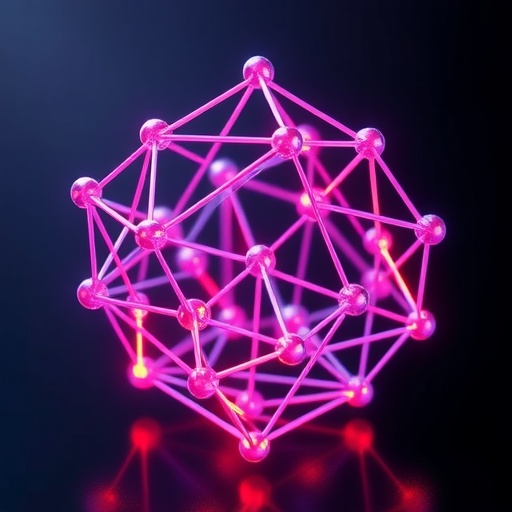
Photonic graph states are a class of multipartite entangled quantum states whose applications span quantum computing, secure communication, and precision sensing. Despite their recognized utility, producing large-scale graph states of photons has been severely impeded by intrinsic photon losses characteristic of optical platforms. The probabilistic nature of photon emission and subsequent transmission losses result in incomplete or corrupted entanglement structures, a barrier that conventional deterministic methods have struggled to overcome.
The fundamental issue stems from the fact that photon detection, which confirms entanglement, is intrinsically destructive. Attempting to fill missing photon “slots” after partial detection collides with the no-cloning principle and quantum measurement postulates, which forbid the non-invasive inspection or replacement of quantum particles without disturbing their delicate quantum states. Overcoming this destructive nature requires a radical rethink of how entangled photonic states are constructed in practice.
Led by Associate Professor Elizabeth Goldschmidt and Professor Eric Chitambar, the Illinois team embraced this paradigm shift. Instead of striving for a perfect, pre-generated entangled state, they proposed embracing the limitations of real-world hardware and harnessing the destructive measurement process itself to their advantage. This mindset heralded the development of the “emit-then-add” technique, wherein photons are added sequentially to a virtual graph state only after their successful heralded detection, ensuring that the graph is constructed from verified, existing photons.
Central to their scheme is the concept of “virtual graph states.” Unlike physical photonic states existing simultaneously in a shared quantum system, virtual graph states exist temporally and are mediated via the long coherence times of spin qubits in quantum emitters. Each photon is emitted, detected, and verified before the next photon is incorporated into the entangled state, dramatically mitigating photon loss impacts. This approach shifts the primary bottleneck from photon loss probabilities—which can be alarmingly high—to the coherence properties of the quantum emitters’ spin qubits, which often maintain coherence over extended durations.
This heralded add-on strategy represents a departure from conventional approaches that require non-destructive, quantum non-demolition measurements—currently beyond state-of-the-art capabilities for photon detection. By embracing destructive measurements and coupling them to virtual graph state construction, the Illinois group charts a more immediately accessible route to functional photonic graph states. Their framework is not only theoretically elegant but promise practical feasibility with existing quantum hardware such as trapped ions and neutral atom emitters, which have historically been handicapped by suboptimal photon collection efficiencies.
Graduate students Max Gold and Jianlong Lin, co-lead authors on the study, provide further insight into the counterintuitive nature of this process. Because the photons do not coexist simultaneously, the emergent multi-photon entanglement is not embodied in a conventional time-synchronized state. Instead, the spin qubit’s coherence “stitches” these photons together in a virtual, non-classical state transcending the traditional temporal constraints on quantum correlation. This fundamentally shifts perspectives on how entanglement can be distributed and measured in quantum networks and computational devices.
The researchers have illustrated a compelling potential application of their protocol in secure two-party computation. By repeatedly generating small graph states that are verified before usage, parties can perform computations that leverage quantum correlations with strict security guarantees against adversaries, even under photon loss scenarios. This concrete use case highlights the practical import of their proposal, going beyond the purely theoretical allure of large entangled states.
Measurement-based quantum computing, a leading model in quantum computation architectures, stands to be revolutionized by these heralded graph states. The proposed methodology not only underpins scalable quantum gate implementations but also opens avenues to fault-tolerant error correction and distributed quantum sensing, where entanglement serves as a critical resource enhancing sensitivity beyond classical limits.
Moreover, this work signals a call to the broader quantum information science community to focus on realistic hardware constraints. Often, theoretical proposals assume idealized components unavailable in laboratory settings, creating a disconnect between theory and implementation. Goldschmidt’s group explicitly addresses this divide by developing a protocol aligned with current emitter technologies and measurement limitations, inspiring optimism for near-term experimental realization.
The Illinois team is emboldened by the wide compatibility of their scheme across various quantum emitter platforms. Their method’s feasibility is underscored particularly for systems with inherently low photon collection efficiencies—a persistent hurdle in quantum optics. Early experimental efforts headed by Jianlong Lin aim to demonstrate this protocol with standard quantum hardware, potentially marking one of few successful practical demonstrations of photonic graph states with bona fide technological applications.
While the experimental endeavors advance, Max Gold continues to explore the theoretical landscape, seeking additional scenarios where heralded photonic graph states could innovate quantum algorithms or communication protocols. Their combined efforts promise a robust pipeline from foundational theory through laboratory validation to potential technological deployment in quantum computing and secure communication infrastructures.
This landmark research encapsulates a shift toward pragmatism in quantum photonics, marrying theoretical innovation with hardware realism. By constructing entangled photonic states constructively and heraldedly, rather than attempting to overcome unavoidable system losses through brute force, the Illinois researchers demonstrate a pathway that could shape the next decade of quantum technology development, making complex photonic entanglement accessible to operational quantum devices worldwide.
Subject of Research: Photonic graph states and quantum emitters for quantum information processing
Article Title: Heralded photonic graph states with inefficient quantum emitters
News Publication Date: 15 January 2026
Web References:
https://www.nature.com/articles/s41534-026-01181-7
http://dx.doi.org/10.1038/s41534-026-01181-7
References:
Goldschmidt, E., Chitambar, E., Gold, M., Lin, J. (2026). Heralded photonic graph states with inefficient quantum emitters. npj Quantum Information. https://doi.org/10.1038/s41534-026-01181-7
Keywords
Quantum information, photonic graph states, quantum entanglement, quantum emitters, heralded photon detection, virtual graph states, measurement-based quantum computing, quantum communication, spin qubits, quantum sensing, trapped ions, neutral atoms.
Tags: emit-then-add protocolentangled photonic states generationmulti-photon statesphoton losses in optical platformsphotonic graph statesprecision quantum sensingQuantum Computing ApplicationsQuantum EntanglementQuantum information sciencescalable quantum technologiessecure quantum communicationUniversity of Illinois Urbana-Champaign research