


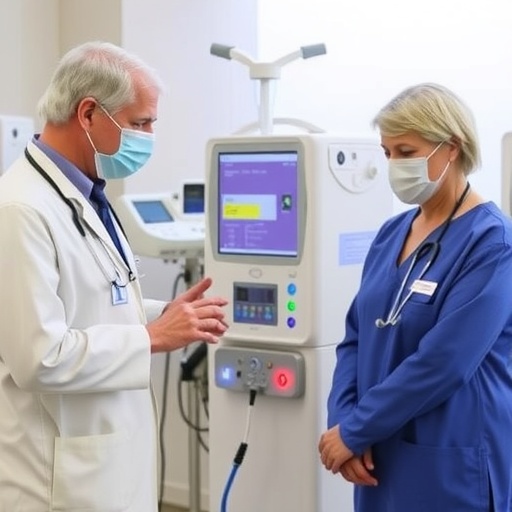
In an era defined by technological advances in the medical field, understanding the nuances of adopting clinical decision support systems (CDSS) has become pivotal, especially in specialties like nephrology. A recent qualitative study, spearheaded by researchers Yang, Cheng, and Kuo, delves into physicians’ perceptions regarding the acceptance of a CDSS designed specifically for anemia management in patients undergoing hemodialysis. This exploration not only addresses the practical implications of clinical technology but also provides insights into the underlying factors influencing physicians’ willingness to embrace such innovations.
The significance of managing anemia in patients receiving hemodialysis cannot be overstated. Anemia is a common complication in these patients, often resulting from various factors including erythropoietin deficiency, iron deficiency, and the effects of uremia. Left unchecked, anemia can lead to a host of complications, including decreased quality of life and increased morbidity. In this light, a CDSS aimed at streamlining decision-making in anemia management offers a promising avenue for enhancing patient outcomes and optimizing individual treatment paths.
The researchers adopted a qualitative approach to capture the multifaceted views of physicians who interact with the decision support system. Through in-depth interviews and focus group discussions, they unearthed a range of perceptions that underscored the complexities surrounding the integration of technology in clinical practice. Such qualitative methods offer richer, more textured insights compared to quantitative data alone, allowing for an exploration of physician attitudes, beliefs, and experiences.
One of the standout findings from the study is the mixed reception that the CDSS received among physicians. While some recognized the potential of the system to enhance accuracy in diagnosis and tailor treatment protocols, others expressed skepticism about its efficacy and reliability. This division highlights the critical need for robust evidence supporting the use of CDSS in real-world settings to reassure clinicians about its validity and utility in patient care.
Moreover, the study identified several barriers that could impede the acceptance of the CDSS among healthcare providers. Chief among these was the concern for clinical autonomy, as many physicians feel that reliance on technology might compromise their expertise or decision-making capabilities. The fear that a CDSS could inadvertently lead to a one-size-fits-all approach, devoid of individual patient nuances, emerged as a significant issue that warrants careful consideration during future implementations.
Another barrier discussed was the usability of the system. Physicians emphasized the importance of intuitive user interfaces and seamless integration into current medical workflows. A system deemed too cumbersome or time-consuming could swiftly become a source of frustration rather than a helpful aid. This underscores the necessity for continual feedback from end-users during the development phase of such systems to create tools that genuinely fit into the clinician’s workflow.
Interestingly, the study found that prior experience with technology plays a pivotal role in shaping acceptance attitudes. Physicians who had previously interacted with advanced healthcare technologies exhibited a greater propensity to embrace the CDSS, owing to a deeper understanding of its potential benefits. Conversely, those with limited exposure exhibited hesitance, often grounded in unfamiliarity and apprehension about how technology might impact their practice.
The researchers also noted the importance of interprofessional collaboration in fostering an environment conducive to the acceptance of CDSS. Physicians emphasized that collaboration with nurses, pharmacists, and IT specialists enhances collective decision-making. An integrated approach involving various healthcare professionals not only promotes a shared understanding of patient care but also encourages the adoption of decision support systems.
Patient safety emerged as a crucial theme throughout the discussions. Many physicians expressed concern regarding the ethical implications of relying on technology for critical treatment decisions. The notion that a CDSS could lead to errors or misjudgments not only raises apprehensions about patient safety but also about legal liabilities. This tension speaks to the broader ethical questions regarding the balance of human judgment and technological aid in healthcare.
Another intriguing aspect of the study was the emphasis on the need for continuous education and training. Physicians voiced that ongoing training regarding the use and interpretation of the CDSS could greatly improve their confidence in the technology. Providing workshops or informational sessions could serve to demystify the technology and equip clinicians with the knowledge necessary to leverage it effectively.
The researchers found that organizational culture significantly impacts the acceptance of the CDSS. In institutions where there is a strong emphasis on innovation and evidence-based practice, physicians are more likely to engage with new technologies. Conversely, in settings resistant to change, adopting a CDSS might prove more challenging. This highlights the role of leadership in championing the integration of technological innovations and fostering an environment receptive to change.
In summary, Yang, Cheng, and Kuo’s qualitative study sheds light on the multifaceted dimensions influencing physicians’ acceptance of a clinical decision support system for anemia management in hemodialysis patients. By illuminating both the potential benefits and the barriers, the study serves as a foundation for future efforts aimed at enhancing the integration of technology in medical practice. As the healthcare landscape continues to evolve, understanding these dynamics will be essential in creating tools that empower clinicians and enhance patient care.
The insights derived from this research not only contribute to the academic discourse surrounding clinical decision support systems but also have practical implications for administrators and developers of health technologies. Addressing the identified barriers, involving healthcare practitioners in the design and implementation phases, and fostering a culture of innovation could significantly improve the acceptance rates of such promising systems.
In conclusion, while the transition towards a technology-augmented healthcare future is already underway, it is crucial to navigate the human factors involved in this evolution. Embracing the insights gleaned from qualitative research such as this will ensure that the innovations effectively serve the needs of both healthcare providers and patients, ultimately driving enhanced health outcomes and satisfaction in this specialized care domain.
Subject of Research: Acceptance of Clinical Decision Support Systems Among Physicians
Article Title: Qualitative study on physicians’ acceptance of a clinical decision support system for anemia management in patients receiving hemodialysis
Article References:
Yang, JY., Cheng, SH. & Kuo, R.N. Qualitative study on physicians’ acceptance of a clinical decision support system for anemia management in patients receiving hemodialysis.
BMC Health Serv Res 25, 1620 (2025). https://doi.org/10.1186/s12913-025-13780-9
Image Credits: AI Generated
DOI: https://doi.org/10.1186/s12913-025-13780-9
Keywords: Clinical Decision Support Systems, Anemia Management, Hemodialysis, Physician Acceptance, Healthcare Technology.
Tags: anemia management in hemodialysisclinical decision support systems in nephrologycomplications of anemia in dialysis patientsdecision-making in nephrology practicesenhancing quality of life in hemodialysiserythropoietin and iron deficiency in dialysisfactors influencing healthcare technology adoptionhemodialysis patient care strategiesinterdisciplinary approaches to anemia treatmentpatient outcomes in chronic kidney diseasephysician acceptance of medical technologyqualitative research in healthcare



