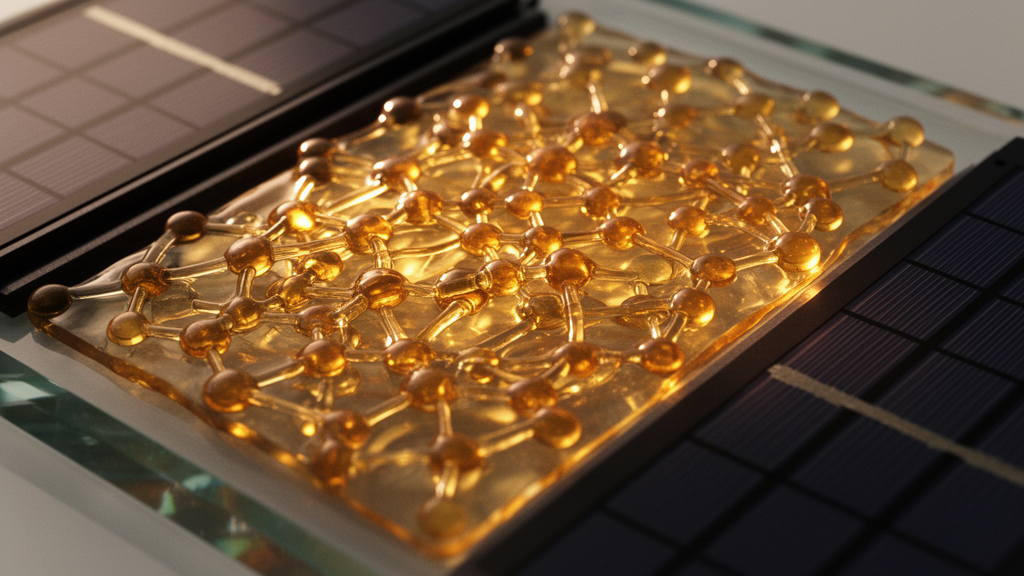
The electrolyte preparation centered on the solution casting method, employing poly(ethyl methacrylate), abbreviated as PEMA, to form the primary macromolecular host structure. Into this polymeric matrix, the investigators introduced an iodide-based phosphonium ionic liquid, tributylmethylphosphonium iodide or TMPI, incorporating the dopant across multiple distinct weight ratios to systematically evaluate how varying ionic liquid concentrations influenced the functional behavior and morphology of the resulting composite films.
To examine the electrical transport characteristics across the different material formulations, the authors conducted electrochemical impedance spectroscopy under ambient conditions. These impedance measurements established that the ionic conductivity of the polymer electrolyte progressively increased following the introduction of the ionic liquid dopant, ultimately attaining its highest observed value of 5.08 × 10⁻⁴ S/cm in the composition prepared with 20 weight percent TMPI.
The chemical structure and intermolecular interactions governing the electrolyte blend were evaluated through Fourier transform infrared spectroscopy. The recorded FT-IR spectra indicated significant complex formation and active chemical interaction occurring between the poly(ethyl methacrylate) host polymer chains and the tributylmethylphosphonium iodide ionic liquid, confirming that the dopant successfully complexed within the host polymer network.
Morphological and structural changes within the polymer matrix were tracked using both polarized light microscopy and X-ray diffraction techniques. The polarized optical microscopy analysis revealed a clear decrease in the overall crystallinity of the host material after the addition of the ionic liquid, an observation that was directly corroborated by the diffraction patterns obtained from the X-ray diffraction studies.
The electrochemical operational limits of the synthesized electrolyte were determined using linear sweep voltammetry. This LSV testing revealed an electrochemical stability window measuring 3.03 V, demonstrating that the material possesses sufficient electrochemical endurance for deployment in functional electronic devices. In addition, transference number evaluation confirmed that the polymer and ionic liquid system remains predominantly ionic in its charge transport behavior.
Device-level photovoltaic performance was verified by assembling functional dye-sensitized solar cells utilizing the optimized polymer electrolyte formulation doped with 20 weight percent TMPI. Tested under a single solar illumination condition, the fabricated solar cell achieved an overall power conversion efficiency of 1.45 percent. The investigators monitored and evaluated the dye-sensitized solar cell over a consecutive 15-day testing period, establishing a comprehensive assessment of the device’s operational stability and practical durability.
Subject of Research: Polymer electrolytes for dye-sensitized solar cells
Article Title: Ionic liquid tributyl methylphosphonium iodide infused polyethylmethacrylate based polymer electrolyte for dye sensitized solar cell application
Article References: Zakariya’u, I., Singh, P. K., Michalska, M., Diantoro, M., Zu Azhan Yahya, M., Alheety, M. A., Rawat, S., & Johari, R. (2026). Ionic liquid tributyl methylphosphonium iodide infused polyethylmethacrylate based polymer electrolyte for dye sensitized solar cell application. Materials for Renewable and Sustainable Energy, 15(2), Article 32. https://doi.org/10.1007/s40243-026-00377-3
Image Credits: AI Generated
DOI: 10.1007/s40243-026-00377-3
Keywords: poly(ethyl methacrylate), tributylmethylphosphonium iodide, polymer electrolyte, dye-sensitized solar cells, ionic conductivity, electrochemical impedance spectroscopy, Fourier transform infrared spectroscopy, X-ray diffraction, polarized light microscopy, linear sweep voltammetry, solution casting, solar conversion efficiency, electrochemical stability window, ionic liquid doping, crystallinity alteration, photovoltaic performance, durability evaluation
News Source: Neil Sanderson. (November 21, 2026). Phosphonium Ionic Liquid Boosts PEMA Polymer Electrolyte for Solar Cells. Scienmag.