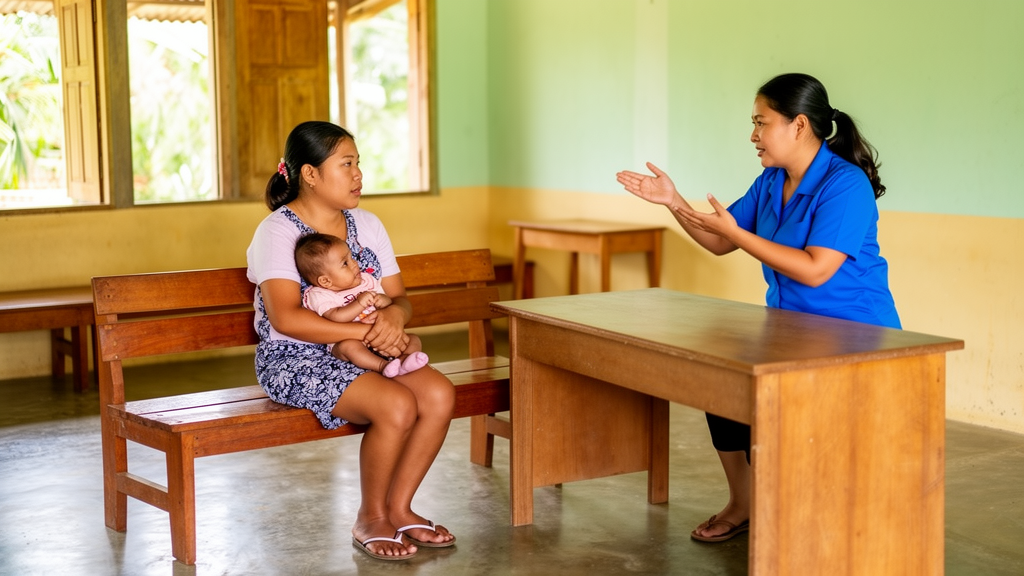
A randomized controlled trial and qualitative study in the Philippines found that a community parenting program did not reduce child maltreatment compared to a waitlist-control group. The research evaluated Masayang Pamilya for Teens, known as MaPa Teens, which was delivered in a low-resource semi-urban setting. The trial recorded mostly null results across primary and secondary outcome measures, alongside an unexpected increase in teen-reported emotional abuse at a three-month follow-up assessment.
Child maltreatment is a significant public health concern, especially in low- and middle-income contexts. While parenting interventions are evidence-based strategies for reducing maltreatment, their real-world effectiveness depends heavily on implementation quality. To evaluate these dynamics in the Philippines, researchers examined MaPa Teens, a group-based intervention designed for Filipino caregivers and adolescents. The program aimed to strengthen positive relationships and promote non-violent discipline through nine weekly sessions delivered by volunteer facilitators.
The evaluation used a mixed-methods design combining an experimental trial with a qualitative study. The trial protocol was pre-registered on the Open Science Framework. In the quantitative component, researchers used a two-arm randomized controlled design enrolling 122 caregiver-adolescent dyads with a one-to-one allocation ratio. Dyads were assigned either to the active MaPa Teens intervention or to a waitlist-control group to establish comparisons across post-intervention and follow-up periods.
To assess child maltreatment and secondary outcomes, the researchers gathered data at post-intervention and at a three-month follow-up. Analysis was conducted using multilevel negative binomial regression under an intention-to-treat framework. This statistical framework enabled the research team to evaluate differences between the MaPa Teens participants and the waitlist control while rigorously preserving the original randomized allocation across all participating caregiver-adolescent pairs.
The randomized trial did not yield significant differences between the MaPa Teens and waitlist-control groups on parent-reported or teen-reported child maltreatment or secondary outcomes. The only statistically significant result was that adolescents in the MaPa Teens group reported higher emotional abuse at the three-month follow-up. In addition, session attendance was low: 25 percent of caregivers and 21 percent of teens attended no sessions, while fewer than 20 percent of caregivers attended at least seven of the nine sessions.
To investigate the implementation processes behind the trial results, researchers collected qualitative data from seven focus group discussions, three interviews, and written reports from facilitators and coaches. These data were analyzed thematically and interpreted using the Consolidated Framework for Implementation Research. The qualitative findings revealed distinct implementation challenges that spanned three specific domains within the framework.
Across the Consolidated Framework for Implementation Research domains, the qualitative analysis identified critical operational hurdles. In the implementation process domain, the program faced low, incongruent dyad attendance and an insufficient community needs assessment. In the inner setting domain, the implementing partner experienced unclear organizational roles and resource constraints. Within individual characteristics, volunteer facilitators suffered from diminishing motivation driven by poor participant attendance and internal organizational tensions.
Study authors cautiously attributed the null trial outcomes to these implementation challenges rather than program design alone. They concluded that effective delivery of MaPa Teens and other public health interventions in real-world settings requires thorough organizational preparation, community engagement, and sustained coordination among developers, implementing partners, facilitators, and families. The findings provide vital insights for scaling violence prevention programs in low-resource community environments.
Subject of Research: Parenting intervention trial and implementation challenges for adolescents in the Philippines
Article Title: Effects and implementation challenges of a parenting intervention for adolescents in the Philippines: findings from a randomized controlled trial and qualitative study
Article References: Alampay, L. P., Reyes, D. R. G., Mamauag, B. L., Han, Q., & Lachman, J. M. (2026). Effects and implementation challenges of a parenting intervention for adolescents in the Philippines: findings from a randomized controlled trial and qualitative study. BMC Public Health. https://doi.org/10.1186/s12889-026-30419-4
Image Credits: AI Generated
DOI: 10.1186/s12889-026-30419-4
Keywords: MaPa Teens, Masayang Pamilya for Teens, parenting interventions, child maltreatment, adolescent health, randomized controlled trial, implementation research, Consolidated Framework for Implementation Research, Philippines, non-violent discipline, caregiver-adolescent dyads, emotional abuse, volunteer facilitators, community health programs, low-resource settings, intention-to-treat analysis, negative binomial regression, program attendance
News Source: Ophelia Keating. (November 20, 2026). Philippine Adolescent Parenting Program Trial Shows Null Outcomes and Implementation Hurdles. Scienmag.