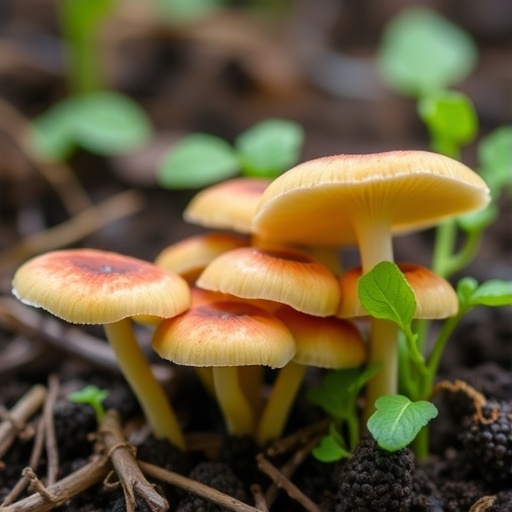
In the relentless quest to sustain the planet’s burgeoning agricultural demands, a groundbreaking study has unfurled new insights into the genus Trichoderma, a group of fungi known for their ubiquitous presence in soil ecosystems and their beneficial roles in plant health. The research, harnessing the power of phenogenomics, dives deep into the ecology and evolutionary biology of these remarkable fungi, revealing potential pathways to revolutionize sustainable agriculture on a global scale.
Trichoderma fungi have long been recognized for their biocontrol properties, effectively suppressing plant pathogens and enhancing crop resistance. However, the complexity of their interactions with plants and the environment has remained elusive. This study distinguishes itself by integrating phenotypic observations with genomic data, creating a comprehensive framework that deciphers the adaptive traits and evolutionary trajectories that underpin these fungi’s agricultural utility.
Employing advanced phenogenomic tools, the researchers cataloged the genetic makeup and corresponding phenotypic traits of diverse Trichoderma strains collected from varied ecological niches. This approach illuminates how specific gene clusters correspond to functional capabilities such as nutrient acquisition, pathogen suppression, and environmental resilience. The findings suggest that Trichoderma species have undergone convergent evolutionary adaptations to thrive in distinct soil environments, adapting their metabolic and enzymatic arsenals accordingly.
One of the pivotal revelations is the elucidation of genes involved in the biosynthesis of secondary metabolites—compounds that not only deter pathogenic microbes but also promote plant growth. The study maps these biosynthetic pathways against ecological variables, demonstrating how environmental pressures shape the chemical output of Trichoderma strains. This biochemical plasticity offers an explanation for their versatile efficacy in different crop systems, ranging from cereals to horticultural plants.
Further intriguing is the identification of genetic determinants linked to symbiotic interactions with plant roots. The team unearthed a suite of genes responsible for modulating root colonization and eliciting systemic resistance in host plants. These molecular mechanisms highlight a sophisticated dialogue between fungus and plant, orchestrated at the genomic level, which primes crop immunity against a spectrum of diseases without the need for chemical interventions.
From an evolutionary standpoint, the study reveals that horizontal gene transfer and gene duplication events have been instrumental in expanding the functional repertoire of Trichoderma fungi. Such genetic exchanges contribute to rapid adaptability, allowing the fungi to colonize novel environments and establish beneficial interactions with emerging agricultural hosts. This evolutionary agility positions Trichoderma as a dynamic tool for future crop improvement strategies amid changing climatic conditions.
The research also underscores the importance of maintaining fungal biodiversity within agroecosystems. Diverse Trichoderma communities correspond to more resilient soil health and enhanced suppression of phytopathogens. This ecological insight advocates for farming practices that conserve or augment native fungal populations, moving beyond monocultural systems that often diminish microbial diversity.
Crucially, the integration of phenogenomics presents a paradigm shift in how agricultural biocontrol agents can be developed. Instead of traditional trial-and-error selection, scientists can now predict beneficial traits from genomic blueprints, accelerating the design of tailored microbial consortia that address specific crop and environmental needs with unprecedented precision.
Moreover, the study’s implications extend into the realm of sustainable intensification. By leveraging natural fungal allies, farmers can reduce dependency on synthetic pesticides and fertilizers, mitigating environmental pollution and promoting biodiversity. The economic benefits are significant too, offering cost-effective and eco-friendly solutions that align well with global sustainability goals.
As the research community assimilates these findings, there is a palpable excitement about the potential to engineer Trichoderma strains through genetic and synthetic biology approaches, enhancing traits that optimize plant growth, nutrient uptake, and stress tolerance. However, the study also cautions on the ecological ramifications and stresses the necessity for thorough field assessments before widespread deployment.
The interdisciplinary nature of this research, combining microbiology, plant science, genomics, and ecology, exemplifies the innovative approaches needed to tackle 21st-century agricultural challenges. It marks a significant step toward harnessing the unseen microbial kingdoms beneath our feet as indispensable allies in feeding the world.
By decoding the genomic lexicon of Trichoderma fungi, this work paves the way for sustainable agricultural ecosystems where natural microbial functions are optimized rather than disrupted. The path forward lies not in circumventing nature but collaborating with it, a vision vividly brought to life through the lens of phenogenomics.
This study, poised to redefine agricultural biotechnology, invites further exploration into the underappreciated complexity of soil microbial networks and how they can be managed responsibly. As climate change threatens crop yields worldwide, such insights are desperately needed to safeguard food security through intelligent, nature-inspired innovations.
In conclusion, the phenogenomic revelations regarding Trichoderma fungi illuminate an ecological and evolutionary roadmap with profound implications for sustainable agriculture. As scientists delve deeper, these fungal bioengineers stand ready to shape the future of farming in harmony with the planet’s intricate living systems.
Subject of Research: The ecology and evolution of Trichoderma fungi and their application in sustainable agriculture revealed through phenogenomics.
Article Title: Phenogenomics reveals the ecology and evolution of Trichoderma fungi for sustainable agriculture.
Article References:
Steindorff, A.S., Cai, F.M., Ding, M. et al. Phenogenomics reveals the ecology and evolution of Trichoderma fungi for sustainable agriculture. Nat Microbiol (2026). https://doi.org/10.1038/s41564-026-02260-3
Image Credits: AI Generated
DOI: https://doi.org/10.1038/s41564-026-02260-3
Tags: adaptive traits in agricultural fungiconvergent evolution in agricultural fungievolutionary biology of Trichodermafungal-environment interactions in farminggenetic traits of soil fungigenomic analysis of Trichoderma strainsmetabolic adaptation of soil fungiphenogenomics in sustainable agricultureplant pathogen suppression by fungisustainable crop resistance enhancementTrichoderma fungi biocontrol propertiesTrichoderma nutrient acquisition mechanisms