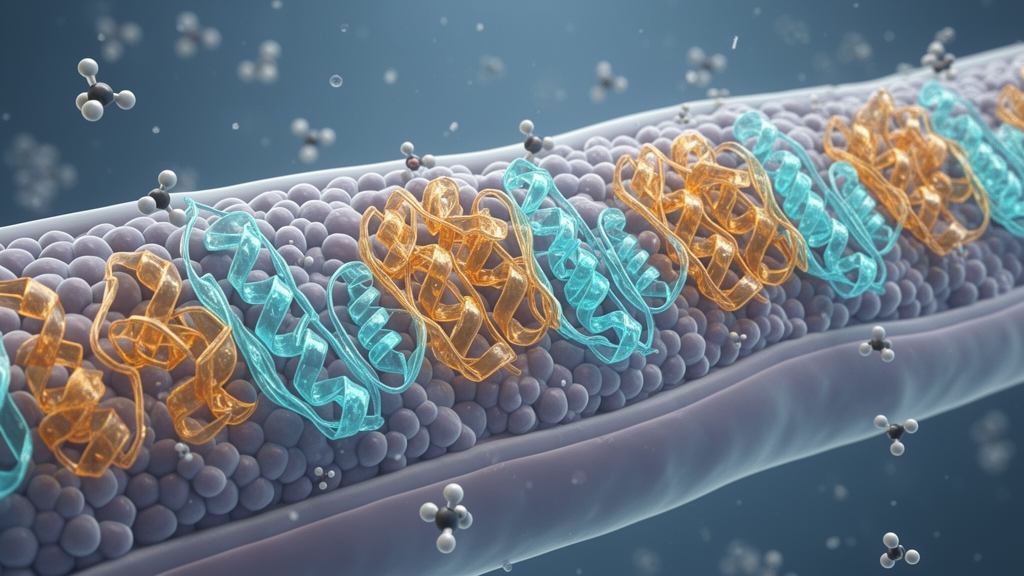
Researchers from Chilean institutions have released PhageLysData, a comprehensive computational resource that consolidates dispersed data on bacteriophage lytic enzymes and depolymerases. Published in Frontiers in Bioinformatics, this data report presents an evidence-aware and AI-ready dataset designed to support protein retrieval, comparative analysis, and machine-learning applications. The resource addresses the fragmentation of sequence and annotation data across general databases, specialized resources, and prediction-oriented datasets, providing a unified framework for studying these biologically relevant proteins.
The construction of PhageLysData involved a reproducible multisource integration process that tracked provenance and consolidated exact sequences. The release integrates 807,366 source observations from seven primary resources into 759,105 unique exact-sequence entities. This integration distinguishes between non-predictive biological evidence and prediction-derived support, preserving the breadth of the candidate sequence space while maintaining clear architectural boundaries between different types of data support.
The dataset is organized into three mutually exclusive universes to reflect the strength of evidence associated with each entity. The evidence-supported Core comprises 11,867 entities that possess at least one non-predictive target assertion. A much larger Prediction Extension contains 745,092 entities, representing 98.15% of the total, whose valid target assertions are exclusively prediction-derived. Additionally, 2,146 Context entities are retained for provenance and reference purposes, ensuring that the full scope of retrieved candidate space is preserved without conflating different evidence states.
Within the evidence-supported Core, endolysins represent the predominant canonical class, accounting for 9,888 entities or 83.3% of the group. The remaining Core entities include 999 with multiple non-exclusive assignments, 712 depolymerases, 241 virion-associated lytic enzymes, and 27 other phage-envelope lytic enzymes. The distribution of evidence tiers within the Core is dominated by Tier 3, which includes 9,836 entities, while Tier 1 consists exclusively of depolymerases that met strict requirements for verified primary experimental support.
The Core entities are enriched with harmonized biological annotations, physicochemical properties, and independent functional annotations derived from InterProScan. Structural assets from the Protein Data Bank and AlphaFold DB are also mapped to these entities, providing a multi-dimensional view of their biological characteristics. This enrichment layer allows researchers to access detailed information about sequence properties, functional domains, and structural models without altering the underlying biological assignments of the entities.
To facilitate machine-learning applications, the resource provides numerical representations for 11,259 eligible Core sequences. These representations include embeddings from 11 different protein language models, such as Ankh, ESM-C, ESM-2, Mistral-Prot, ProtBERT, and ProtT5, along with one-hot encoding. All representations are generated under a common contract, ensuring consistency across different feature spaces and enabling direct comparison and integration in computational workflows.
Illustrative reuse workflows demonstrate the practical utility of the released assets in conventional analytical tasks. These examples include latent-space exploration using dimensionality reduction techniques, unsupervised clustering to identify computational groups, and supervised classification to evaluate model performance. The workflows are designed to show how the data and representations can be combined directly, rather than serving as universal predictive benchmarks for remote sequence generalization.
The supervised classification example evaluated Logistic Regression, linear Support Vector Machine, and Random Forest classifiers using ESM-2 representations. The models achieved macro-F1 scores ranging from 0.806 to 0.818 across four demonstration classes. However, the authors emphasize that this evaluation used a standard stratified train-test split without homology-aware separation, meaning the results should not be interpreted as estimates of performance on sequence-dissimilar proteins.
PhageLysData is intended to complement existing resources like PhaLP 2.0, INPHARED, and PhagesDB rather than replace them. Its primary distinction lies in the integration of heterogeneous source records into a common exact-sequence entity framework that preserves source provenance. This architecture allows users to define task-specific inclusion criteria while retaining the ability to inspect conflicting annotations and reinterpret biological support based on evidence lineages.
The resource has potential applications in biotechnology and phage therapy, enabling evidence-aware selection and comparison of enzymes for experimental screening. Researchers can use the Core and its associated layers to assemble candidate sets for enzyme discovery and engineering. However, the authors caution that these potential uses represent downstream applications of the resource and do not constitute evidence of therapeutic efficacy for individual entries.
Limitations of the resource include the fact that Prediction Extension entities remain computational candidates and some Core records retain ambiguous evidence. The canonical Core is strongly imbalanced across biological classes, with depolymerase and virion-associated lytic-enzyme subsets being substantially smaller than the endolysin subset. These subsets should be regarded as source-dependent evidence collections rather than estimates of their relative biological prevalence in bacteriophages.
The complete PhageLysData v1.0 resource is archived on Zenodo and distributed under the Creative Commons Attribution 4.0 International license. Code, workflows, and executable notebooks are available on GitHub under the MIT License. This versioned, machine-readable resource provides a traceable foundation for future research, allowing for the incorporation of revised evidence and updated annotations while preserving the exact-sequence identity and provenance framework.
The seven primary resources integrated into PhageLysData include UniProtKB release 2026_02, PhaLP 2.0, INPHARED, DePP, DposFinder, DepoCatalog, and PhagesDB. These sources represent a mix of general protein annotation, specialized phage-enzyme collections, genome-centred resources, curated depolymerase datasets, and prediction-oriented candidate collections. The biological scope of the resource covers four non-exclusive target classes: endolysin, virion-associated lytic enzyme, depolymerase, and other phage envelope lytic enzyme. Virion-associated lytic enzymes are retained as a distinct class because their definition includes physical association with the phage particle and activity during early infection. The other phage envelope lytic enzyme class captures supported envelope-lytic proteins for which available evidence does not justify assignment as an endolysin, depolymerase, or virion-associated enzyme. Broader lysis-system components and ambiguous structural proteins are retained only when necessary to preserve provenance or biological context, but they are not automatically considered target entities.
UniProtKB candidates were recovered through a frozen registry of controlled queries spanning explicit protein identities, functional and catalytic annotations, Gene Ontology and Enzyme Commission terms, substrate and structural terminology, and phage-associated context. Query provenance was preserved independently from biological evidence so that synonymous or overlapping retrieval strategies did not increase confidence by themselves. The remaining resources were processed according to their native data models, with source-specific rules distinguishing curated annotations, source-reported experimental support, imported annotations, computational predictions, genomic context, and records used only as computational background. This approach ensures that the integration process respects the specific data structures and evidence standards of each original database.
Exact amino-acid sequence identity defined the entity layer in the PhageLysData architecture. Records corresponding to the same normalized sequence were consolidated under a stable sequence_entity_id, while alternative accessions, genome occurrences, phages, hosts, publications, and source-specific annotations remained connected through relation tables. Sequence similarity, homology, domain architecture, predicted function, and clustering were not used to merge entities. This strict identity-based consolidation prevents the conflation of distinct biological sequences that may share functional similarities. Amino-acid sequences were normalized before integration, and non-canonical residues were retained as quality attributes without triggering automatic exclusion, ensuring that data quality issues are tracked without altering the underlying sequence data.
After multisource integration, biological assertions were harmonized to the four target classes and linked to their provenance and evidence lineages. Core entities supported by more than one non-predictive target class were retained under the derived resource-level label multiple_nonexclusive and were not forced into a single canonical target class. Conflicting or discordant assertions were preserved, and repeated occurrence across databases was not interpreted automatically as independent support. Entities were then assigned to the mutually exclusive Core, Prediction Extension, or Context universes according to whether valid target support was non-predictive, exclusively prediction-derived, or absent. For the Prediction Extension, the minimum inclusion criterion was the presence of at least one valid prediction-derived target assertion after source-specific harmonization, with no additional universal numerical score threshold imposed.
Evidence Tiers 1 through 4 were restricted to the Core because they describe the strength and resolution of non-predictive evidence and are not directly applicable to prediction-only entities. Prediction scores were retained within their native source context rather than converted into a common confidence scale, because scores produced by different prediction systems are not necessarily calibrated or directly comparable. This design choice preserves the integrity of the original prediction outputs while allowing users to inspect the specific evidence supporting each entity. The complete entity-construction rules, provenance relations, universe predicates, and conflict-handling procedures are provided in the supplementary methods, ensuring transparency in how the dataset was constructed.
Physicochemical characterization of the Core entities was performed with modlAMP 4.3.2 and included canonical amino-acid composition, global sequence properties, and full-sequence means derived from established amino-acid scales. Descriptor incompatibility did not remove sequences from the Core; unavailable chemistry-dependent values were retained as missing with explicit status. A frozen UniProtKB annotation layer was materialized from release 2026_02 without performing live queries during enrichment. Accessions were connected to Core entities through exact sequence identity, retaining protein and gene annotations, taxonomy, review and annotation status, sequence features, publications, and normalized cross-references. When several UniProtKB accessions mapped to the same exact sequence, a representative accession was selected deterministically while all alternative mappings remained available.
Independent functional enrichment was performed with InterProScan 5.78–109.0 using InterPro release 109.0 and Pfam release 38.2. Resulting member-database signatures, InterPro entries, Pfam assignments, domain coordinates, Gene Ontology mappings, and pathway mappings were connected to sequence_entity_id and stored independently from corresponding UniProtKB-reported cross-references. InterProScan annotations were treated as computational enrichment and did not alter Core membership, canonical target class, or evidence Tier. Existing structural assets were mapped from PDB and AlphaFold DB, with PDB relations combining frozen UniProtKB cross-references with exact sequence matching against PDB sequence records. AlphaFold DB models were accepted only when their reported sequence matched the corresponding Core entity, ensuring that structural data is accurately linked to the correct biological sequences.
Subject of Research: PhageLysData dataset for phage lytic enzymes and depolymerases
Article Title: PhageLysData: an evidence-aware and AI-ready dataset of phage lytic enzymes and depolymerases
Article References: Medina-Ortiz, D., Olivera-Nappa, Á., Lienqueo, M. E., Opazo, R., & Romero, J. (2026). PhageLysData: an evidence-aware and AI-ready dataset of phage lytic enzymes and depolymerases. Frontiers in Bioinformatics, 6, Article 1976298. https://doi.org/10.3389/fbinf.2026.1976298
Image Credits: AI Generated
DOI: 10.3389/fbinf.2026.1976298
Keywords: bacteriophage, lytic enzymes, depolymerases, bioinformatics, protein language models, data integration, evidence-aware, machine learning, PhageLysData, AI-ready, dataset, phage
News Source: Gregory Coleman. (November 10, 2026). PhageLysData Integrates 759,100 Phage Enzyme Sequences. Scienmag.