


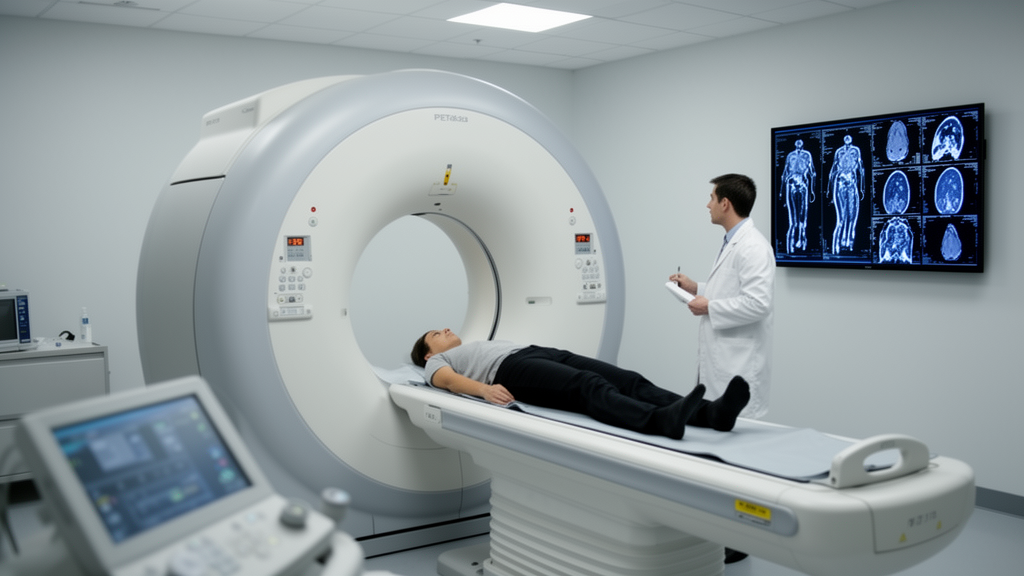
Anal cancer staging may be on the verge of a rethink. In a narrative review published in European Radiology Abdomen, a team of radiologists, oncologists and surgeons argues that whole-body FDG PET/CT, rather than pelvic MRI, could serve as the first imaging investigation for most patients with anal squamous cell carcinoma, with MRI reserved for selected cases where detailed pelvic anatomy is likely to change management. The authors are careful to frame this as a testable hypothesis rather than an established protocol, but the evidence they assemble raises a pointed question about a long-standing dual-modality standard.
Anal squamous cell carcinoma accounts for roughly 2% of gastrointestinal cancers, yet its incidence is rising worldwide, driven mainly by human papillomavirus infection and immunosuppression. The burden falls disproportionately on socioeconomically disadvantaged groups, reflecting inequalities in HPV exposure, vaccination rates and access to early diagnosis. Because treatment is predominantly curative and depends heavily on precise radiotherapy planning, accurate staging is critical. Current practice, endorsed by NCCN and ESMO guidelines, generally recommends both pelvic MRI for local tumour assessment and FDG PET/CT for nodal and distant disease evaluation.
MRI has long been regarded as the reference standard for local anatomical staging in this disease, thanks to its superior soft-tissue contrast and its ability to delineate sphincter complex involvement and adjacent pelvic structures. PET/CT, by contrast, offers whole-body metabolic imaging and has shown particular strength in detecting nodal and distant disease. The review’s central argument is that the modality most likely to change what actually happens to a patient may be PET/CT, not MRI.
The strongest recent evidence cited comes from a 2026 systematic review and meta-analysis by Temperley and colleagues, which analysed six studies including 246 patients staged with MRI before PET/CT. In that pooled analysis, PET/CT changed TNM staging in 22.5% of cases, with upstaging in 16.2% of patients. Notably, 74.6% of upstaged patients were reclassified because of newly identified nodal disease, and occult distant metastases were detected in approximately 3% of patients. Management was altered in 20.7% of patients overall, with radiotherapy modifications accounting for 18.5% of those changes, including field expansion to cover PET/CT-positive nodal basins, dose escalation to metabolically active disease, and dose reduction where PET/CT excluded suspicious findings.
Earlier and individual studies reinforce the pattern, though with wide variation. A meta-analysis by Mahmud and colleagues reported pooled upstaging rates of approximately 5.1 to 37.5% and management changes of 12.5 to 59.3% when PET/CT was added to initial imaging, with nodal disease detection as the primary driver throughout. Individual series include Engledow and colleagues, who documented management changes in 12.5% of patients using older PET/CT technology; Bhuva and colleagues, who reported staging changes in 42% of a sequential staging cohort; Wells and colleagues, who documented management changes in 29%, mostly radiotherapy modifications; and Di Carlo and colleagues, who found PET/CT-detected nodal disease not seen on MRI in 38% of patients in a prospective single-institution series, with management changes for all affected patients. Manafi-Farid and colleagues reported discordant findings in 46.3% of patients, with radiotherapy alterations in 24.1%.
Why does nodal status matter so much? Regional nodal involvement is a key prognostic factor in anal cancer and directly determines which lymph node basins are included in the radiotherapy field and what doses are prescribed. MRI assessment of nodal disease relies on size-based and morphological features, criteria borrowed from rectal cancer staging that are not well validated for anal cancer, meaning micrometastatic disease within normal-sized nodes may be missed. PET/CT detects increased glycolytic activity regardless of nodal size, and can also support treatment de-escalation by identifying false-positive nodal findings on conventional imaging, potentially avoiding unnecessary field expansion. Beyond nodal staging, PET/CT provides whole-body assessment in a single examination, a capability pelvic MRI alone cannot offer, and detection of distant metastases can shift patients from curative to palliative management.
The case for demoting routine MRI rests on the nature of anal cancer treatment itself. For most patients with newly diagnosed disease, the initial treatment decision is definitive chemoradiotherapy, recommended across T1 to T3 disease and frequently adopted even for T4 tumours. Under the AJCC staging system, T1 to T3 categories are mainly determined by maximum tumour diameter, which can often be estimated clinically and endoscopically, so MRI offers refinement rather than a fundamentally different treatment approach. For most stage I to III patients, definitive chemoradiotherapy remains the standard of care regardless of T stage, and even T4 tumours are frequently treated with curative-intent chemoradiotherapy initially, with abdominoperineal resection generally reserved for persistent or recurrent disease. The authors distinguish treatment intent from treatment planning: MRI may still contribute to radiotherapy planning by defining local disease extent and fistulising anatomy, even when it does not alter the overall therapeutic strategy.
MRI is not being dismissed. The review identifies clear scenarios where it retains value: assessing invasion into adjacent organs such as the vagina, urethra or bladder, information directly relevant to radiotherapy target volume delineation and anticipating salvage surgery; identifying fistulising disease and pelvic complications, where inflammatory and malignant components are more readily discriminated on MRI than on PET/CT; and providing a pre-treatment anatomical baseline, since post-treatment fibrosis can obscure anatomical planes and complicate interpretation if salvage surgery becomes necessary. Only a small proportion of patients, approximately 2 to 8% of newly diagnosed cases, ultimately require salvage surgery, but the baseline principle remains relevant in selected cases.
The authors are equally candid about the limitations of their proposal. PET/CT offers substantially lower soft-tissue contrast resolution than high-resolution pelvic MRI, limiting its ability to delineate the sphincter complex, mesorectal fascia and subtle organ invasion, and it may have reduced sensitivity for small-volume perirectal nodes; Manafi-Farid and colleagues linked PET/CT false downstaging in 9.3% of patients to small perirectal nodes near the resolution threshold. More fundamentally, all key studies used a sequential design in which PET/CT followed initial MRI or CT, so the reported figures reflect PET/CT’s additive yield and may not transfer to a true PET/CT-first pathway. Because anal cancer is primarily treated non-surgically, PET/CT-driven nodal upstaging cannot be confirmed against histopathology, and no study reported long-term oncological outcomes attributable to PET/CT-driven management changes. A change in management, the authors stress, cannot be equated with an improvement in management; some upstaging may reflect false-positive metabolic activity leading to unnecessary field expansion or dose escalation.
Practical and economic constraints further complicate the picture. PET/CT requires a radiotracer production supply chain and specialised personnel, and in many settings MRI remains considerably more accessible; a PET/CT-first approach is realistic only where PET/CT infrastructure already exists. PET/CT also generally carries a higher per-scan cost than pelvic MRI, formal cost-effectiveness analyses in anal cancer are lacking, and a Scottish health technology assessment highlighted uncertainty in the cost-benefit balance. The proposed selective MRI indications, including uncertain local tumour extent, suspected organ invasion, fistulising or inflammatory disease, discordant findings, and a baseline for patients at higher risk of needing salvage surgery, may apply to a substantial proportion of patients in routine practice, potentially limiting efficiency gains. The authors propose an algorithm beginning with clinical assessment and biopsy-confirmed disease, followed by whole-body FDG PET/CT as the primary staging investigation, selective MRI by defined indications, and multidisciplinary team review of all staging information. They call for prospective studies with comparator arms that capture survival, local control, distant failure, toxicity, workflow measures such as time from diagnosis to treatment, and health-economic endpoints including cost per patient staged. Until such data exist, the PET/CT-first pathway remains exactly what its authors say it is: a hypothesis awaiting its test.
Subject of Research: Staging strategies for anal squamous cell carcinoma, comparing PET/CT-first and dual-modality imaging pathways
Article Title: PET/CT-first staging in anal cancer: reconsidering the role of routine MRI
Article References: Saadeh, O. A., Temperley, H. C., O’Sullivan, N. J., Mac Curtain, B. M., Ng, Z. Q., Sheahan, K. P., Corr, A., Rausa, E., McCormick, P. H., Gillham, C., Meaney, J. F. M., Heriot, A., & Kelly, M. E. (2026). PET/CT-first staging in anal cancer: reconsidering the role of routine MRI. European Radiology Abdomen, 1(1), Article 8. https://doi.org/10.1007/s44501-026-00010-8
Image Credits: AI Generated
DOI: 10.1007/s44501-026-00010-8
Keywords: anal cancer, PET/CT, MRI, staging, radiotherapy planning, nodal disease, chemoradiotherapy, anal squamous cell carcinoma, narrative review, diagnostic imaging, health economics, salvage surgery
News Source: Nathaniel Bowman. (October 28, 2026). PET/CT-first staging proposed for anal cancer, with MRI reserved for selected cases. Scienmag.



