


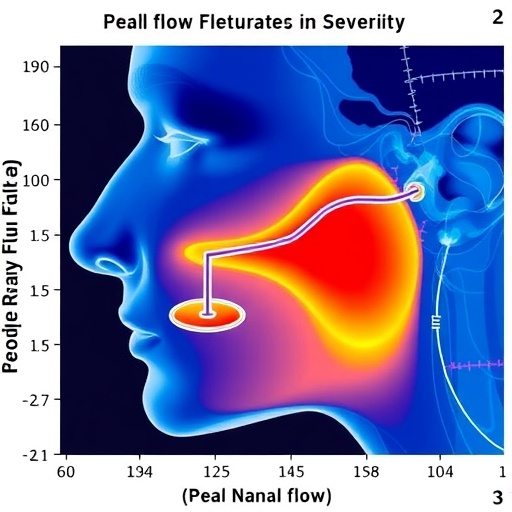
A recent study has sparked significant interest in the realm of otorhinolaryngology by examining the relationship between peak nasal inspiratory flow (PNIF) and nasal obstruction in patients diagnosed with severe chronic rhinosinusitis with nasal polyps (CRSwNP). This research is particularly timely as the prevalence of CRSwNP continues to rise, fostering a growing need for effective assessments and management strategies. Conducted as part of the larger SINUS-24/-52 studies, this work delves into the implications of nasal airflow on overall health outcomes for these patients.
The significance of understanding PNIF cannot be overstated. Peak nasal inspiratory flow represents a critical measure of nasal patency and function, providing insights into how well a patient can breathe through their nose. This measure serves as a crucial objective assessment that complements subjective assessments of nasal obstruction, which are often influenced by various psychological and environmental factors. Understanding PNIF in the context of CRSwNP not only furthers our comprehension of respiratory health challenges but also aids in tailoring treatment approaches.
CRSwNP is a debilitating condition afflicting a considerable number of individuals, significantly impacting their quality of life and daily functioning. Symptoms often include chronic nasal obstruction, loss of smell, and recurrent sinus infections, contributing to a burden that affects both physical and mental health. The hormonal and inflammatory pathways involved in CRSwNP illustrate complex biological interactions, indicating the necessity for comprehensive research into these processes and their ramifications on patients’ respiratory efforts.
The most recent correction to the article by Desrosiers and colleagues emphasizes the importance of analyzing the data from both the SINUS-24 and SINUS-52 studies. These trials explored various treatment regimens, focusing on understanding how medical and surgical interventions could affect patient outcomes in terms of both subjective and objective measures of nasal obstruction. It is crucial to note that while these studies represent a large patient cohort, the nuances between individual responses to treatment still warrant discussion, indicating the heterogeneous nature of CRSwNP.
Moreover, the study underscores the utility of PNIF in routine clinical practice. Evaluating PNIF offers an actionable measure that can inform healthcare providers about the severity of nasal obstruction and potentially guide treatment decisions. The relationship between nasal airflow and the perception of obstruction also sheds light on the psychological dimensions of nasal conditions. Patients with CRSwNP often report a higher degree of discomfort despite variable nasal airflow measurements. This disconnect emphasizes the complexity of managing such conditions and highlights the necessity for holistic approaches to patient care.
Additionally, the importance of the correction made to the original article cannot be undervalued. In scientific writing, accuracy is paramount, as it ensures that subsequent research builds on validated information. The correction was significant as it aims to refine the interpretation of results, allowing better clarity for both researchers and clinicians alike. Such adjustments can shape future guidelines for the management of CRSwNP, thereby driving forward advancements in therapeutic strategies.
The researchers involved in this study acknowledge the potential for a paradigm shift in how nasal obstruction is assessed and treated. Historically, the focus has predominantly been on imaging diagnostics and subjective symptom questionnaires. However, the emerging significance of objective measures like PNIF introduces a new dimension to the evaluation process. Armed with more precise tools, clinicians can more effectively monitor treatment efficacy over time, enhancing personalized medicine approaches in otorhinolaryngology.
As investigations continue to explore the interplay between nasal function and the various treatment modalities available for CRSwNP, researchers are also examining the underlying pathophysiology of the disease. Insights derived from understanding nasal aerodynamics provide valuable context for how inflammation, whether allergic or non-allergic, impacts airflow and patient experiences overall. This research could lead to breakthroughs in devising targeted therapies that address both the obstruction of nasal passages and the inflammatory responses contributing to CRSwNP.
The ramifications of such findings extend far beyond academic circles. For patients enduring the chronic nature of CRSwNP, the implications of a better understanding of PNIF and its relationship to nasal obstruction resonate deeply. The hope for improved treatment strategies that enhance quality of life is a shared goal between researchers and those affected by the condition. As such, the importance of continuing to refine our clinical approaches through research cannot be overstated.
Moreover, with the advent of newer therapeutic options, including biologic agents specifically designed to target inflammatory pathways in CRSwNP, the integration of PNIF assessments into routine practice may facilitate quicker adjustments to treatment plans. Not only does this enhance patient outcomes, but it also fosters a more dynamic interaction between patients and healthcare providers, wherein both parties can engage actively in the management of care.
Going forward, the lessons gleaned from the SINUS-24/-52 studies will undoubtedly serve as a foundation for future research endeavors. The exploration of nasal airflow and obstruction will likely continue to be a compelling area of study, prompting new questions that could redefine clinical practices in the field of otorhinolaryngology.
In conclusion, the recent clarification provided by Desrosiers et al. heralds not only a step forward in understanding CRSwNP and nasal function but also sets the stage for ongoing discourse that is essential for advancing patient-centered care. As researchers delve deeper into the complexities of nasal obstruction, the evolution of assessment methodologies, including the role of PNIF, will be crucial in shaping effective treatments and improving health outcomes for patients grappling with the challenges posed by this prevalent condition.
The journey toward better management of CRSwNP is a collaborative effort involving patients, researchers, and clinicians alike. Each new finding contributes to a more comprehensive tapestry of knowledge, ultimately empowering individuals to take charge of their health in the face of chronic illness. The potential for innovative, effective treatments fueled by ongoing research is bright, illuminating the path towards healthier futures for those affected by severe nasal obstruction.
Subject of Research: Relationship between peak nasal inspiratory flow (PNIF) and nasal obstruction in patients with severe chronic rhinosinusitis with nasal polyps (CRSwNP).
Article Title: Correction to: Peak Nasal Inspiratory Flow and the Association with Nasal Obstruction in Patients with Severe CRSwNP from the SINUS-24/-52 Studies.
Article References:
Desrosiers, M., Nash, S., Lane, A. et al. Correction to: Peak Nasal Inspiratory Flow and the Association with Nasal Obstruction in Patients with Severe CRSwNP from the SINUS-24/-52 Studies. Adv Ther (2025). https://doi.org/10.1007/s12325-025-03444-9
Image Credits: AI Generated
DOI:
Keywords: CRSwNP, PNIF, nasal obstruction, SINUS-24, SINUS-52 studies.
Tags: chronic nasal obstruction symptomschronic rhinosinusitis with nasal polypsCRSwNP treatment strategieseffective management of CRSwNPnasal airflow measurementnasal obstruction assessmentotorhinolaryngology researchpatient quality of lifePeak nasal inspiratory flowPNIF and CRSwNP correlationrespiratory health outcomessinus infection prevalence



